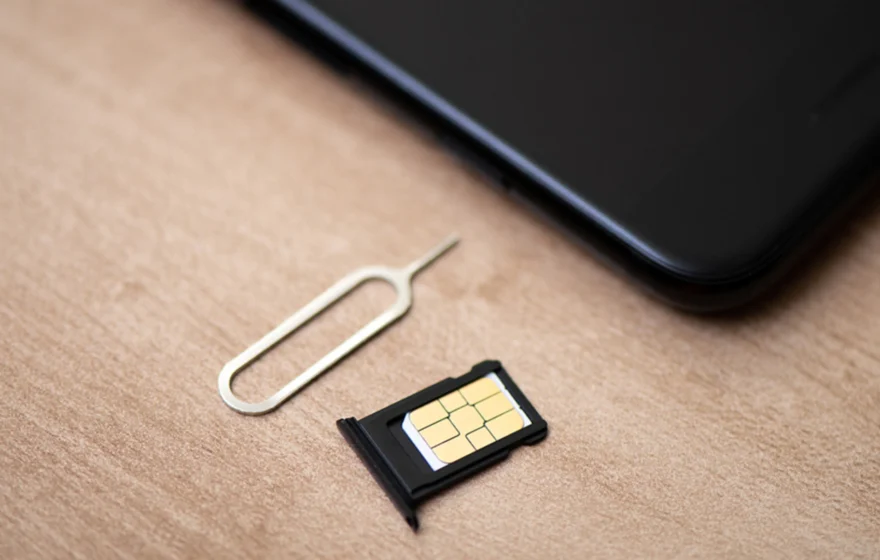
The Pakistan Telecommunication Authority has warned people across the country not to buy or sell foreign SIM cards in Pakistan, describing the trade in such cards as unlawful. In a public awareness message, the regulator said the practice carries serious security risks, because a SIM that has not passed through Pakistan’s own registration system can be misused for fraud and other illegal purposes.
The warning is aimed at ordinary mobile users, not only at telecom companies. The authority said foreign SIMs may be exploited by people involved in fraud, leaving buyers and users exposed to legal trouble as well as security problems. Its advice was direct: avoid buying and selling foreign SIMs altogether, and use only a locally issued SIM registered in the user’s own name. Users were urged to make sure their connections are properly registered, and to treat responsible SIM use as a basic protection against fraud and misuse.
The concern becomes clear once the way Pakistan’s mobile system works is kept in mind. A local SIM is tied to its holder through biometric verification and a national identity record, so the person behind a number can in principle be traced if that number is used for a crime. A foreign SIM, by contrast, arrives without going through that local check. When it connects to a Pakistani network while roaming, it can still make calls, send messages and use data, yet the local operator and the regulator hold far less verified information about who is actually holding it. That gap is what worries investigators, and it is why an untraceable connection is treated differently from an ordinary registered number.
Fraud is the most immediate risk. Regulators have linked unverified foreign connections to spoofed calls, in which the number shown on a victim’s phone is faked, and to text-message phishing, where a message pretends to come from a bank, a courier company or a government office in order to steal passwords or money. Extortion calls, online shopping fraud and other scams have also been cited, because a number that cannot easily be tied to a real person makes it harder for victims to report the crime and for the authorities to follow the trail. The authority has further warned that such connections can be used to spread misleading messages and unlawful content, again because the account behind them is difficult to identify.
The warning also arrives while the authority is consulting on a separate set of draft rules for international roaming. Under the proposed International Roaming (Inbound) Regulations, 2026, operators would have to build identity-checking procedures for foreign SIMs and travel eSIMs connecting to Pakistani networks. Visitors could be asked for passport or travel-document details, their nationality, information about their SIM or eSIM, the name of their home operator, and, where available, their arrival date and expected length of stay. Verification could be done through a welcome message link, a regulator-approved digital portal, or coordination with immigration and border authorities, and travel SIM sellers would have to register with the regulator. Operators would also need to keep verification records for at least twelve months.
It is important to keep the two things apart. The draft roaming rules are still proposals under consultation, and they would only take effect once formally notified. The warning issued this week, on the other hand, concerns the buying and selling of foreign SIMs in Pakistan now, and it presents that trade as illegal in itself. In other words, the longer-term plan is to create a verified route for genuine visitors roaming on a foreign connection for a short stay, while the immediate message is that an informal market in foreign SIMs inside Pakistan is not an acceptable alternative to a properly registered local connection. The draft also proposes that a roaming connection active for ninety days or more within any six-month period would count as permanent roaming, which could face suspension or blocking if its legitimate temporary use cannot be established.
The wider significance of the warning lies in how central the mobile phone has become to daily life and to crime. Bank accounts are verified by text message, government services send one-time codes to phones, and social media accounts are often recovered through a mobile number. A fraudster who controls an untraceable SIM therefore gains a tool that reaches into all of those systems at once. By insisting that every SIM used in Pakistan be tied to a verified identity, the regulator is trying to close one of the easiest routes into that system. Warnings alone will not do it: unauthorised sellers must actually be stopped, and users must understand why a cheap, unregistered card is not worth the risk. This week’s message is a clear statement of intent on both counts, and it suggests foreign SIMs will face still closer scrutiny in the months ahead.
