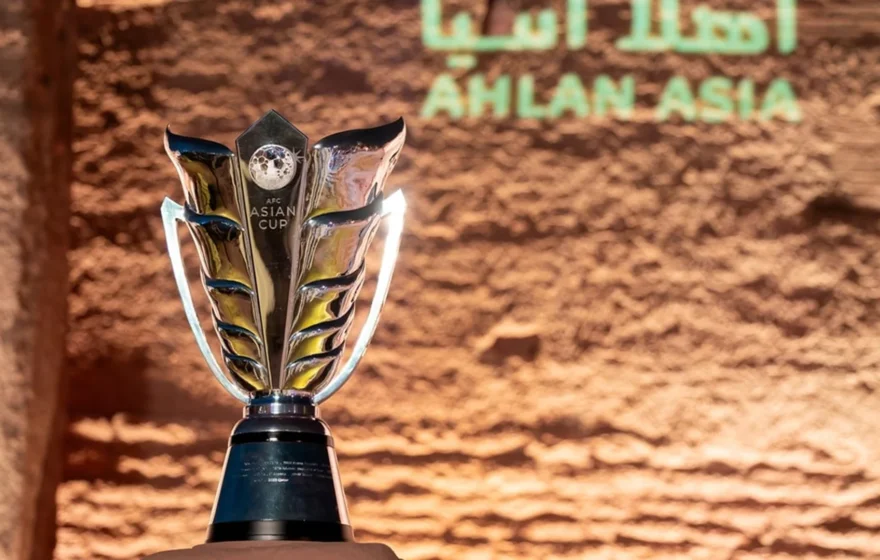
Asia’s biggest football tournament will not go ahead when it was supposed to. The Asian Football Confederation has pushed the AFC Asian Cup 2027 in Saudi Arabia back by almost a full year, moving a tournament meant to open in January 2027 to the end of that year, after security worries and disruption across the region made the original plan impossible to deliver.
Under the revised schedule announced on Tuesday, the 24-team competition will now run from December 23, 2027, to January 21, 2028. It had originally been set for January 7 to February 5, 2027. The shift of close to eleven months is one of the most significant reschedulings in the tournament’s recent history, and it underlines how quickly the security picture in the Middle East has changed in recent weeks.
The decision was taken after lengthy talks between the AFC, the tournament’s Local Organising Committee and the Saudi Arabian Football Federation. In its announcement, the confederation pointed to exceptional circumstances in the region, including serious logistical problems and travel disruption that would have affected how the tournament was organised. The governing body said the postponement had become necessary in the interests of the teams taking part, the officials, the spectators and everyone else involved in staging the event.
At the heart of the decision is the deteriorating security situation in Saudi Arabia. The kingdom has come under repeated attack from Yemen’s Houthi movement since September, with missiles and drones targeting infrastructure including airports, and the capital Riyadh among the places hit. An attack on Riyadh’s international airport in October left people dead and hundreds more injured, according to news reports, and sharpened fears about holding a major international gathering in the country on the original dates. The Asian Cup is not the only event to be affected: several other major sporting occasions in Saudi Arabia have been cancelled or postponed in recent weeks as the attacks have continued.
For the organisers, the problem was never only about safety on match days. A tournament of this size depends on teams, officials, broadcasters, sponsors and tens of thousands of supporters being able to travel freely and plan months in advance. When flights are disrupted and governments issue fresh travel warnings, that planning starts to break down. The AFC said the situation had created real difficulties for organising the competition as originally scheduled, and that pushing it back was the responsible course rather than pressing ahead and hoping conditions would improve in time.
The tournament will still be held in Saudi Arabia, in the same three cities: Riyadh, Jeddah and Al Khobar. Saudi organisers had previously insisted preparations were on track despite the growing concerns, and the Local Organising Committee has now reaffirmed its commitment to hosting the event, saying work will continue in close coordination with the AFC and other partners.
Before the new dates become final, they must be presented to FIFA, world football’s governing body, for approval. That step matters because the international calendar is tightly packed, with domestic leagues, continental club competitions and national team fixtures all competing for the same windows. Moving a month-long tournament by almost a year will force adjustments elsewhere, from qualifying matches to the availability of players released by their clubs for international duty. FIFA’s sign-off will therefore be watched closely by federations across Asia, many of which had built their plans around the original January dates.
The delay also carries a wider significance for Saudi Arabia’s sporting ambitions. The kingdom has spent recent years positioning itself as a host of major international events, and the Asian Cup was meant to be a showcase for that strategy. A postponement forced by security concerns is a setback to that image, and it raises questions about how other events planned in the country will be handled while the conflict continues.
For the teams, the new timetable brings both relief and fresh uncertainty. Players and coaches preparing for a tournament in a matter of weeks now have almost another year to plan, which may help squads hit form and recover from injuries. But the delay also stretches out qualification timelines and leaves fans who had booked travel and accommodation facing changes to their plans. Broadcasters and sponsors, too, will need to rework schedules and campaigns built around the original window.
What happens next will depend largely on the security situation in the months ahead. If tensions ease and travel returns to normal, the December 2027 start could pass without further trouble. If the conflict drags on, however, the AFC may face harder choices about whether the revised dates can hold. For now, the confederation has promised to work with national associations, sponsors, broadcasters and other partners to limit the damage from the delay and to make sure the tournament, when it does take place, is organised successfully. The Asian Cup has been pushed back, but Asia’s football family will be hoping the wait ends with a tournament worthy of the continent’s biggest stage.
