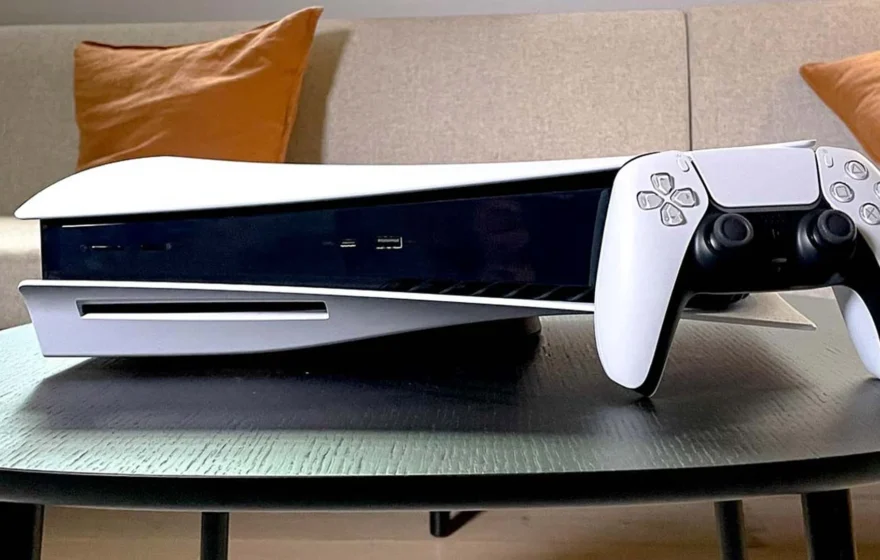
For millions of PlayStation owners, the disc in the box has always been more than a way to start a game. It is the reason they can afford to play at all. A disc can be bought second hand for a fraction of the launch price, swapped with a friend, or sold on once the final mission is done. From January 2028, Sony plans to take that option away, and experts say the players with the least money will feel it first.
Sony announced the change on July 1, 2026. From January 2028, every new PlayStation game will be sold in digital form only, through the PlayStation Store and through shops selling download codes instead of discs. Games released before that date are not affected, and earlier discs will keep working. The change covers new releases, not the disc drives already in people’s homes.
The numbers explain why Sony is moving. In the final quarter of its 2025 financial year, digital downloads made up 85 percent of full game sales across PlayStation 4 and PlayStation 5, leaving discs with 15 percent. Sony’s chief financial officer, Lin Tao, has described the shift to digital as the biggest reason behind the decision. Every game sold through Sony’s own store keeps far more of the money inside the company. Joost van Dreunen, a professor at New York University’s Stern School of Business, notes shops have historically taken 20 to 30 percent of the margin on a disc sale.
For players, the sums work the other way. A digital game has one price, set by the publisher, and it can never be resold. There is no cheaper used copy, no trade-in at the local shop, and no lending a game to a friend. That second-hand market is the quiet engine that keeps gaming affordable for lower-income players. When a new title costs several days’ wages, buying it used, or selling last year’s game to pay for this year’s, is often the difference between playing and not playing.
Nowhere is that likely to bite harder than in Africa, where digital-only gaming runs into problems that have little to do with taste and everything to do with infrastructure. The PlayStation Network, the online store every digital PlayStation game must pass through, is officially supported in only one African country, South Africa. That leaves players across the rest of the continent in an impossible position. Many register accounts using a foreign location and pay with international gift cards, breaking Sony’s own rules. Sony can suspend accounts created with false information, so years of purchases could vanish in a single decision.
Then there is the sheer size of modern games. Grand Theft Auto 6, due out on November 19, is expected to need a download of around 212 gigabytes. For a player in Nigeria, that download could cost 25 to 60 dollars in mobile data and take close to 13 hours at typical speeds. When the download alone costs more than some players spend on games in a month, an all-digital future stops sounding like progress and starts sounding like a locked door. Isa Muhammad, who runs Bijetic, a platform covering the games industry in Africa and the Middle East, told Decrypt the PlayStation 5 is already out of reach for most Africans.
The reaction has been loud. Shawn Layden, who once ran Sony Interactive Entertainment America, has publicly criticised the decision and questioned what players are actually buying when a game exists only as a licence on a server. More than 385,000 people have signed a petition calling on Sony not to kill the disc. PlayStation founder Ken Kutaragi has dismissed the anger, describing it as a mentality issue. Sony itself has not backed down. Sony has even argued in a California court that buyers do not really own the digital games they purchase. A disc is yours to keep, sell or give away. A digital licence can be changed, withdrawn or lost with the account that holds it.
Sony is not moving alone. The PlayStation 5 Pro arrived in 2024 without a disc drive at all, and shops that built their business on used games are already shrinking. Even the biggest release of the year is caught up in the change. Physical boxes of Grand Theft Auto 6 will reportedly contain only a download code rather than a disc, a sign of how far the shift has already gone before Sony’s deadline even arrives.
What happens next will be decided in part by whether Sony holds its nerve. There is no sign of a reversal. But the pressure is not going away, because the argument against discs was always about the average player. The average player buys games when they can afford them, shares them with friends, and sells them on to fund the next one. For that player, the disc was never nostalgia. It was the thing that made the hobby possible. If Sony’s digital future arrives without a cheaper way in, millions of them may simply stop playing, not because they lost interest in games, but because games stopped being something they could afford.
