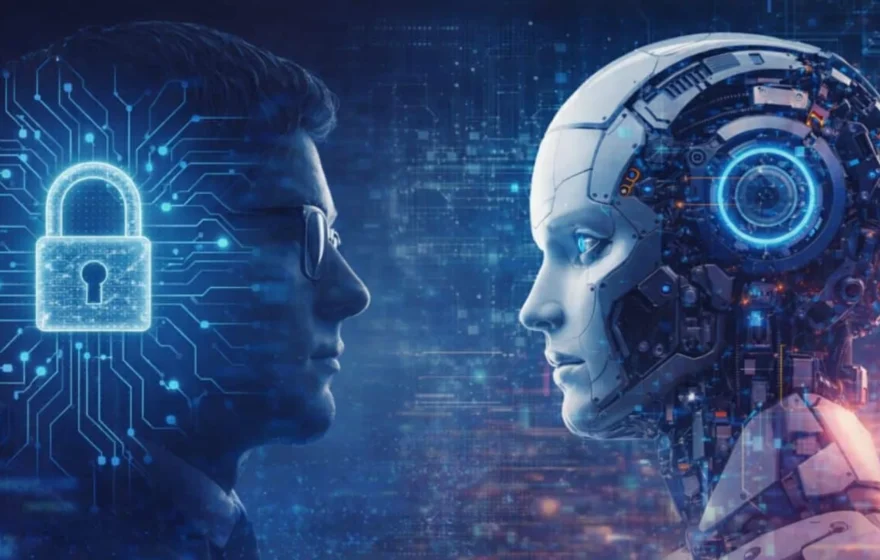
Artificial intelligence is changing how offices work across Pakistan and the Middle East and Africa. Staff now ask AI assistants to draft reports and handle routine jobs. Yet as these tools spread, the greatest danger to a company’s security may not come from a clever piece of malicious code. It may come from an everyday decision made by an ordinary employee.
Generative AI has widened the ground that companies must defend. Staff can use AI assistants for all sorts of tasks, often without knowing where the information they type in ends up. Criminals are using the same technology to sharpen their attacks. Phishing emails read more naturally, fake messages can impersonate a senior executive, and social engineering campaigns can be put together far faster than before.
Why staff awareness still matters most in the age of AI
Employees are often called the weakest link in cybersecurity, but the truth is more complicated than carelessness. People work under time pressure, juggle several applications at once and make quick decisions with incomplete information. When security procedures are confusing or feel disconnected from the way work actually gets done, even experienced professionals can put their organisation at risk without meaning to.
Reporting in Pakistan shows how wide the gap can be between written policy and everyday behaviour. A Kaspersky survey reported by Business Recorder in 2026 found that 8 per cent of the professionals asked said their organisations either had no cybersecurity rules or they did not know about them. The same report found 39 per cent considered workplace security rules excessive or not entirely appropriate. Simply writing policies, in other words, is not enough.
Awareness programmes therefore need to go beyond one presentation a year. Businesses should offer regular training, realistic phishing simulations and clear guidance on approved AI tools and sensitive data. Just as important, employees must know how to report something suspicious without fearing an unfair punishment. Real protection begins when people, policies and technical controls work as one system.
How companies can keep generative AI tools and data safe
Governing AI is becoming a practical business need rather than something to think about in the future. Organisations bringing in generative AI need to decide which tools staff may use, what information they may share and who is responsible for weighing up the risks. The danger is not only confidential information reaching a public AI platform. Weaknesses can also creep in through excessive permissions, insecure connections to other systems, unverified outputs and unauthorised access to company data. IT teams should start with visibility: knowing which AI tools are in use, where data sits and who can reach it, then enforcing least-privilege access and multifactor authentication.
Why managed IT services make security stronger
For many organisations, the problem is not a shortage of security technology but the resources needed to run it. Keeping skilled teams in place, watching infrastructure around the clock, managing several vendors and responding to incidents can strain an internal IT department. Managed IT services offer a different way of handling this, bringing professional services, infrastructure management and ongoing support under one consistent approach.
The real value lies in continuity. A security assessment can point out weaknesses, but those findings only matter if they lead to fixes. A new firewall can strengthen a network, but its worth depends on how it is configured, monitored and maintained. A capable partner can tie these jobs together, from checking the infrastructure to keeping it updated to agreed service levels. Internal teams remain essential for business decisions and risk ownership, while managed services supply expertise and capacity that organisations may struggle to maintain alone.
Bringing networks, DDoS protection and security operations together
Cybersecurity cannot be separated from the infrastructure behind daily business. Cloud applications, corporate networks, data centres, remote workers and connected devices form one linked environment, and trouble in one part can quickly reach the others. Visibility across the network matters for spotting unusual traffic and seeing how an incident might spread.
Distributed denial-of-service attacks present another threat, potentially knocking digital services offline and hitting customer access and revenue. Protection must combine prevention, rapid detection and effective mitigation, with infrastructure, networking and security working together under clear ownership. One firm active in Pakistan and the region, Beyond Technology, works with partners including HPE, Nokia and Corero in this area.
Choosing a long-term technology partner for business continuity
Picking a managed services provider is, at heart, a choice about how well a business can keep running when things go wrong. Technology leaders should look beyond product lists and ask whether a potential partner grasps what the business is trying to achieve, what systems it already runs, where its risks lie and where it plans to grow. That assessment should cover working across vendors, documenting the environment, setting measurable service levels and supporting incident response.
Staying safe in the AI era will take more than better software or better-trained staff. It will require organisations to combine responsible use of technology, effective governance, resilient infrastructure and continuous operational oversight. Building resilience means addressing the human decision, the overlooked configuration and the unmonitored system together.
