
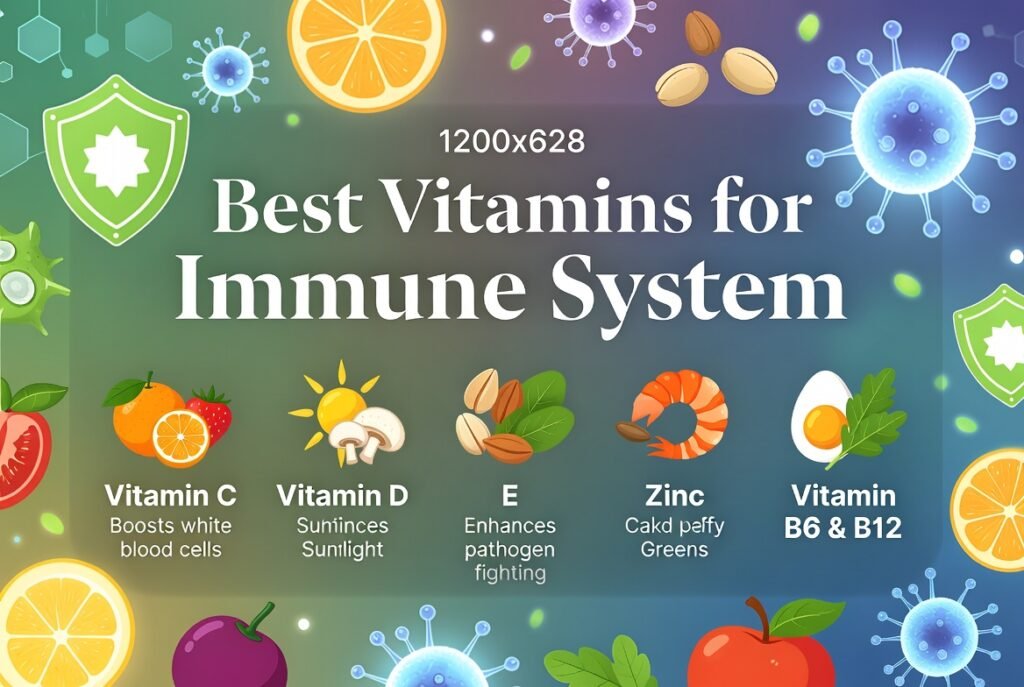
Go stand in front of the immune-support shelf at any pharmacy sometime. It’s a lot — gummies stacked next to mega-dose tablets next to powders claiming they’ll “supercharge” you by tomorrow morning. Most of that is marketing wearing a lab coat, honestly. But there’s real research underneath it, and a handful of vitamins actually do something measurable for your immune system. Worth knowing which ones, instead of just grabbing whatever’s got the biggest “IMMUNE BOOST” font on the label.
Vitamin C — Yes, the Obvious One, But It Earns It
Everyone names vitamin C first when you ask about immunity, and that’s not just habit. It’s an antioxidant, so it helps fight off the oxidative stress behind a lot of inflammation, and it’s involved in building blood vessels, cartilage, muscle tissue. Research has tied vitamin C deficiency directly to a higher chance of getting sick.
Here’s the thing people get wrong though — your body can’t make vitamin C itself. None of it. So it has to come in steadily, through food or a supplement, not just the second you feel a sore throat starting. Citrus, bell peppers, strawberries, broccoli — any of those work fine if you’d rather skip pills entirely.
Vitamin D Might Matter More Than People Think
D gets filed under “bone health” in most people’s minds, but its role in immune function is honestly just as big a deal, maybe bigger. A 2023 review found vitamin D affects at least five different immune cell types — neutrophils, macrophages, and the T cells that regulate the whole immune response.
The annoying part is how many people are deficient without ever knowing it — especially anyone stuck indoors most of the day, or living somewhere that doesn’t see much sun. Low vitamin D has been connected to a higher risk of respiratory infections. If you go the supplement route, get D3, not D2 — research shows D3 works better. Fatty fish, beef liver, mushrooms, fortified milk or cereal, all help close the gap too.
Zinc Deserves Way More Attention Than It Gets
Zinc kind of flies under the radar next to vitamin C, which feels backwards once you look at what it actually does. Anti-inflammatory, antioxidant, and some researchers have started calling it the immune system’s “gatekeeper” — which sounds dramatic but isn’t far off.
Timing’s the key thing here, more than with most vitamins. Zinc can genuinely speed up cold recovery, but mainly if you take it right when symptoms start — not three days into already feeling awful. One catch: too much zinc tends to cause stomach cramps, so this isn’t a “more is better” situation at all.
A and B6 — The Two Nobody Talks About
These two basically never come up in conversation, but they’re quietly doing real work. Vitamin A supports white blood cells and the mucus membranes lining your lungs, intestines, and urinary tract — your body’s first barrier against infection, essentially.
B6 helps produce both white blood cells and T cells, the ones directly responsible for taking on viruses and bacteria. Neither one really needs a supplement bottle — leafy greens, poultry, bananas, fortified cereal, that covers most of it.
And Then There’s Vitamin E… Which Is Complicated
This one’s not a simple yes. Vitamin E is a strong antioxidant, no argument there, and it does support T-cell function. But the research backing up vitamin E supplements specifically? Shakier than people assume. Some experts actively advise against taking vitamin E as a supplement, citing limited evidence of real benefit and a chance it could even cause harm in some cases. Probably safer to just get it from nuts, seeds, leafy greens — skip the capsule.
One Honest Note on Supplements Generally
Worth saying plainly: more isn’t automatically better here, and “over the counter” doesn’t mean zero risk. Around 23,000 ER visits a year get traced back to supplement use. Usually that’s people stacking too many things at once, mixing supplements with medications they’re already on, or just assuming “natural” can’t possibly do harm. It can.
If your normal diet already includes fruit, vegetables, lean protein, whole grains — you might genuinely not need much extra. Supplements tend to matter most when there’s an actual gap to fill. Someone who’s vitamin D deficient, say. Or someone going through a stretch of high stress or illness where the body could use real backup.
So What’s the Actual Takeaway?
No vitamin flips some switch that makes you immune to getting sick. That’s just not how any of this works, regardless of what the bottle says. What the research does support is more modest, but still useful — a handful of nutrients working together. Vitamin C, D, zinc, A, B6, each one playing a supporting role rather than acting as some magic fix on its own. Food first. Supplements only where there’s a real, specific gap. And a quick check-in with your doctor before adding anything new, especially if you’re already on other medication.
Questions People Tend to Ask
Is one vitamin more important than the rest? Not really, no. Vitamin C and D come up most in research, but neither one works alone — they’re part of a system, not standalone fixes.
Can you get everything from food? For a lot of people, yeah, if the diet’s already decent and varied. Someone with limited sun exposure or a restricted diet is more likely to actually need supplementing.
Does taking more always help? No — zinc’s a good example of where that backfires, since high doses cause real side effects, and a few of these vitamins just stop doing anything useful past a certain point anyway.
Can supplements make up for bad sleep or a generally poor diet? Not really. They’re meant to support the basics, not stand in for them.