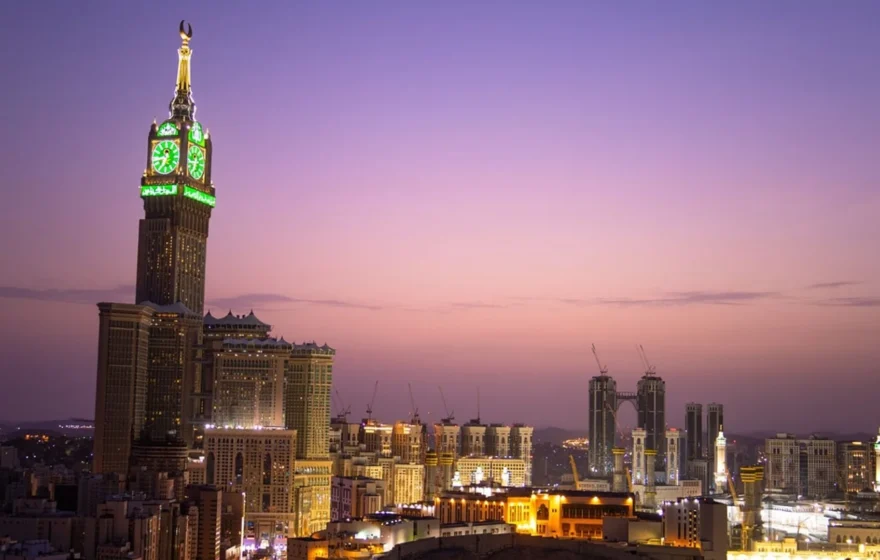
The Mecca Clock Tower has secured two Guinness World Records, adding a fresh distinction to one of the most recognisable landmarks in the Muslim world and to the skyline that rises beside the Grand Mosque. The Royal Commission for Mecca City and Holy Sites announced the recognition on Tuesday, 17 November 2026, confirming that both the tower’s museum and its outdoor observation deck have been entered in the record books for their remarkable height. The announcement was welcomed in Saudi Arabia as a mark of the city’s architectural ambition and of the care now being given to the places that millions of pilgrims pass through every year.
According to Guinness World Records, the two records were officially achieved on 5 January 2026, although the formal announcement from the Saudi authorities came more than ten months later, on 17 November. That gap is not unusual for records of this kind, where verification, measurement and documentation take time before a public announcement is made. The royal commission, which oversees development in the holy city, said the recognition reflected its wider work to develop Mecca’s architectural and cultural landmarks, to improve facilities for residents and visitors, and to make the experience of pilgrims richer and more comfortable.
The first of the two records belongs to the Clock Tower Museum, which sits 426.875 metres above ground. Guinness World Records has recognised it as the highest museum inside a building anywhere in the world. Visitors who make their way up to it are not simply entering an exhibition space; they are stepping into a museum suspended hundreds of metres above the streets of Mecca, with the holy city spread out far below them. The museum explores the history of timekeeping, astronomy and the measurement of the hours, subjects that have long mattered deeply in Islamic life, where the five daily prayers are tied to the movement of the sun.
The second record belongs to the tower’s outdoor observation deck, which stands 560.875 metres above ground. It has been recognised as the highest outdoor observation deck of its kind in the world. The distinction matters because an outdoor deck is a very different experience from an enclosed viewing gallery. Standing in the open air at that height gives visitors a direct and unfiltered view of Mecca and of the Grand Mosque below. From there they can look out over the mosque and its courtyards, over the streets and hotels that serve pilgrims, and over the hills that ring the city.
Both attractions sit within the Abraj Al-Bait Clock Tower, the tall tower that forms the centrepiece of the Abraj Al-Bait complex beside the Grand Mosque, Islam’s holiest site. The complex is one of the tallest building developments in the world, and its clock tower dominates the approach to the mosque. For pilgrims arriving in Mecca, the tower is often one of the first landmarks they see, and its great clock face has become a familiar guide for prayer times across the city. It has come to stand as a symbol of modern Mecca alongside the ancient sanctity of the Grand Mosque itself.
The royal commission said the achievements reflected its efforts to develop the city’s landmarks and to improve the experience of the millions of pilgrims who visit Mecca each year. That work sits within a much wider programme of change in Saudi Arabia. Under Vision 2030, the Kingdom’s long-term plan for economic and social reform, Mecca and Medina have been a central focus, with investment in transport, accommodation, crowd management and visitor services designed to make pilgrimage safer, smoother and more welcoming. The aim is to allow more pilgrims to perform Hajj and Umrah while preserving the sanctity and dignity of the holy sites.
For pilgrims, the practical improvements matter as much as the records themselves. Better facilities, clearer walkways, modern transport links and well-managed viewing spaces all help people who may be elderly, travelling with children, or visiting for the first time. The museum and the observation deck add a cultural and educational dimension to a visit that is otherwise centred on worship. They give pilgrims and other visitors a place to pause, to learn and to look out over the city they have travelled so far to reach.
The commission also said it aimed to highlight Mecca’s historical, scientific and architectural heritage and to strengthen the city’s position as a global religious and cultural destination. That ambition goes beyond tourism in the usual sense, because Mecca is not a conventional visitor destination; it is a city whose meaning is religious first and foremost. The two records therefore carry a meaning that goes beyond the numbers themselves. The heights of 426.875 metres and 560.875 metres are striking, and they will be quoted in guidebooks around the world, but they also point to a broader effort to present Mecca as a city that honours its past while building confidently for the future.
