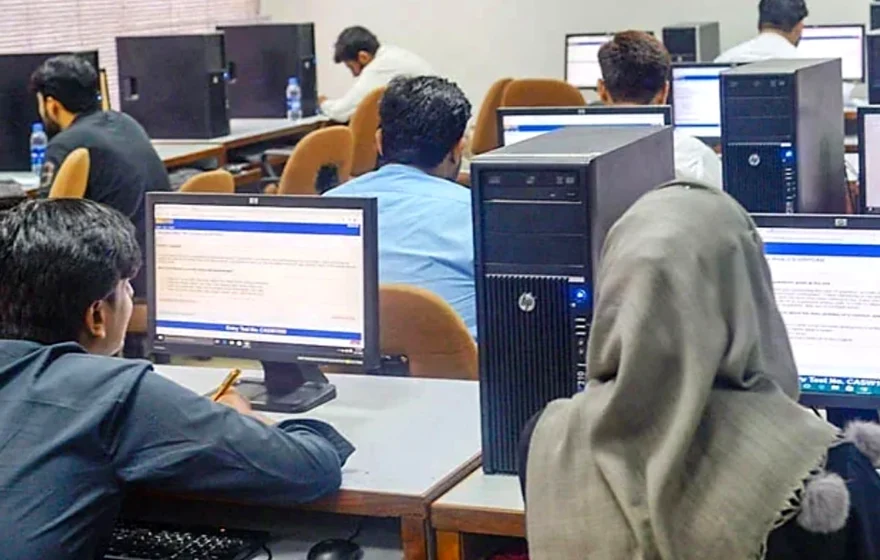
Punjab has set itself one of the most ambitious youth targets in the province’s recent history, with Chief Minister Maryam Nawaz Sharif directing that one million young people receive skills training over the next three years. The target was fixed at a meeting chaired by the chief minister on Sunday, where officials briefed her on training programmes already running and new ones planned. It reflects a simple reality in Pakistan’s largest province: every year, hundreds of thousands of young people leave school and college looking for work, and the difference between a job and a long spell of unemployment often comes down to whether they hold a skill an employer needs.
The meeting approved a series of new institutions designed to widen that choice. Punjab will establish its first modern Woodworking Centre of Excellence, for a trade long reliant on informal apprenticeship. Alongside it, centres of excellence will be created for electrical work, vehicle technology and digital marketing, fields where demand for trained workers is growing quickly. Certification programmes for agriculture and heavy machinery operators were also approved, recognising that modern farming and construction require operators who understand machinery, safety and maintenance.
Language skills, often the quiet barrier between a trained worker and a better-paying job, received particular attention. The chief minister approved a programme under which courses in 13 languages will be offered, a move aimed at young people seeking work abroad as well as those dealing with international clients from home. Punjab’s first cleaning and cleaner academy was also approved, providing professional training in healthcare, hospitality and domestic services. The academy is a reminder that dignified, skilled work is not confined to factories and offices: hospitals, hotels and homes all need trained staff, and professional standards in cleaning and care work can raise both earnings and the quality of service.
Behind the new announcements sits a programme that has already reached a considerable scale. Officials told the meeting that skills training had been completed for 400,000 young people in the province, with more than 45 per cent securing employment and many others choosing to continue their education. That figure matters because it suggests the new million-person target is an expansion of something already working, rather than a promise built from nothing. The employment outcomes reported were striking in their breadth. A total of 90,029 trained young people found work in local industries, 53,509 took up self-employment, and 38,557 obtained jobs abroad, while another 39,325 chose to continue studying.
The sector-by-sector breakdown shows where the jobs are coming from. About 113,333 young people completed training in manufacturing, with more than 50,000 securing immediate employment. In information technology, 111,607 received training and 49,588 were earning through employment. Agriculture and livestock training reached 23,269 people, of whom 10,033 found jobs, while construction training reached 27,069, with 12,026 employed. The energy sector trained 35,227 people and placed 15,651 in work, and hospitality and tourism courses trained 15,319, with 6,807 securing immediate employment.
Women’s participation featured prominently in the briefing. Under the Empowering Women through Information Technology Programme, 3,000 women in rural areas are now earning from home after completing their training. The department also gave industry, management, teaching and skills-upgradation training to 15,065 teachers and staff members, recognising that training quality depends on the people delivering it.
The wider programme surrounding the new target adds further depth. Officials have previously outlined upgrades to 220 computer laboratories, 100 industrial stitching labs, 70 solar labs and 27 healthcare labs, along with virtual reality welding and electric vehicle laboratories. Under the Mahir programme, 25,000 young people are to be trained in industrial clusters in Lahore, Faisalabad, Sialkot, Gujranwala and Multan, while the Global Rozgar programme aims to train another 25,000 for the business process outsourcing sector. An advance technology programme will provide international certifications to 7,500 people, and a Rs2.6 billion Haryali programme will train 20,000 young people in agriculture and green environment-related fields.
Inclusion is built into the design. Programmes for transgender persons have already trained 2,474 people, and a separate initiative aims to provide skills training to 10,000 people with disabilities. Meanwhile, 69 Technical Education and Vocational Training Authority institutions will train 45,700 young people every year in line with the European Qualifications Framework, a standard intended to make Pakistani qualifications more recognisable abroad. That ambition was illustrated by a trainee electrician from a technical college in Punjab who secured fourth position at the WorldSkills competition in Shanghai.
The test of the new target will not be the announcement but the delivery. Training one million people in three years means enrolling, teaching, examining and placing roughly 900 people every single day, without letting quality slip. Employers will need to help design courses so certificates match real vacancies, and centres will need instructors and equipment that keep pace. If those pieces fall into place, the programme could change a generation’s prospects in Punjab; if not, the province risks producing certificates without jobs. For now, the direction is clear: Punjab is betting skilled hands and trained minds are the surest route to employment and a stronger economy.
