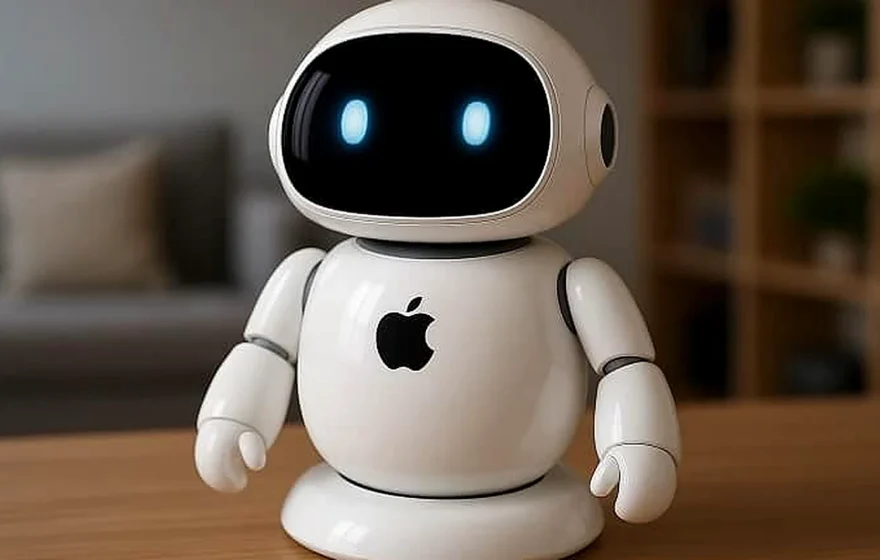
Apple is reportedly working on a robot that could fold laundry on its own, taking over one of the most repetitive chores in the home. According to a new report from The Information, the iPhone maker is experimenting with robots built for ordinary household work, and folding clothes is among the tasks under consideration. The idea is easy to picture: a machine that picks up a shirt, a towel or a pair of trousers, recognises what it is holding, and folds it neatly without a person guiding every movement.
At the same time, Apple has not announced such a product, has not shown a working version to the public, and has not given a price or a release date for a laundry-folding machine. The project remains experimental, and such projects often change direction or disappear before they ever reach a shop shelf.
A Robot for One Job: Folding Clothes
Apple is reportedly exploring robots that handle specific household chores rather than attempting to build one machine that can do everything. One project is focused on folding laundry, a task that sounds straightforward until the engineering behind it is considered. A robot that folds clothes must recognise the item in front of it, pick it up without tearing or tangling it, and then manipulate a soft, flexible object into a neat shape. Unlike a rigid object such as a book, fabric bends, stretches and changes shape as it is moved.
That flexibility is what makes laundry so difficult for machines. A shirt left in a pile does not present itself in the same way twice, and a person solves these problems almost without thinking, using sight, touch and years of habit. A robot must be taught to do the same. The Information reports that Apple’s robotics team is investigating machines capable of completing such everyday tasks. A robot devoted to folding clothes could in principle be easier to develop than a humanoid robot expected to perform many household activities, because its world is smaller and its goal is clearer. It does not need to walk up stairs or open doors. It needs to handle laundry, and handle it well. Even so, the report does not explain how Apple’s machine works, how far development has progressed, or whether a functioning prototype has been demonstrated. It is also unclear whether Apple intends to release the device commercially at all.
Robots That Follow You Around the House
Alongside the laundry-folding machine, Apple has reportedly explored other robotic products for the home. One concept involves a robot on wheels that could follow users as they move between rooms. Another involves a small flying robot designed to operate indoors. Such devices could eventually provide assistance around the home, although their exact capabilities remain unclear.
According to the report, Apple’s robotics efforts are being led by longtime executive Kevin Lynch, and executive John Ternus is reportedly particularly interested in robots that can perform useful household tasks. However, these projects are still being explored, and there is no guarantee that any of them will become commercial products. That uncertainty is normal for early-stage work, but none of these concepts should yet be treated as a confirmed part of Apple’s future range.
The $1,000 Tabletop Robot Tipped for 2027
Apple is also developing a more advanced smart home device that could be called HomeView Ultra. Unlike the laundry-folding robot, this product is reportedly further along in development, and it is the device most likely to reach customers first. It is expected to feature a 9-inch touchscreen mounted on a motorised robotic arm, allowing the display to rotate and turn toward users as they move around a room.
Its design has reportedly been compared to Apple’s old iMac G4 and the animated desk lamp featured in Pixar’s branding. The device is also expected to use cameras and sensors to understand its surroundings, for example turning on lights when someone enters a room, while helping prevent the arm from hitting nearby objects. Apple reportedly wants to price the device at approximately $1,000, well above ordinary smart displays.
Why Software, Not Hardware, May Hold Things Back
Although much of the smart home robot’s hardware has reportedly been ready for around two years, Apple is still facing software-related challenges. According to The Information, the company’s hardware and software teams have disagreed about which features should be included in the first version. The hardware team reportedly wants to release the product sooner, while software developers have pushed for additional development time.
Apple initially designed the device primarily for video calls, but its plans became more ambitious as the company began exploring additional artificial intelligence capabilities. The software team has reportedly considered focusing the first-generation model on basic features, including FaceTime calls and simple home automation. Apple is currently targeting a 2027 launch, although the release could be delayed until 2028. Meanwhile, the laundry-folding robot, the wheeled robot and the indoor drone have no confirmed launch schedules. The laundry robot is therefore best seen as a sign of where Apple is looking, not yet as a promise of what it will sell.
