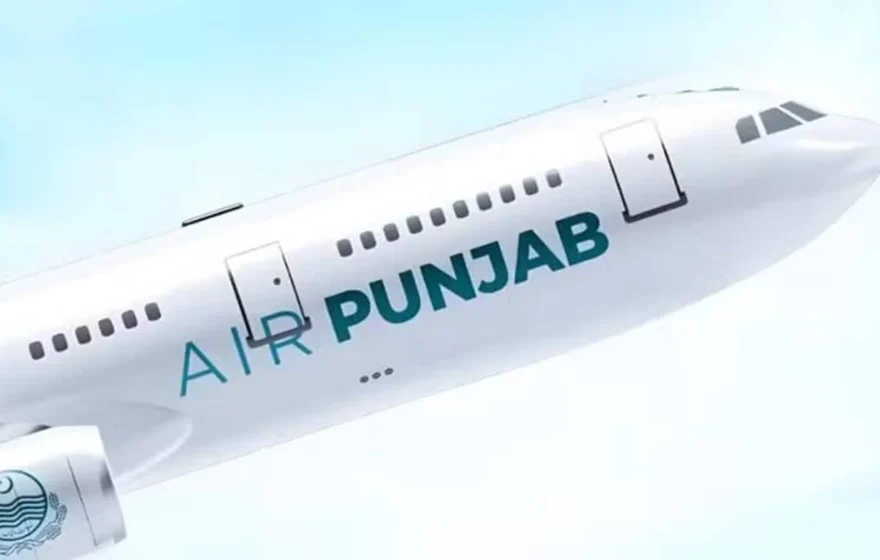
The Punjab government has firmly rejected suggestions that Air Punjab, its planned provincial airline, has been abandoned. Officials say the project is still active, even though progress has slowed, and they insist that work to bring the airline into service is continuing behind the scenes.
The clarification came from Punjab Transport Secretary Imran Sikandar Baloch, who addressed the speculation directly. He said the government has no intention of cancelling the airline and that the delays seen so far should not be mistaken for a decision to shelve the project. For a venture that has attracted attention ever since it was first announced, the statement was meant to draw a clear line between a slow start and a dead project.
According to Baloch, two major pressures have held the project back: the conflict between Iran and the United States, which has added uncertainty to the wider region, and the ongoing oil crisis, which has pushed up costs across aviation. Fuel is one of an airline’s largest expenses, so volatile oil prices make fleet planning and ticket pricing far harder, and for a new airline that has not yet flown a commercial passenger, that instability is a strong reason to move carefully rather than rush into service.
Despite those pressures, Baloch said one important regulatory step has already been completed: Air Punjab has obtained a licence from the Civil Aviation Authority, which oversees aviation safety and operations in Pakistan. No airline can carry passengers without satisfying the regulator on safety, maintenance, crew training and operational procedures, so securing the licence means the project has passed a formal hurdle many proposed airlines never clear, even if it is not yet ready to fly.
The next step, Baloch confirmed, is already under way. The government is in the process of leasing aircraft, and it plans to bring in six aircraft in the initial phase. Leasing, rather than buying outright, is the route most new airlines take, because it avoids the enormous upfront cost of purchasing jets and gives flexibility if demand on a route grows or weakens. Lease agreements still take time to negotiate, however, and lessors examine an airline’s business plan, management team and regulatory standing closely before handing over aircraft.
Air Punjab was approved by Punjab Chief Minister Maryam Nawaz Sharif as part of a broader effort to improve air connectivity within the province and to give travellers more affordable options. The idea of a provincial airline is unusual in Pakistan, where aviation has traditionally been dominated by the national carrier and private airlines operating nationally. Supporters argue it could open up routes larger carriers overlook, bring down fares through competition and create jobs in aviation and tourism. Critics, by contrast, ask whether a provincial government should run an airline at all, and whether public money could be better spent elsewhere.
The project first took shape in April 2025, when the chief minister announced plans for a provincial carrier that would begin with domestic flights and expand later. A meeting chaired by her in October 2025 then directed that the project be made operational at the earliest and settled on Lahore to Islamabad as the first corridor, a practical choice for a new carrier: the route is short and busy, making it a useful testing ground for schedules, crew rotations and airport procedures before more destinations are added.
Preparations have also extended to leadership. The government has begun recruitment for key management positions, including a chief executive officer, a chief operating officer and a chief financial officer. Those appointments are critical, because an airline depends on tight coordination between operations, safety, finance and commercial planning, and a credible management team is something regulators and lessors examine closely.
What happens next will depend on how quickly the leasing process can be completed and how the wider environment develops. If oil prices settle and regional tensions ease, the case for launching becomes stronger, because fuel costs become more predictable and lessors and insurers become more willing to commit. If, on the other hand, volatility continues, the government may have to choose between waiting for calmer conditions and launching with higher costs that would have to be passed on to passengers or absorbed by the airline.
There is also a broader question about what Air Punjab is meant to achieve. If it succeeds, it could give Punjab’s travellers, businesses and tourists a new option and put competitive pressure on existing carriers on domestic routes, and it could serve as a model, or a warning, for other provinces considering similar ventures. If it stalls, it will join a long list of ambitious transport projects announced with confidence but never reaching the runway. That is why the latest statement matters: by confirming the project remains active, a licence has been secured and six aircraft are to be leased in the first phase, officials are trying to show Air Punjab is still moving, even if more slowly than hoped. The real test, however, will not be another statement. It will be leased aircraft arriving, crews being trained and a first flight taking off from Lahore to Islamabad.
