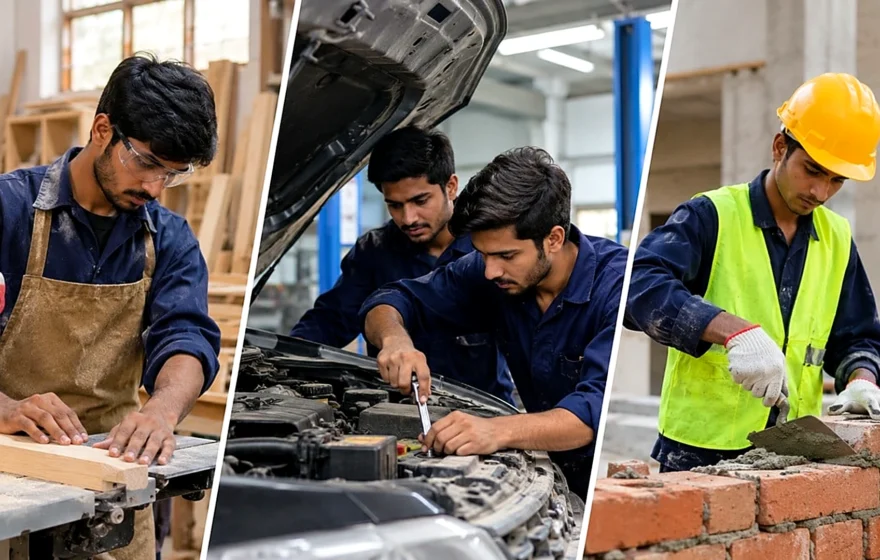
Lahore is set to gain three modern technical training centres after the Punjab Provincial Development Working Party approved projects worth more than Rs2.94 billion for Shahdara, a move aimed at giving young people formal, practical skills in trades that have long been learned informally on the job.
The approval covers a Centre of Excellence in Advanced Automotive Technologies, a Modern Woodworking Service Centre and a Centre of Excellence for the Construction Sector. Together, the three facilities are meant to move training in these fields beyond the traditional apprenticeship, where a young worker learns by watching a carpenter, a mason or an auto mechanic at work, and into structured courses built around modern machinery, current techniques and recognised standards of workmanship.
For the young people the scheme is designed to serve, that difference matters. Informal learning can produce a skilled worker, but it rarely comes with a certificate, a planned curriculum or exposure to the newest equipment. A centre that teaches advanced automotive technology, for example, can train students on the diagnostic tools and electronic systems found in modern vehicles, rather than only on the mechanical skills that older vehicles required. A woodworking centre equipped for modern production can teach precision cutting, finishing and machine safety alongside traditional joinery. A construction centre can combine practical site skills with an understanding of materials, measurements and safe working practices. In each case, the aim is a worker who can be hired on the strength of demonstrable skill, not only on the word of a single employer.
The provincial working party’s decision also puts a clear financial shape on the plan. The three projects together carry an estimated cost of more than Rs2.94 billion, and Rs566 million has been allocated for them in the current fiscal year’s budget. The Punjab Finance Department has been directed to release the funds for the approved projects, which is the practical step that turns an approval on paper into buildings, equipment and staff. How quickly the centres open will depend in large part on that release, and on the procurement of machinery and the recruitment of instructors who can teach at the level the centres promise.
The choice of Shahdara is itself significant. The area sits on Lahore’s industrial edge, close to workshops, small factories and construction activity, and a training centre there can draw students from working neighbourhoods while staying within reach of the employers who may eventually hire them. If the centres build links with local industry, students could move from classroom training into placements and then into jobs, and employers could help shape courses so that graduates arrive with the skills workshops actually need.
The initiative is also framed around incomes. The provincial plan holds out the prospect that young people equipped with modern technical skills could earn hundreds of thousands of rupees, a substantial improvement on the uncertain earnings of unskilled or semi-skilled work. That promise will ultimately be tested by the labour market: whether graduates find steady work, whether employers value the new qualifications, and whether the training keeps pace with changing technology. A centre that teaches today’s machines but fails to update its courses will quickly fall behind, so the real test of the scheme will come years after the buildings open, in the employment records of its first batches of students.
There is a wider context, too. Pakistan’s workforce is young, and every year large numbers of young people enter a job market that cannot absorb them all into government service or white-collar work. Technical and vocational training is one of the few routes that can prepare them for work that exists in every city: vehicles that need repair, buildings that need to be built and maintained, and furniture and fittings that need to be made. Investment in that kind of training is therefore not a side project but a central part of any employment strategy, and the Shahdara plan should be judged on whether it delivers skilled workers at scale, not only on whether three buildings are completed.
For now, the approval is the starting point rather than the finish. Funds must flow, construction must follow, and courses must be designed and staffed. If those steps are carried through, Lahore could soon have three institutions that give its young people a structured path into skilled trades, and give its workshops, builders and manufacturers a steadier supply of trained workers. If the follow-through falters, the approval will remain an announcement. The coming months, as the Finance Department’s release of funds is acted upon, will show which of those two outcomes the province is heading towards.
