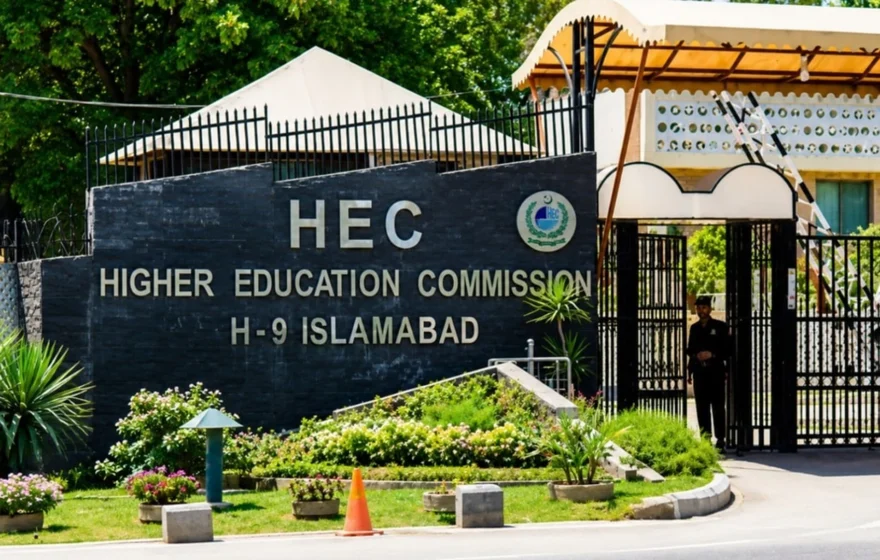
The Higher Education Commission has announced a revised admission procedure for students from Balochistan and the former Federally Administered Tribal Areas who want to study medicine or dentistry in the academic session 2026-27. Students applying under the commission’s scholarship project for these regions must now apply directly to the medical or dental university of their choice, rather than going through the commission for a place.
The change applies to students seeking MBBS and BDS admissions under the project titled Provision of Higher Education Opportunities for the Students of Balochistan and Erstwhile FATA (Phase-III). The respective universities will now handle admissions, seat allocations and placements themselves, in accordance with the seat allocations approved by the Pakistan Medical and Dental Council and the applicable rules.
The commission was clear about what it will and will not do under the new arrangement. It will continue to provide financial assistance to candidates selected through its prescribed merit-based scholarship process, but it will not be responsible for admission, seat allocation or placement in any medical college or university. That division of responsibility is the heart of the announcement.
The distinction matters because the two processes now run separately. Selection for a scholarship does not automatically guarantee admission to an MBBS or BDS programme, and admission to a university does not automatically qualify a student for scholarship funding. A student could win a place but receive no financial help, or win a scholarship but hold no place, and either outcome would leave them unable to start their studies.
The scholarship project aims to give students from Balochistan and the former tribal areas the chance to study in institutions in other provinces, with the commission paying their tuition fees and other living expenses. According to the commission’s own guidance for the Phase-III project, there are 1,000 scholarships available, shared equally between students from Balochistan and students from the former FATA. Ninety percent are reserved for students who completed their intermediate education inside Balochistan or the tribal districts, and ten percent for those who studied outside those areas. Applicants must be no older than 22 years on the closing date, must have at least 60 percent marks in FA, FSc, ICom, ICS, DAE or an equivalent qualification, and must hold a valid domicile of Balochistan or the former FATA. Applications are submitted online, with a non-refundable fee of Rs. 500.
The announcement comes against a background of confusion over medical seats for these regions. The Ministry of National Health Services recently clarified that 333 additional MBBS and BDS seats for students from Balochistan and the former FATA, granted under the Prime Minister’s Scholarship Scheme, were approved only as a one-time arrangement for one academic session, with no extra allocation granted for the next session. The ministry disclosed this during a Senate question session, after the commission had asked for additional seats and then for the allocation to be increased to 500. The council eventually approved 333 seats, divided equally between Balochistan and the former FATA, over and above the approved strength of the institutions, on the condition that the institutions enhance their infrastructure and teaching capacity. The episode showed how easily seat allocations for these regions can become a matter of dispute.
The universities themselves have also been announcing their own quota seats and deadlines. The University of Health Sciences in Lahore, for example, has announced admissions for 252 reserved MBBS and BDS seats in public medical and dental institutions across Punjab for the 2026-27 session, including seats under the commission’s scholarship categories. According to reports, candidates from Balochistan, the former FATA, Islamabad, Azad Jammu and Kashmir and Gilgit-Baltistan may apply, with a valid MDCAT result required at a minimum of 55 percent for MBBS and 50 percent for BDS, and admissions decided on a weighted merit formula giving 50 percent to MDCAT scores, 40 percent to intermediate marks and 10 percent to matriculation results. MBBS registration was reported to open on October 26 and close on November 9, 2026, with BDS registration to follow in December. Students must now track these separate university deadlines themselves, because there is no single closing date for every institution under the new procedure.
For students and their families, the message is straightforward. Anyone interested in MBBS or BDS admission under the Phase-III project should visit the official admission portal of their preferred medical or dental university, read its announcement carefully and meet all of its eligibility criteria and procedural formalities. A scholarship application to the commission is not the same as a university application, and students should not wait for the commission to place them.
The clarification should remove a long-standing source of confusion, but it also shifts more responsibility onto applicants who are often far from the universities they hope to join. Students from remote districts of Balochistan and the former tribal areas will need clear, timely information from each university before deadlines close. If the universities publish that information clearly, the new procedure could work smoothly; if they do not, the students the scholarship was created to help may be the ones who miss out.
