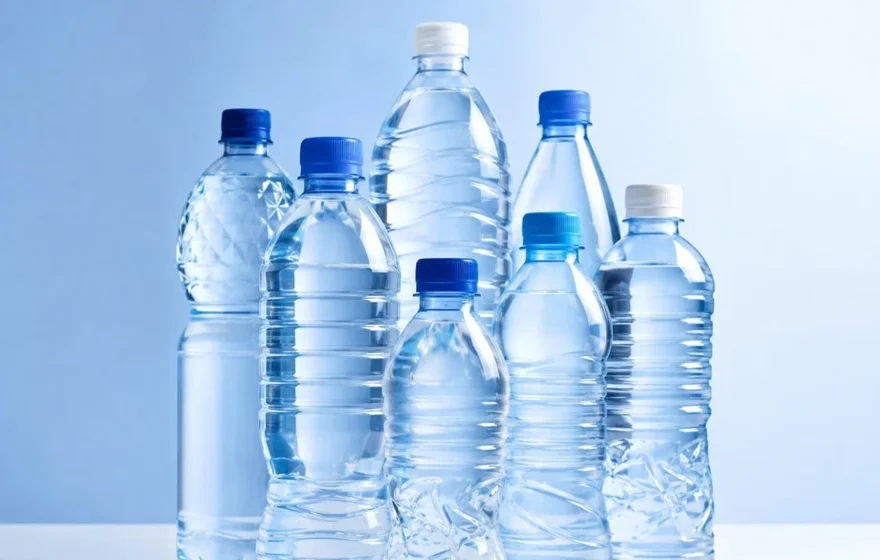
The Pakistan Council of Research in Water Resources has declared 27 bottled and mineral water brands unsafe for human consumption, after laboratory tests found chemical and bacterial contamination in samples collected from shops across the country. The findings come from the council’s quarterly monitoring report for July to September 2026, and they serve as a fresh warning for millions of households that depend on bottled water every day.
Under the monitoring programme, the council, known as PCRWR, collected samples from 223 bottled water brands in 20 cities and tested them against the quality standards set by the Pakistan Standards and Quality Control Authority. Of those brands, 195 met the safety requirements. The remaining 27 did not: six failed the chemical tests, while 22 were found to carry microbiological contamination, and at least one brand failed on both counts.
The chemical failures were led by excessive sodium. Three brands, Aab-e-Haram, AB-Blue Water and HR Water Healthy Life, were found to contain sodium at levels of between 94 and 164 parts per million, far above the permissible limit of 50 parts per million. High sodium in drinking water is a particular concern for people living with high blood pressure and kidney problems.
The larger problem, however, was bacteria. Twenty-two brands were found to be contaminated with bacteria, making them unsafe to drink. The brands named in the report are Aab-e-Haram, Imperial Pure Drinking Water, Aab-e-Makuran, Water Verse Purified, Jel Bottled Drinking Water, Sip Bottled Drinking Water from Malir in Karachi, Sip Bottled Drinking Water from Shahdra in Lahore, AB-Blue Water, HR Water Healthy Life, Safi Bottled Drinking Water, Pure Aqua Tech Bottled Drinking Water, Akwafine Bottled Drinking Water, Water Time Bottled Drinking Water, Al Saha Drinking Water, Aab-e-Hayat, K and S Aqua Sea, JERS Safe Life, Athar Premium, Aqua Dor, HHG Sweets and Bakers, Drinkly, One Flow Bottled Drinking Water, Premium Safa Purified Water, Xalmi Pure Mineral Water, New A2Z Bottled Water, Fresh Smart Pure Water and Aqua Indus. Several of these names have appeared in earlier PCRWR reports, which suggests that some bottlers have not fixed the problems found in previous rounds of testing.
The samples were drawn from Islamabad, Rawalpindi, Peshawar, Multan, Quetta, Karachi, Lahore, Gilgit, Muzaffarabad and Sukkur, along with ten other cities. The spread matters because bottled water is sold everywhere in Pakistan, and a brand bottled in one place can end up on shelves hundreds of kilometres away.
This is not a one-off exercise. The federal government directed PCRWR to monitor bottled water brands every quarter and to publish the results so that the public knows what it is drinking. The council has published these reports four times a year since 2005. The full report is available on the council’s website, where anyone can check whether the brand they buy has passed or failed.
The latest figures also show a small improvement. In the previous quarter, from April to June 2026, the council tested 230 brands and found 29 of them unsafe, while in the first quarter of the year, 35 of the 228 brands tested were declared unsafe. The number of unsafe brands has therefore fallen from 35 to 29 and now to 27, although more than one in ten brands still fails the tests.
The reports attract so much attention because bottled water is not a luxury in Pakistan. In many areas tap water is unsafe, so households buy bottled water instead. An earlier PCRWR survey of water sources in 29 cities found that only 39 per cent of the 435 sources tested were safe to drink, so when the water people pay for is also contaminated, families are left with very few safe choices.
Bacterial contamination in drinking water can cause stomach infections, diarrhoea and other waterborne illnesses, which spread quickly in households where the same water is used for drinking and cooking. Children and older people are the most vulnerable. Chemical contamination is quieter but no less worrying, because it builds up over time and is impossible for a consumer to detect at home without laboratory testing.
The council has advised the public to check its report before buying bottled water and to avoid the brands that have been declared unsafe. Buyers can also look for the registration and licence details printed on the bottle, buy from shops they trust, and check that the seal is intact before opening a bottle. The reports are published so that consumers can make an informed choice, and so that regulators can take action against the bottlers that repeatedly fail.
For the companies named in the report, the consequences go beyond a bad quarter. A brand that appears on the unsafe list loses the trust of its customers, and repeated appearances can finish a small bottler altogether. Until enforcement keeps pace with the size of the market, the PCRWR report will remain the main protection that ordinary buyers have.
