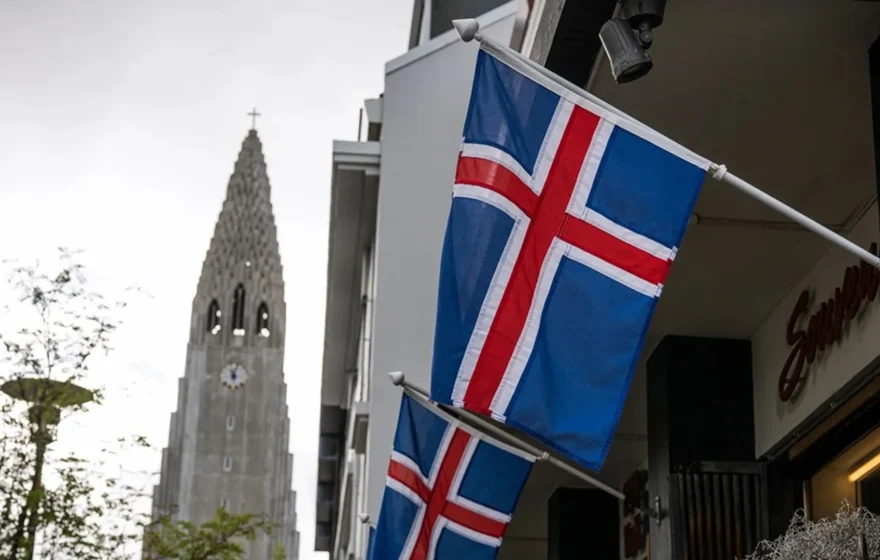
Iceland has announced new rules that allow international students holding a valid residence permit to work in the country without obtaining a separate work permit, a change that removes one of the biggest practical barriers for foreign students who need to support themselves while they study.
The change follows amendments to the Icelandic Act on Foreign Nationals and the Foreign Nationals’ Right to Work Act, approved by Parliament on June 18, 2026 and in force since July 8, 2026. The Directorate of Immigration, which administers residence permits in Iceland, has confirmed the new rules and explained how they will work.
Under the revised rules, international students can work for up to 60 percent of full-time employment during the academic year. The limit applies to their total working hours across all employers, so a student working two part-time jobs must count the hours from both jobs together. The rule is designed to let students earn money while making sure that work does not take over from their studies.
Students can go beyond the 60 percent limit in three situations: full-time work during official academic breaks, including the summer and Christmas holidays, an internship or workplace training programme, or after graduating from an Icelandic university while remaining in the country to look for work.
Foreign nationals who have completed a doctoral degree in Iceland can renew a specialist residence permit for up to 12 months to seek employment related to their qualifications, and they do not need a work permit to obtain that permit. The provision is aimed at keeping highly qualified researchers and specialists in the country rather than losing them as soon as their studies end.
The freedom to work comes with tighter oversight. International students must provide their employment details whenever they renew their residence permits. Immigration authorities can request employment records at any time and can contact employers or public institutions to verify compliance, and students who exceed the permitted working hours could have their right to work reviewed or revoked, so keeping accurate records of hours worked is now essential.
On the academic side, students must complete at least 75 percent of a full-time course load in each academic year. Previously, this requirement applied only during the first residence permit renewal, but it will now be assessed at every renewal. A student who falls behind in their studies therefore risks not only their academic standing but also their permission to remain in Iceland.
The work permit change is part of a wider reform that also tightened several other conditions for international students. The post-study period during which graduates can remain in Iceland to look for work has been cut from three years to 18 months, so graduates must now secure a specialist job offer within that shorter window if they want to move onto a work permit route. The financial requirements have also been raised: students from outside the European Economic Area must now show monthly means of 259,951 Icelandic krona for an individual applicant and 415,922 krona for a married couple. Family reunification has been narrowed to spouses and children under 18, and responsibility for processing work permit applications has moved from the Directorate of Labour to the Directorate of Immigration.
Students thinking of applying should also understand how the residence permit itself works. Citizens of countries outside the European Economic Area and the European Free Trade Association need a residence permit for students from the Directorate of Immigration, and the paper application must arrive by May 1 for the autumn semester or October 1 for the spring semester. Applicants need admission to full-time university study, must be at least 18 years old, and must pay a processing fee of 70,000 krona. The permit lasts for up to one year and must be renewed. Students applying for their first residence permit may not start work until it has been issued, and self-employment is not allowed under the student work rules.
There is one more change on the horizon for prospective students. Public universities in Iceland may begin charging tuition fees to students from outside the European Economic Area from the autumn of 2027, which would add a significant cost to studying in a country that has previously been attractive partly because its public universities charged little or no tuition.
Taken together, the reforms send a mixed message. Iceland has made it much easier for international students to earn money while they study, removing the separate work permit that used to stand in the way of even a part-time job. At the same time, it has shortened the time graduates have to find work, raised the amount of money students must show, and made academic progress a condition of every permit renewal. For students who plan carefully, keep their grades up and use their working hours wisely, the new rules offer a genuine opportunity; for those who treat the right to work as a reason to put their studies second, they carry a real risk of losing the permit altogether.
