The United States is offering up to $20 million, along with possible relocation, for information about Iran’s nuclear programme, including the location of its facilities, the scientists working on it and any movement of those assets. The reward, advertised through the State Department’s Rewards for Justice programme and publicised by US Central Command on X, shows Washington still does not know the full picture of a programme it claimed to have destroyed more than a year ago.
The timing is what makes the announcement so awkward for the White House. In June 2025, President Donald Trump announced that American warplanes had obliterated Iran’s nuclear sites and called the operation a complete success. Seventeen months later, it is offering one of the programme’s largest rewards to anyone who can say where those sites are, what survives inside them and where the material has gone.
The reward notice appears on the Rewards for Justice website, which is run by the State Department’s Diplomatic Security Service. The programme has long paid for information on terrorism and other security threats, helping American agencies track down fugitives and uncover hidden plots. This time, however, the target is not a person on the run but a whole nuclear programme, and the questions Washington is asking suggest it is working with large gaps in its knowledge.
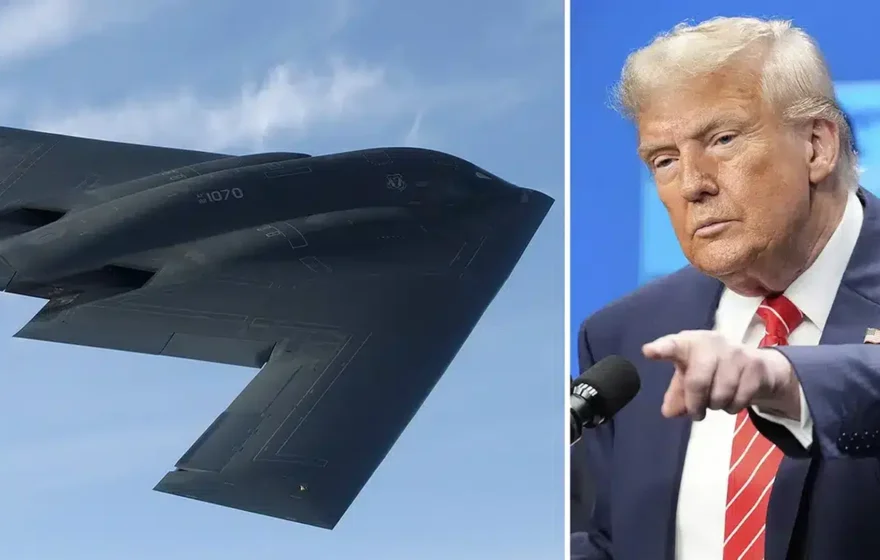
Those gaps begin with the strikes themselves. On the night of June 21 and 22, 2025, seven American B-2 stealth bombers flew from Missouri to Iran in an operation the Pentagon called Midnight Hammer, dropping fourteen 30,000-pound bunker-buster bombs on the buried enrichment plants at Fordow and Natanz, while a submarine fired more than two dozen Tomahawk cruise missiles at the nuclear complex at Isfahan. Satellite pictures showed damage at all three sites, and Trump declared within hours that they had been obliterated.
Yet almost from the start, the United Nations nuclear watchdog was more cautious. The International Atomic Energy Agency had reported in 2025 that Iran was enriching uranium to 60 percent purity, a short technical step from the roughly 90 percent needed for a nuclear weapon. Iran is the only country without nuclear weapons known to produce uranium at that level. Before the bombing began, the agency estimated that Iran held about 440.9 kilograms of uranium enriched to 60 percent, a stockpile that could in theory yield material for around ten weapons, far above the 3.67 percent limit of the now-defunct 2015 nuclear deal.
The question ever since is what happened to that stockpile. The agency has said it lost what it calls continuity of knowledge over centrifuges and other key components, meaning inspectors can no longer say where the material is or whether any of it has been moved. Its inspectors were withdrawn for their own safety when the attacks began in June 2025 and have not carried out normal inspections since. In a report dated September 1, 2026, the agency said it could not establish the stockpile’s current size, composition or location, and its director general, Rafael Grossi, told the Security Council in late October that it still could not confirm no safeguarded material had been diverted.
Grossi also said the agency had found no sign of repair or reconstruction at any of the facilities damaged in the strikes since June 2025. Verification work has continued at Bushehr, the one site where inspectors still have a presence. The agency has also said it has no credible evidence of a coordinated Iranian nuclear weapons programme. In September, its board voted 23 to 3 to refer Iran’s case to the Security Council over its failure to cooperate with safeguards, the first such referral in twenty years.
Against that background, the reward looks less like routine intelligence gathering than an attempt to fill a hole that bombing and satellite surveillance could not. Washington is asking not only where facilities are, but also about the people and the movement of equipment, suggesting concern that material or machinery may have been shifted before the bombs fell or in the confusion that followed. Some analysts concluded the strikes effectively destroyed Iran’s centrifuge enrichment programme, yet the fate of the enriched uranium has remained uncertain, and it is that uncertainty the reward is aimed at.
There are other signs of the nervousness. Iran has been distributing iodine tablets near Bushehr, a precaution taken when people fear radiation exposure, and reports have suggested Trump is weighing further military action. A reward of this size also tells anyone inside Iran with knowledge of the programme that the United States will pay handsomely and offer a new life elsewhere for information.
What happens next depends on whether the offer produces anything useful, and on whether Iran lets inspectors back into sites shut to them for more than a year. If tips arrive, Washington may finally answer the question the bombing left open. If they do not, the reward may be remembered as the moment the White House’s June 2025 story quietly fell apart, a reminder that destroying buildings from the air is not the same as knowing where the material inside them has gone.
