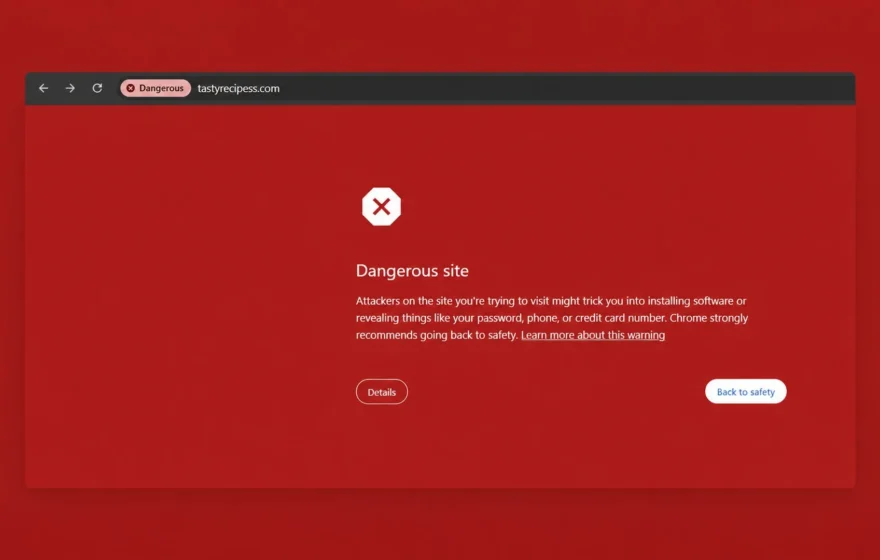
Pakistan’s telecom regulator has identified hundreds of online traps aimed at ordinary internet users, from fake websites and harmful mobile apps to bogus social media accounts built to steal personal information. The Pakistan Telecommunication Authority, known as the PTA, says it found and processed 586 malicious online sources over the course of a single year, a figure that shows how routine online fraud has become for people who simply browse, shop, chat and bank on their phones.
The numbers come from the authority’s Cyber Security Annual Report for 2025-26, which covers the twelve months from July 2025 to June 2026. In that period the regulator dealt with 152 dangerous website links, 48 malicious mobile apps and 386 suspicious social media accounts and pages. More than six in every ten of the sources flagged during the year were accounts or pages on social platforms.
The pattern behind the figures is familiar, but it is worth spelling out because the tricks keep working. A fake website can look almost identical to a bank, a courier service or a government portal, and it exists to persuade a visitor to type in a password or a card number. In each case the deception depends on the victim trusting what is on the screen, and that trust is exactly what the criminals are counting on.
Major Risks Involved
According to the report, many of the threats detected during the year involved fake websites, impersonation, phishing scams and the spread of harmful online content. Impersonation sits at the heart of most of these schemes. Criminals pretend to be legitimate individuals or organisations. A message that appears to come from a bank, a relative or a government office carries a weight that a message from a stranger does not, and that borrowed authority is what turns an ordinary message into a successful fraud.
Phishing, in particular, is designed to trick people into revealing sensitive information through fake messages, websites or other online sources. A victim might receive a text about a parcel delivery, a warning that an account will be closed, or a link to claim a refund, and each of those messages creates a small sense of urgency that pushes the person to click before thinking. Social media was one of the major sources of these threats, and that is no accident. Platforms where millions of people already share their lives and their trust make an ideal hunting ground for anyone who knows how to imitate a familiar face or a well-known brand.
September Saw the Most Threats
The report also shows that the danger was not spread evenly across the year. The PTA reported that September 2025 had the highest number of malicious online sources detected during the year. The authority did not explain in the report why that particular month stood out, but the spike is a reminder that online threats come in waves.
The authority identified these threats through its National Telecom Security Operations Centre, known as nTSOC, which continuously monitors online activity to detect suspicious websites, accounts, applications and other cybersecurity risks. The monitoring covers the regular internet, social media platforms and the less accessible parts of the online world, including deep web and dark web forums where stolen data is traded and new scams are planned before they ever reach the public. The purpose of this monitoring is to identify threats before they can cause further harm to citizens, government organisations and telecom infrastructure.
PTA Steps Up Cybersecurity Monitoring
The PTA said it has strengthened its systems for identifying and analysing online threats, and the report describes a process that continues after a threat is first spotted. After detecting suspicious activity, the authority assesses the potential risks and shares relevant information with other organisations to support preventive action. It also issues cybersecurity advisories and works with telecom operators, the National Cyber Emergency Response Team, known as National CERT, and other stakeholders. The regulator watches the networks, the operators control the connections, the emergency response team coordinates the national reply, and the advisories carry the warnings out to the public.
According to the report, these efforts are aimed at detecting cyber threats earlier, preventing potential attacks and improving the security of Pakistan’s internet and telecommunications infrastructure. The ambition is clear, and it is a realistic one. No monitoring system can catch every fake link or every bogus account, and the criminals will keep changing their methods, but earlier detection means fewer victims, faster warnings and a smaller window in which a scam can spread.
For ordinary users, the lesson of the report is a simple one, and it does not require any technical knowledge. A message that creates urgency, a link that arrives out of nowhere, or a page that asks for sensitive details should all prompt a pause rather than a click. Checking the sender through a separate channel, typing a web address directly instead of following a link, and never sharing passwords or one-time codes are habits that cost nothing and defeat most of the tricks described in the report.
