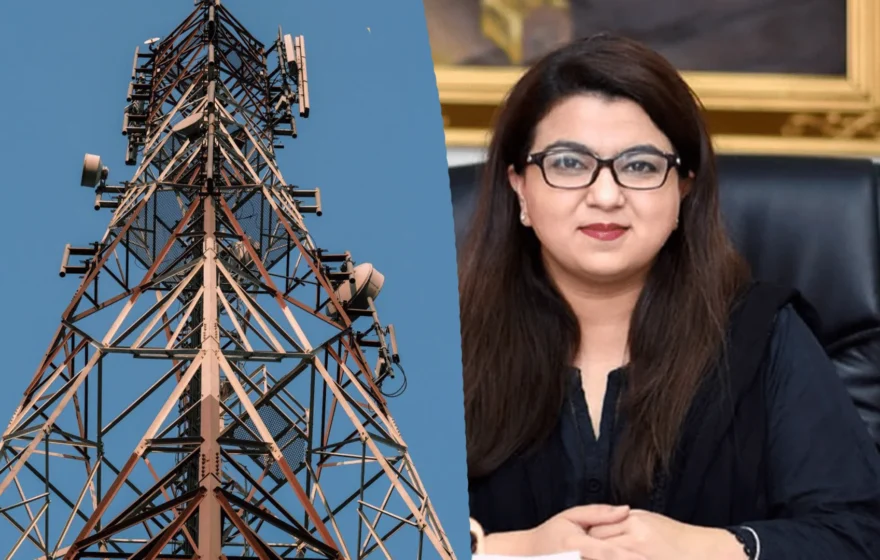
Internet speed in Pakistan has risen by 60 per cent over the past two and a half years, and fibre-optic connectivity has doubled in the same period. The claim comes from the Federal Minister for Information Technology and Telecommunication, Shaza Fatima Khawaja, who was speaking at the Margalla Dialogue on Tuesday. Her message was a confident one. The country’s digital foundations, she said, are stronger than they were, and the improvements are the result of deliberate investment in cables, fibre, spectrum and new mobile technology rather than a single lucky break.
The headline figure is only part of the picture. The minister said internet data usage in the country had risen by two terabits per second, bringing total live internet capacity to about seven terabits per second. Capacity is the amount of data the network can carry at any given moment, and a larger capacity means the system can cope with more users streaming, calling, working and studying online at the same time without slowing to a crawl. That headroom matters when millions log on at once.
Two new submarine internet cables have been added to improve the country’s international connectivity, and the fibre-optic network inside Pakistan has grown from three million connections to more than six million. Submarine cables are the undersea links that carry almost all of a country’s international internet traffic, so adding two of them gives Pakistan more routes to the rest of the world and more resilience if one route fails. The doubling of fibre connections is the domestic half of the same story. Fibre carries data far faster and more reliably than the older copper lines it replaces, and every home or business that moves onto fibre takes pressure off the rest of the network.
The minister also pointed to the largest spectrum auction in the country’s history, in which 480 megahertz of spectrum was offered, raising the total available spectrum from 274 megahertz to more than 750 megahertz. Spectrum is the radio frequency that mobile networks use to carry calls and data through the air, and more of it means mobile operators can serve more customers at higher speeds. The jump from 274 to over 750 megahertz is a large one, and it is the foundation on which the next generation of mobile services will be built. That next generation has already begun to arrive. Fifth-generation mobile services, known as 5G, have launched in Pakistan, with around 1.8 million users already subscribed. The early subscriber figure is modest, but 5G is now a service real customers pay for.
On artificial intelligence, the minister struck an optimistic note. She said AI could become a 4.8 trillion dollar global economy by 2033, and that it would transform jobs rather than eliminate them. Her argument was that people who learn to use AI could become up to 100 times more productive than others with similar skills, which would put a premium on learning the new tools rather than fearing them. The claim about a hundredfold gain in productivity is a bold one, and it should be read as the minister’s case for embracing the technology rather than as a measured forecast, but the direction of her argument is clear enough. The workers who gain the most from AI, in her telling, will be the ones who learn to work with it, not the ones who stand aside from it.
She stressed that people need to acquire new digital skills to stay competitive as AI adoption increases, and that point connects directly to the infrastructure story. Faster internet, more fibre and more spectrum create the conditions for a digital economy, but they do not by themselves create the workforce that can use it. Skills are the missing link between the network and the jobs, and the minister’s emphasis on learning suggests the government sees training as part of the same project as laying cables and auctioning spectrum. She said the government is committed to advancing the Digital Nation Pakistan vision and expanding the country’s digital infrastructure, a programme that aims to bring government services, businesses and citizens onto a common digital footing.
The overall picture the minister painted is one of rapid, broad-based improvement, and the figures she quoted support that reading as far as they go. Speed up by three-fifths, fibre connections doubled, capacity up by two terabits per second, spectrum nearly tripled and 5G under way is a substantial list of gains for two and a half years. What the figures do not show, and what will decide whether the improvement is felt by ordinary users, is how evenly those gains are spread. A faster national average can sit alongside slow connections in smaller towns and rural areas, and a 5G launch can matter little to someone whose neighbourhood has no fibre at all. The test of the Digital Nation vision will therefore not be the next set of national figures, but whether the speed, the fibre and the new services reach the places and the people who have waited longest for them.
