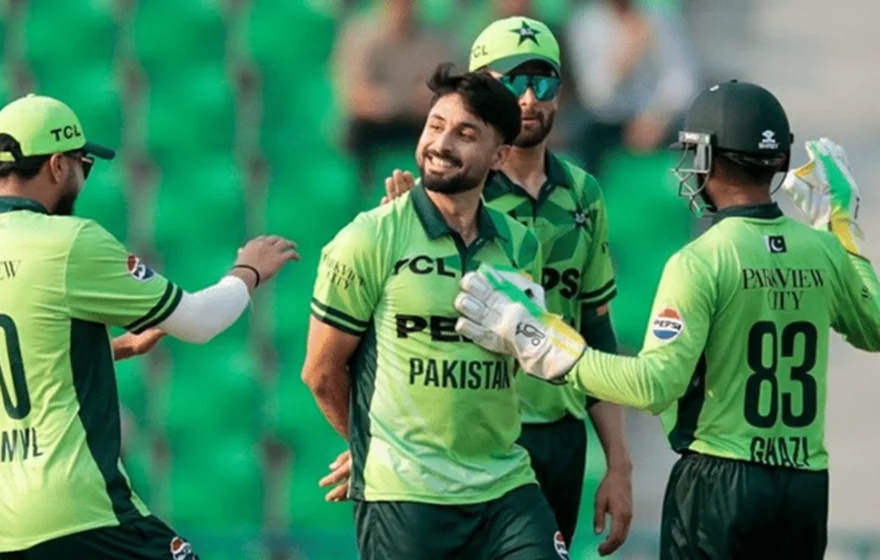
Pakistan now has two bowlers among the top five in the world in one-day international cricket. Abrar Ahmed and Shaheen Shah Afridi have both secured places among the leading five ODI bowlers in the latest rankings released by the International Cricket Council, while several other national players have also improved their positions. It is a striking show of strength from Pakistan’s bowling attack, and it underlines where the team’s greatest quality lies at a time when the batting order is still searching for consistency.
Abrar moved up one place to third with 642 rating points, overtaking New Zealand captain Mitchell Santner in the process. Pakistan’s ODI captain Shaheen Afridi also climbed one spot to share fourth position with Santner, with both players holding 621 points. The latest rankings were updated following the conclusion of the tri-series involving England and Sri Lanka and the ongoing ODI series between New Zealand and India, and they reflect the weight of recent performances in matches that mattered. Afghanistan’s Rashid Khan continues to lead the bowling rankings with 760 points, followed by South Africa’s Keshav Maharaj in second place with 660 points, so the two Pakistanis are chasing a pair of outstanding bowlers, but the gap to the top is not so large that it cannot be closed with a strong series.
The rise of Abrar has been one of the more interesting stories of Pakistan’s recent white-ball cricket. A mystery spinner is a rare and valuable thing in the modern game, and Abrar’s variations have troubled batters who are used to picking conventional spin with ease. His climb to third in the world is a reward for consistency rather than a single spectacular performance. Shaheen, meanwhile, is a more familiar figure at the top of the rankings, and his return to the top five is a reminder of what he brings when he is fit and in rhythm. A left-arm fast bowler who swings the new ball and strikes early is the most prized asset in one-day cricket.
Among the other Pakistani bowlers, Haris Rauf retained 24th position with 540 points, while Naseem Shah remained 55th with 472 points. Arafat Minhas, however, dropped two places to 73rd, a reminder that the rankings move in both directions and that a quiet series can cost a player ground.
In the batting rankings, Babar Azam remained Pakistan’s highest-ranked player, retaining ninth position with 661 points, while Salman Ali Agha held 13th place with 622 points. Fakhar Zaman climbed one spot to share 36th position with New Zealand’s Glenn Phillips, with both players on 548 points. Mohammad Rizwan also moved up one place to 43rd with 532 points. Saim Ayub recorded the biggest improvement among Pakistani batters, jumping four places to 64th with 468 points, while Shadab Khan gained one position to reach 92nd with 398 points. India’s Shubman Gill retained the top spot with 822 points, followed by New Zealand’s Daryl Mitchell and India’s Virat Kohli, who hold 794 and 781 points respectively.
The batting picture is less encouraging than the bowling one, and the numbers make that plain. Babar’s ninth place keeps Pakistan represented in the top ten, but no other Pakistani batter sits in the top twelve, and the gap between Babar and the next Pakistani is a reminder of how much the batting has depended on one man. Saim Ayub’s four-place jump is the brightest spot, suggesting a young opener finding his feet in the format, and Fakhar’s steady climb shows the value of experience. But the batting unit as a whole has work to do if it is to match the standard the bowlers are setting.
In the all-rounders’ rankings, Pakistan’s Salman Ali Agha and Shaheen Afridi retained their positions at 13th and 16th respectively. Arafat Minhas climbed two places to 31st with 143 points, while Naseem Shah moved up one spot to 41st. Abrar Ahmed also gained one position to reach 46th with 129 points. Shadab Khan and Haris Rauf remained tied at 54th, while Saim Ayub retained 58th position. Mohammad Nawaz climbed two places to 95th with 90 points. Afghanistan’s Azmatullah Omarzai continued to lead the all-rounders’ rankings with 359 points, followed by Zimbabwe’s Sikandar Raza in second with 288 points and Afghanistan’s Mohammad Nabi in third with 251 points.
The rankings matter because they shape how teams are seen and how players are valued, but they are also a snapshot, not a verdict. They move with every series, and a strong performance against a top side can lift a player several places in a single update, just as a poor one can drag him down. For Pakistan, the message of this update is clear. The bowling is world-class, with two men in the top five and a supporting cast that is holding its ground. The batting is competitive but short of the very best, with Babar carrying the flag and Saim Ayub offering hope for the future. If the batters can catch up with the bowlers, Pakistan will have a one-day side to be reckoned with.
