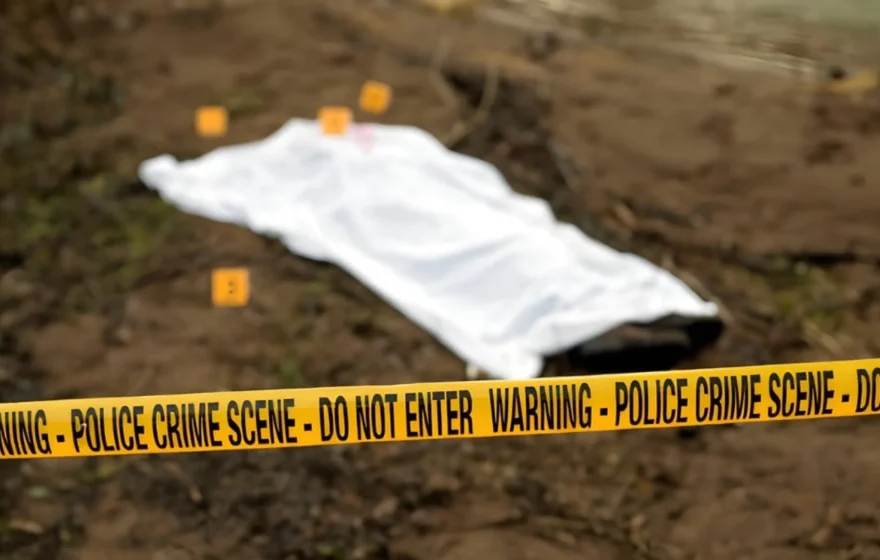
Two people, including a passer-by who had nothing to do with the quarrel, were killed on Tuesday when a dispute over a TikTok video turned into an exchange of gunfire between two rival groups in the Majoki area of Charsadda, within the limits of Parang police station.
Police identified the dead as Adnan, the son of Tariq and a resident of Parang Majoki, and Asghar Ali, who was passing through the area when the firing began and was caught in the crossfire. Both men died from bullet wounds, and the firing spread panic as residents rushed indoors.
In her statement to the police, Adnan’s mother, Zakia Begum, said she was standing with her sons, Waqar and Adnan, when the suspects arrived at the scene. She named Hilal, Babu and Asif’s wife among those who came to the spot, and said they opened fire on her family. Adnan was hit and died from his injuries. Zakia Begum told the police that an earlier dispute over a TikTok video was the reason behind the attack.
A second account came from Saleem Jan, the brother of the passer-by Asghar Ali. He told the police that his brother had simply been walking through the area when the two groups began firing at each other, and that he was struck by bullets meant for someone else. Saleem Jan said his brother had no part in their dispute.
Police have registered cases on the statements of both parties and have launched an investigation into the incident. Officers are working to establish the exact sequence of events, including who fired first and where the video at the centre of the dispute came from. No arrests had been reported by the time the details of the case were made public.
The Charsadda shooting is not an isolated incident. It follows a grim pattern that has repeated itself across Pakistan through the year. Only two days earlier, three people were killed and one was injured in Bannu, after an argument over a video shared on social media escalated into a shooting. In Peshawar in April, a young man named Irfan was killed and seven others were injured in Yakatoot after heated exchanges over TikTok videos led to firing. In Rawalpindi in July, Ali Raza was shot dead in Lal Kurti, allegedly for posting videos on TikTok. Two people were killed in Sargodha in January after a quarrel over recording a TikTok video, and in Bhakkar in May, two young men were killed and five were injured when a TikTok dispute turned into an armed clash.
The repetition of these incidents points to something larger than a single quarrel in Charsadda. TikTok is now one of the most widely used platforms in Pakistan. The platform has been banned four times since October 2020 over content concerns, with the last full suspension lifted in November 2021. Only last week, on November 5, the Pakistan Telecommunication Authority rejected a fake notification claiming the app was about to be banned. TikTok removed more than 23.2 million videos in Pakistan between April and June this year for breaking its community guidelines, with nearly 95 per cent taken down within a day of being posted.
That scale is part of the problem. A video that mocks, insults or threatens a rival does not stay between two people. It is shared, commented on and passed around, and every share adds an audience to what began as a private grudge. In communities where personal honour carries great weight, a public insult on a screen can feel impossible to ignore. Add to that the easy availability of firearms in many parts of the country, and a row that might once have ended with harsh words can now end with a funeral.
The Rawalpindi case shows how hard these disputes are to stop once they take hold. There, local elders arranged a jirga to settle the hostility between the two families, but one side refused to make amends, and the exchange of videos continued until it ended in a killing. Traditional mediation depends on both sides accepting the outcome, and it struggles when the quarrel lives online, where new videos can reopen the wound at any hour.
For the police in Charsadda, the immediate task is to trace the suspects, recover the weapons used in the firing and complete the investigation so that the case can be sent to court with solid evidence. Each side will present its own version of events, and the truth will have to be established through witnesses and forensic evidence. The death of Asghar Ali, a man with no part in the dispute, is likely to weigh heavily on how the case is pursued.
The wider lesson of the Charsadda shooting is that an online quarrel is no longer only an online matter. A video can be deleted, but the anger it creates does not disappear with it, and the consequences are felt by people who never appeared in the clip. Until disputes of this kind are settled early, whether by families, community elders or the police, the same story is likely to keep repeating itself.
