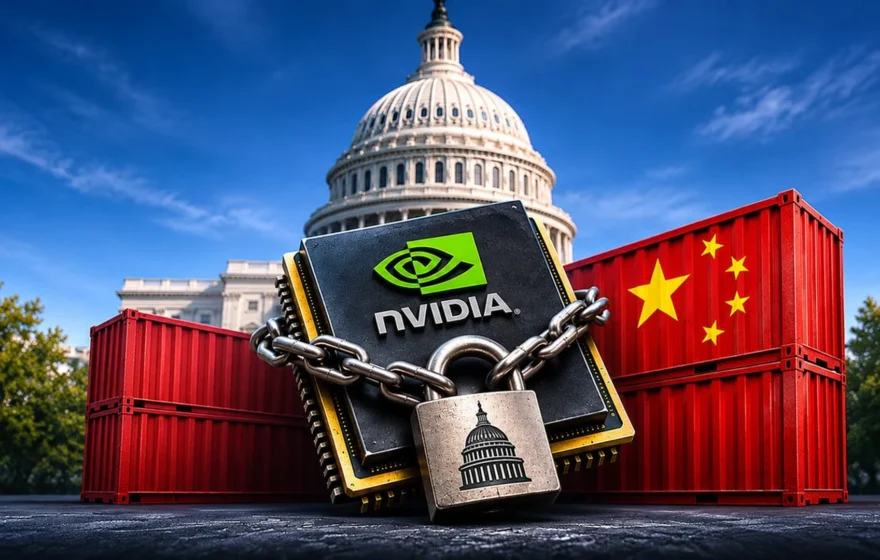
Lawmakers from both parties in the United States Congress are pushing for tighter restrictions on China’s access to advanced artificial intelligence chips, after the resignation of Nvidia chief executive Jensen Huang turned a long-running policy debate into a full-blown political scandal. House Speaker Mike Johnson told Reuters that support for tougher export controls was growing in Congress and that he personally backed limiting China’s access to advanced chips.
The push comes at a moment when the technology at the centre of the argument has become the most contested commodity in the world. Advanced AI chips power everything from chatbots and driverless cars to weapons systems and intelligence analysis, and whoever controls their supply holds a decisive advantage in the race to build the most capable artificial intelligence. Washington has spent four years trying to keep the most powerful of those chips out of Chinese hands, and the events around Nvidia have convinced many in Congress that the existing rules still leave too many gaps.
The Cloud Loophole
One proposal would close what lawmakers call the cloud loophole. The Remote Access Security Act would give the Commerce Department authority to restrict access to advanced American chips through overseas data centres, where Chinese companies can rent computing power without ever importing the chips themselves. A ban on shipping a chip to Beijing means little if a company in China can simply log in to a server abroad and use the same chip remotely.
Lawmakers introduced the bill in April 2025. The House of Representatives passed it by 369 votes to 22 on January 12, 2026, and the Senate referred it to its Banking Committee the next day, where it has remained stalled ever since.
Congress is also weighing other measures. Lawmakers want more oversight of the export decisions made by the Commerce Department, so that licences and exemptions cannot be granted without scrutiny. They want companies to be required to track their most advanced processors after sale, making it harder for chips to be diverted to banned buyers through intermediaries. And they want to press American allies to restrict the sale and servicing of chipmaking equipment destined for China. Some Republicans want the new restrictions written into the annual defence authorisation bill, which would make them far harder to delay or ignore.
Congress Wants Answers
Alongside the legislation, Congress wants answers from the people at the centre of the affair. Senate Banking Committee Chairman Tim Scott has asked Huang and Commerce Secretary Howard Lutnick to testify in public, ABC News reported. Scott requested that Huang appear on December 3 and warned that he could issue a subpoena if Huang declined. The Commerce Department said Lutnick had agreed to appear voluntarily.
Senate Minority Leader Chuck Schumer said Huang’s resignation did not end the need for Nvidia and the Trump administration to explain what they knew about the national security risks, The Verge reported. Democratic senators Elizabeth Warren and Chris Coons separately asked the administration to preserve records related to Nvidia’s chip exports and the reported intelligence operation.
Why Nvidia Is Under Scrutiny
Huang resigned on November 12 after reports of a relationship with Alice Huang, an executive at Nvidia partner Megaspeed, whom American authorities suspect of spying for Beijing. Huang acknowledged having an affair without identifying the other person, and Beijing denied that Alice Huang was a spy. American authorities also suspect Megaspeed of helping China obtain chips covered by export controls, Reuters reported.
The affair alone would have been a corporate scandal. The suspicion that a business partner of the world’s most important chipmaker may have been funnelling restricted technology to China turned it into a matter of national security, and that is why Congress is involved. Nvidia’s chips sit at the heart of the AI boom, and the company has spent years lobbying against the strictest controls, arguing that they cost American firms billions in lost sales. Critics of that position now say the scandal shows the risks were real all along.
The debate is not new. Washington first imposed sweeping controls on advanced chip exports to China in October 2022 and has tightened them in stages since, adding new categories of chips, new restrictions on chipmaking tools and new rules aimed at third countries used as transit points. Each round has been followed by reports of evasion, whether through smuggling, through front companies or through cloud services, and each report has produced calls for the rules to go further.
The stakes reach beyond the technology itself. For the United States, the controls are a bet that slowing China’s access to advanced computing will slow its military and intelligence capabilities while American firms keep their lead. For China, the restrictions are a spur to build its own chip industry faster, and Beijing has poured vast sums into domestic alternatives.
What happens next will be decided in the coming weeks. If the Senate moves on the Remote Access Security Act, and if the defence bill carries new restrictions, the legal landscape for AI chips will shift again. The testimony of Huang and Lutnick in December will show how much Congress already knows and how much more it intends to find out.
