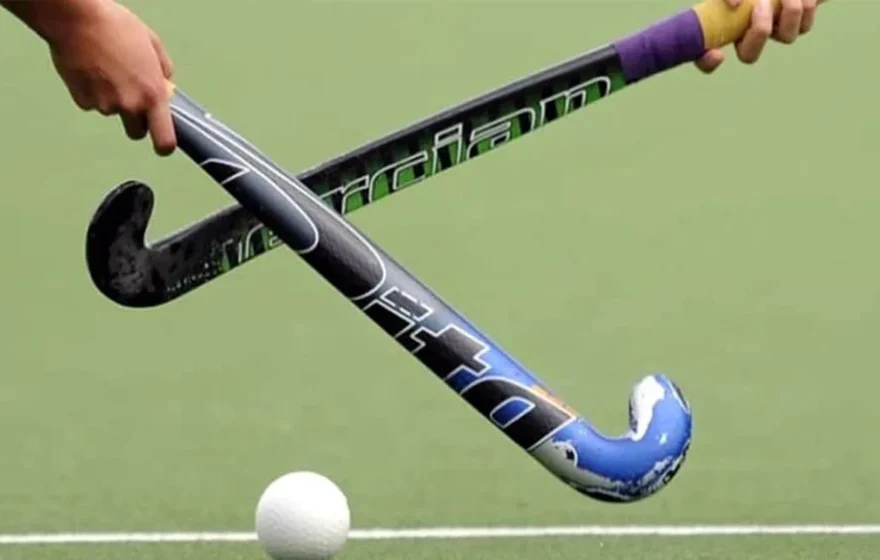
Iran’s men’s and women’s national hockey teams are likely to visit Pakistan in the coming weeks for joint training camps and practice matches. The Iranian Hockey Federation has expressed interest in sending both squads to Pakistan, where they would train and compete against Pakistan’s national teams in Islamabad. The proposal is still at an early stage, but it has caught the attention of hockey followers in both countries.
For Pakistan, the prospect of hosting an international side is significant in itself. Home international fixtures have been rare in recent years, and the national teams have often prepared for major events with limited exposure to foreign opposition. A visit from Iran would change that, even for a short period, by putting Pakistani players up against unfamiliar opponents in their own surroundings. For Iran, the attraction is equally clear. The country has been working to improve its hockey programme, and a tour would let its players train alongside Pakistani internationals.
Pakistan’s standing in world hockey gives the proposal its weight. This is a country that once ruled the sport, winning Olympic gold in 1960, 1968 and 1984, and lifting the World Cup four times, in 1971, 1978, 1982 and 1994. Those triumphs explain why Pakistan’s experience is valued by a developing hockey nation such as Iran. Yet the years since have been difficult. Funding has been tight, structures have weakened, results have slipped, and the national team has struggled to keep pace with the leading sides in Europe, Australia and Asia.
A joint camp in Islamabad would offer something practical in that direction. Training together, rather than simply playing a match and parting, allows coaches to share ideas and players to learn from each other. Practice matches would give selectors a chance to look at emerging players under pressure, and to see how they respond when the opposition is unknown and the contest is genuine. A player who looks strong in domestic hockey may struggle against an international side, while another may rise to the occasion in a way that training alone never reveals.
The inclusion of the women’s teams matters just as much. Women’s hockey in Pakistan is still developing, and it suffers more than the men’s game from a lack of regular competition. Domestic opportunities are limited, and international matches are rarer still, which makes it hard for players to gain the experience they need to improve. A visit by Iran’s women’s team would give Pakistan’s women players a chance to play international hockey at home and to build confidence in a supportive setting. It would also show that women’s hockey deserves the same attention as the men’s game.
Beyond the matches themselves, the proposal carries a broader purpose. Sport has long been a way for neighbouring countries to build trust, and hockey offers a natural bridge between Pakistan and Iran. Regular exchanges, joint training programmes and bilateral competitions can create relationships that last well beyond a single tour, linking federations, coaches and players. The initiative, if it goes ahead, could therefore strengthen sports diplomacy between the two countries, while helping to build stronger hockey ties across the region. In a part of the world where cricket dominates, a shared commitment to hockey shows that other games still have their place.
That wider promise should not obscure the fact that nothing has been finalised yet. The tour remains at the expression of interest stage, and several questions still need answers. Dates have not been announced, the length of the visit has not been confirmed, and the details of the camps and matches have still to be worked out. Until the two federations agree on a schedule, the proposal should be treated as a welcome intention rather than a settled plan. Promising ideas have been discussed before, only to fade away.
If it is confirmed, the tour could support Pakistan’s efforts to revive international hockey in a practical and visible way. Hosting a foreign side in Islamabad would show that Pakistan can stage international hockey, that its facilities are ready and that its teams are prepared to welcome visitors. It could also strengthen the country’s sporting connections, and help to establish Pakistan as a regional hub for the sport, a place where neighbouring teams come to train, to compete and to learn. For Iran, the visit would be a step forward in its own development, and a chance to return home with a clearer sense of what its players need to work on.
In the end, the value of the proposal lies in what it could start. A single tour will not transform Pakistan hockey, and it will not solve the deeper problems of funding and structure that have held the game back. But it would be a start, and a visible one. It would give players experience, coaches information and supporters something to look forward to. It would also promote friendship between two neighbouring countries through a sport that both value, and remind Pakistanis that their hockey heritage still matters, and that it can still be a foundation for the future.
