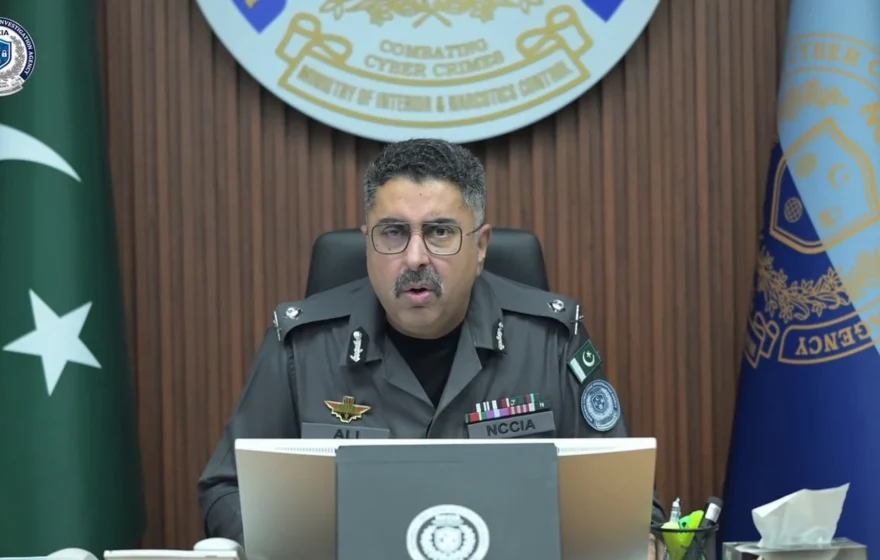
The National Cyber Crime Investigation Agency has issued a warning to social media users in Pakistan: organised campaigns and insulting posts targeting judges and the judiciary will not be tolerated, and those behind them will face the force of the law.
The message came from the agency’s Director General, Syed Ali Nasir Rizvi, in a video posted on the NCCIA’s official account on X on Friday, 21 November. In it, he said nobody had any permission to run negative propaganda about the judiciary, and questioned how anyone could publish a post about a judge as though it were acceptable behaviour.
Rizvi made clear that the warning was not aimed at any one group. It applies, he said, to people from every walk of life, and if anything written about the judiciary, or any other institution, breaks the law, the law will take its course.
Action Under PECA
Those who target judges online in breach of the law will be dealt with under the Prevention of Electronic Crimes Act, known as PECA, Rizvi said. He promised that the agency would pursue every available provision of the law against offenders, and urged people to think carefully before they post.
The provision most likely to be used is Section 26A, added to PECA by the amendment passed by Parliament in January 2025. It makes it an offence to deliberately spread information through an online system that a person knows, or has reason to believe, is false or fake, where it is likely to cause fear, panic, disorder or unrest among the public. The punishment is imprisonment of up to three years, a fine of up to two million rupees, or both. The offence is cognizable and non-bailable, which means officers can arrest without a warrant and bail rests with a court.
The same amendment created the Social Media Protection and Regulatory Authority, a body empowered to order the removal or blocking of unlawful content. Anyone harmed by false information can apply to it, and the authority is required to pass an order within twenty-four hours. Appeals against its decisions go to a tribunal.
A New Agency With a Wide Remit
The NCCIA itself is a relatively new institution. It was created to replace the Federal Investigation Agency’s Cyber Crime Wing, taking over all cybercrime investigations across the country and operating under the Ministry of Interior. The agency registers and investigates complaints ranging from online fraud and harassment to data theft, and runs a round-the-clock helpline, 1799, alongside an online complaints portal.
Rizvi, a former chief of the Islamabad police who took charge of that force in April 2024, was appointed to lead the agency in September this year. His warning follows a message issued by the agency only days earlier, on 16 November, urging responsible digital journalism and careful use of social media.
Earlier this month the agency also announced cyber patrolling units across the country to watch for what it describes as anti-state content and fake news. In November it reported the arrest of 273 people in a raid on a Karachi call centre accused of defrauding people abroad, and in October its officers arrested television anchor Iqrar-ul Hassan from his home in Lahore.
A Law That Divides Opinion
The warning lands in the middle of a long-running argument over PECA itself. Journalists’ bodies and lawyers opposed the January 2025 amendments from the start, saying the law was passed without consulting them and that its vague definitions of false and fake leave too much room for misuse. The Pakistan Federal Union of Journalists has challenged the amendments in the Islamabad High Court, arguing that they breach the constitutional guarantees of free speech and access to information in Articles 19 and 19A.
In February, a meeting of lawyers and journalists convened by the Supreme Court Bar Association passed a resolution calling the amendments defective legislation and demanding their repeal, warning that curbing independent journalism threatens democracy and transparency. Press freedom groups say the effects are already visible: according to Freedom Network, at least fifty-eight legal cases were filed against journalists between April 2025 and March 2026, most of them under PECA.
Supporters of the law argue that it is needed to stop organised disinformation, harassment and campaigns that damage reputations and institutions. Critics reply that the Constitution already protects the judiciary through the law of contempt of court, and that new criminal provisions risk being used against legitimate criticism and reporting.
What happens next will depend on how the NCCIA uses the powers it is now advertising. The agency’s words leave little doubt about its intent, but enforcement will be the real test. If cases are brought against organised networks spreading fabricated material about judges, the move may win broad support. If the net falls instead on journalists and ordinary users questioning court decisions, the warning will be read very differently. Either way, the message from the cybercrime chief is unambiguous: in Pakistan’s online spaces, posts about the judiciary are now firmly in the agency’s sights, and users who cross the line the law draws should expect a knock on the door.
