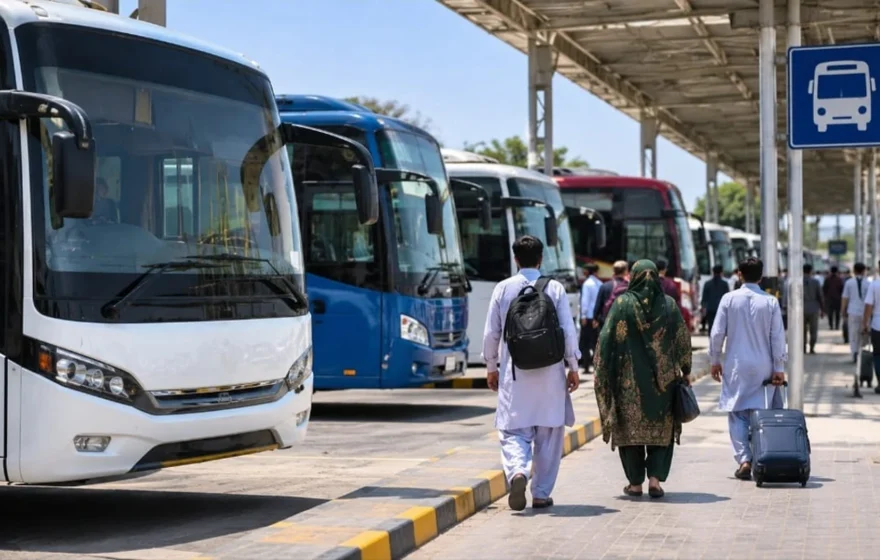
Public transport operators have cut their fares once more, giving passengers fresh relief only days after an earlier round of reductions. The latest cut, announced on Wednesday, takes up to Rs100 off fares on some routes, while goods transporters have also trimmed their charges by up to three per cent. The move follows another fall in petrol and diesel prices, and officials say the revised fares apply with immediate effect.
The Lahore Regional Transport Authority confirmed that updated fare lists have been displayed at bus terminals across the city so that passengers can see exactly what they should be paying. Rana Mohsin, the authority’s secretary in Lahore, said transport operators had put the new lists on show at every terminal and that the reduced fares were already in force. He warned that operators who kept charging the old fares, or anything above the approved rates, would face action.
Transport Minister Bilal Akbar Khan also stepped in, directing officials to tighten their checks on transporters who overcharge passengers. He welcomed the latest cut in petroleum prices and said fares had to come down in step with the fall in fuel costs. The minister directed officials to take strict action against any operator found charging more than the approved fare, and he added that the authorities were pressing on with their crackdown on smoke-emitting vehicles at the same time.
The fare cut is the direct result of a steady fall in fuel prices over the past week. From Wednesday, November 11, petrol costs Rs338 a litre, down Rs8 from Rs346, while high-speed diesel costs Rs371 a litre, down Rs7 from Rs378. The new rates were worked out by the Oil and Gas Regulatory Authority under the pricing mechanism approved by the federal government.
The latest reduction is only the most recent in a run of cuts. Petrol stood at Rs369.06 a litre on November 4, fell to Rs362 on November 5, then to Rs352.59 on November 6 and Rs346 on November 7, before reaching Rs338 on November 11. Diesel has followed a similar path, dropping from Rs391.52 on November 4 to Rs371 on November 11. Prices are now revised every working day, so changes in world oil prices reach local pumps quickly.
This is not the first time in the past week that transporters have responded to cheaper fuel. On November 7, the All Pakistan Public Transport Owners Association announced a five per cent cut in bus fares on intercity and interprovincial routes, covering air-conditioned and non-air-conditioned buses alike. The All Pakistan Goods Transport Alliance announced a five per cent cut in goods charges the same day. Wednesday’s announcement takes that relief further, with some passenger fares falling by as much as Rs100 and goods charges down by up to three per cent more.
For passengers, the savings matter most on the routes they use every day. Millions of people in Punjab travel by bus between districts and provinces for work, study and family visits, and even a modest cut leaves a little more money in their pockets at the end of the week. For goods transporters, lower charges ease the cost of moving food, raw material and finished goods around the country, and that in turn can take some pressure off the prices shoppers pay.
The real test will be whether the announced fares are the fares passengers actually pay. Cuts have been declared before, only for some operators to carry on charging the old rates, especially on busy routes where passengers have little choice. That is why the fare lists at terminals matter: a passenger who can see the approved fare is in a far stronger position to object when a conductor asks for more. The minister’s warning will only carry weight if the checks follow, with authority teams visiting terminals and fining operators who ignore the new lists.
The campaign against smoke-emitting vehicles runs alongside the fare enforcement. Lahore’s transport authorities took action against more than 11,000 smoke-emitting vehicles on Wednesday, as the city continues its fight against smog. Older buses and trucks that belch out thick smoke are among the worst offenders, and taking them off the road protects both the air and the passengers who travel in them. For transporters, the message is that cheaper fuel comes with tighter standards; for the travelling public, the two campaigns together promise cleaner air as well as cheaper tickets.
Whether this relief lasts will depend on what happens to fuel prices next. The daily revision system means prices can rise as quickly as they fall, and transporters will be watching the next sheet from the regulator closely. If fuel keeps getting cheaper, there will be pressure for fares to follow; if it turns dearer again, operators will argue that their costs have risen. For now, though, passengers have a clear win, with fares down by as much as Rs100, goods charges lower, and officials promising to enforce the new rates. Anyone travelling in the coming days should check the fare list at the terminal before boarding, pay only the approved fare, and report any operator who tries to charge more.
