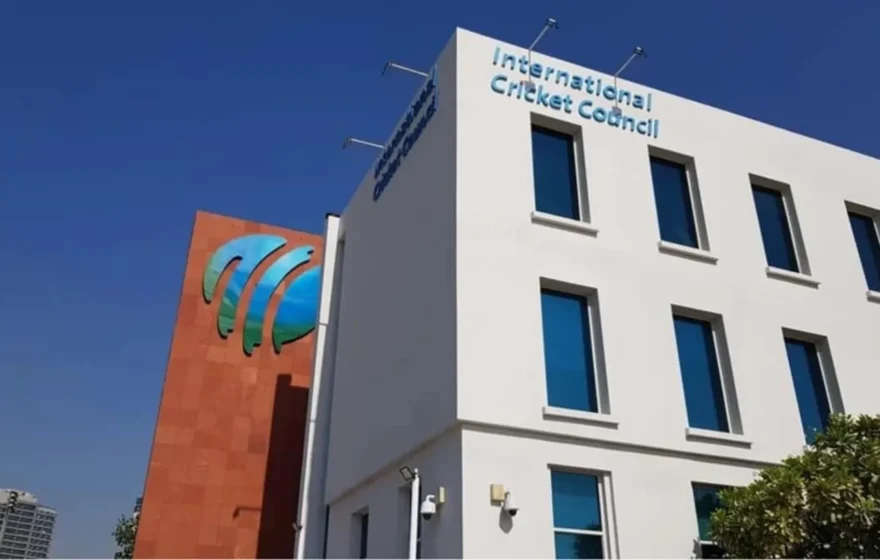
The International Cricket Council has begun its final round of board and committee meetings for 2026 in Bali, Indonesia, with the future of franchise cricket, the shape of Test cricket and the governance of the game itself all on the table. The meetings opened on 11 November and will run until 15 November, with eight committees meeting before the ICC Board and its commercial board take the final decisions. A separate Governance Review Committee, chaired by BCCI secretary Devajit Saikia, will present its first recommendations on how the ICC itself is run.
Franchise cricket is the most pressing item on the agenda. Leagues built around city teams and overseas stars have multiplied around the world, filling calendars and pulling players away from international duty. The Franchise League Review Group, headed by former Bangladesh captain Tamim Iqbal, will present its first recommendations on how the ICC should approve and regulate these competitions. The group was set up at the ICC’s annual conference in Edinburgh in July, when the growth of franchise leagues was recognised as one of the biggest challenges facing the sport. Alongside Tamim it includes officials from Namibia, India, England and Australia, and its job is to look again at the rules under which leagues are sanctioned, and to make sure the framework still protects international cricket rather than letting it be crowded out.
Those rules, as they stand, were tightened only last year. Since March 2025, the host national board has been the ultimate authority for approving a domestic event, while an ICC no-objection certificate is required when a tournament involves more than four current foreign players from Full Member countries. Applications must be lodged at least 90 days ahead, each playing eleven must include at least seven local or Associate players, and the host board is responsible for making sure players and officials are paid. The ICC had earlier capped overseas players at four per side for new leagues, although the ILT20 and Major League Cricket were allowed larger quotas for the time being.
What the review group will propose in Bali has been widely reported, although nothing has been decided yet. Reports suggest it wants the four-overseas cap applied to every league, including the two that were exempted, and wants the ICC to be able to audit league approvals and even revoke a licence on integrity grounds. Other ideas said to be under discussion include an upfront application fee, a requirement to use the ICC’s Anti-Corruption Unit or an approved integrity body, a ban on betting-company sponsorship where gambling is illegal, and a cap on how many leagues one country can host. All of these remain proposals, and no decision had been announced by 12 November.
The integrity question is real. The ICC’s anti-corruption chief, Andy Ephgrave, has said his unit now receives more reports of corrupt approaches on the franchise circuit than in international cricket. With so much money flowing through these leagues, the ICC is under pressure to show it can keep the sport clean without strangling competitions that many players depend on for their livelihoods.
The meetings will also look ahead to the shape of Test cricket, with proposed fixtures for the World Test Championship cycles of 2027-29 and 2029-31 up for discussion. The current cycle runs from 2025 to 2027, with nine teams each playing six series. South Africa won the last title, beating Australia by five wickets at Lord’s in June 2025, and the next final is already fixed for The Oval in London from 9 to 13 June 2027. Alongside the championship, the board will consider windows for the major men’s tournaments between 2028 and 2035.
There is also a human story on the agenda. The board will review the next steps for the Afghan refugee women cricketers supported through the ICC’s Development Pathway Programme. After the Taliban returned to power in August 2021, women’s sport was effectively banned in Afghanistan and the women’s cricket programme ended before it had played an international match. Most of the players resettled in Australia, and in January 2025 they played together again in an exhibition match in Melbourne. The ICC launched its pathway programme for them earlier this year, run with the MCC, with a target of entering ICC qualification pathways by 2030. They would not compete as Afghanistan, but the programme keeps their cricket alive.
The Decision Review System is also under review, with an accreditation programme planned to widen the approved providers beyond Hawk-Eye and Virtual Eye.
The choice of Bali as the venue is itself a statement. Indonesia’s men’s team played more Twenty20 internationals than any other country in 2025, its senior women’s team made its Women’s Asia Cup debut this year, and its under-19 women’s team qualified for the Under-19 Asia Cup for the first time. The island is building the Bali International Oval in North Bali, expected to host the ICC Women’s T20 World Cup East Asia-Pacific Qualifier in 2027. ICC chairman Jay Shah said the meetings gave boards and officials from different countries a chance to work together and shape the future of the sport.
