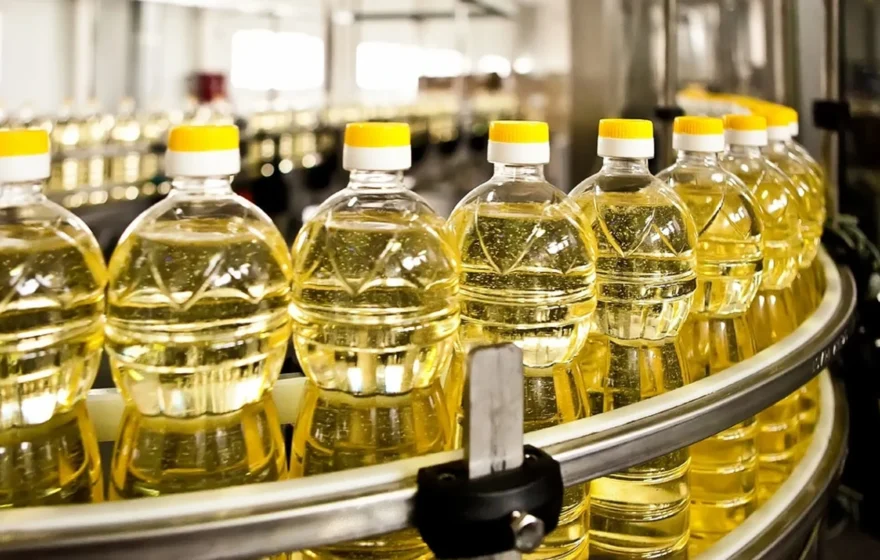
Authorities in Karachi have shut down an illegal factory that was filling counterfeit cooking oil and ghee into containers carrying the names of some of Pakistan’s best-known brands. The unit was operating inside an ordinary house in Shadman Town, and its substandard products were being supplied to shops across the city.
The factory came to light after a tip-off reached the Sindh Food Authority. The authority raided the property with Shahrah-e-Noor Jahan police. When the team arrived, the house was locked. The officers gained access, seized the equipment and material they found inside, and sealed the premises on the spot.
Inside, the team found counterfeit cooking oil and ghee packed under the names of Soya Supreme, Dalda and Habib, three brands on the shelves of almost every grocery store in the country. The officers also recovered loose substandard oil, empty bottles, cartons, printed labels, sealing machines and other packaging material. Heavy machinery had been installed inside the house to fill and package the oil and ghee.
The early findings suggest that cheap, low-quality oil and ghee were poured into counterfeit containers and passed off as branded products before being sent out to retailers. Officials said the factory worked by day and stayed shut at night, a routine that helped it pass unnoticed in a residential neighbourhood.
The food authority and the police have sealed the property and started legal proceedings against the people behind the operation. Police say the investigation is still going on. They want to find out how long the factory had been running, who was behind it, and how far its distribution network reached. Until those questions are answered, it is not clear how much of the fake oil and ghee already reached kitchen shelves, or how many shops in Karachi were buying it.
The Shadman Town raid is not an isolated case. In June this year, the food authority sealed another illegal unit in Bhains Colony after finding it was making oil and ghee from the bones and fat of dead animals. Animal fat, raw material and finished oil and ghee were seized, suspects were arrested, and a case was registered at Sukhan Police Station. In October 2024, the authority seized more than 12,000 litres of unsafe cooking oil in Thatta and fined the operator five hundred thousand rupees.
The authority has been fighting this trade for years. It banned the sale of loose edible oil in Sindh in 2018, after its scientific panel concluded that unpackaged oil could not be trusted. By mid-2022, it had told the Sindh High Court that it had carried out more than three hundred raids against loose, substandard and smuggled cooking oil, registered twenty-seven cases and sealed over a hundred warehouses. The fact that such factories keep appearing shows how profitable the business is.
Pakistan’s appetite for cooking oil feeds the problem. The country imports around eighty-five per cent of the edible oil it uses, mostly palm oil from Indonesia and Malaysia, and each person uses about twenty-two kilogrammes a year. Around thirty per cent of the oil consumed is unbranded loose oil, sold in bulk without proper labelling or checks, and it is in that grey market that counterfeit products find their easiest opening.
A nationwide testing exercise earlier this year showed the scale of the problem. Of four hundred and ninety-one samples of ghee, edible oil and milk products collected from markets across the country, one hundred and seventy-six failed to meet the prescribed standards. Nearly half of the ghee samples were substandard, and three quarters of the refined palm oil samples failed. Some ghee samples carried trans-fat levels as high as 15.87 grammes per hundred grammes, against the official limit of two grammes. The federal government ordered an immediate crackdown after those results, and the Shadman Town raid is part of the drive that followed.
The health stakes are serious. Food scientists warn that substandard oil often carries high levels of trans fats and other toxic compounds formed during poor processing. Trans fats push up bad cholesterol and push down good cholesterol, raising the risk of heart disease, and repeated reheating of oil, common in Pakistani kitchens, can produce harmful substances such as acrylamide. Experts have linked poor-quality oil and ghee to the country’s heavy burden of heart disease, noting that three out of every ten deaths in Pakistan are associated with cardiovascular disease from substandard oil and fat.
For shoppers, the raid is a reminder that a familiar brand name on a tin is no guarantee. Counterfeit packaging is designed to look exactly like the real thing, and the only reliable protection is to buy from trusted shops, check that seals and labels are intact, keep the receipt, and report anything suspicious to the food authority. The sealed factory is one operation closed, but the investigation must still answer the harder questions: who ran it, how long it traded, and which shops sold what it made. Until those behind it are brought to account, and until testing and traceability reach the loose-oil trade that feeds this business, raids like this one will keep being needed.
