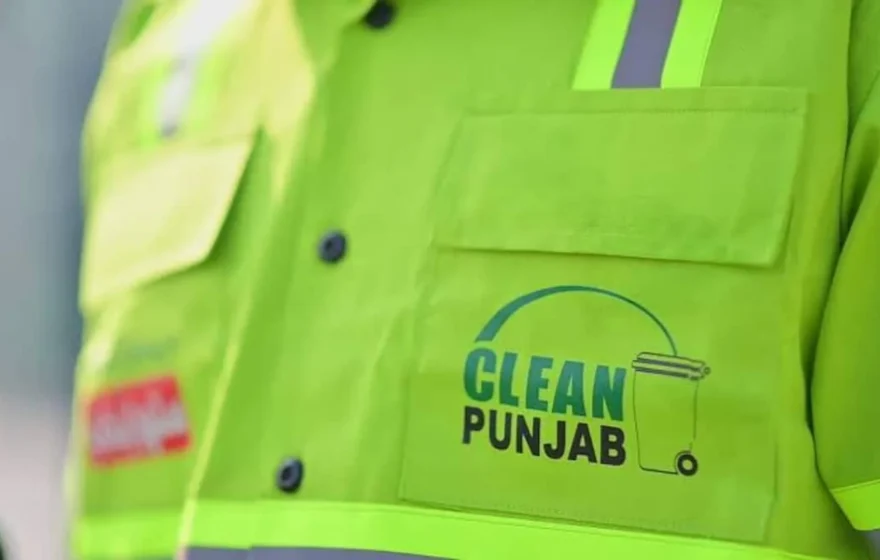
Punjab Chief Minister Maryam Nawaz has given officials fifteen days to deliver a complete improvement in sanitation across the province. The deadline was set at a special review meeting on the Suthra Punjab programme, where she examined progress so far and ordered firm measures to raise standards in cities and villages alike. The message was clear: cleanliness is no longer a routine administrative task, but a visible public service on which district administrations will now be judged.
At the heart of the review was a blunt assessment of the private solid waste companies handling sanitation in several major cities. Officials concluded that their performance had not met expectations, and the meeting decided to move away from that model in Lahore, Faisalabad, Gujranwala, Multan and Dera Ghazi Khan. In those cities, sanitation will now be run directly under a self-operation arrangement, with the government itself taking charge of collection and cleaning rather than relying on outside firms. That shift puts responsibility squarely on district administrations, leaving far less room for blame to be passed between contractors and officials when streets remain dirty.
Maryam Nawaz also asked for a clear and final account of what self-operation has saved so far. That request matters because the case for bringing services in-house rests not only on better cleaning, but also on better value for public money. If the new arrangement is to be defended and extended, officials will need to show, in concrete terms, how much has been saved and where those savings have gone. Every deputy commissioner has also been asked to submit details of the machinery still needed for cleanliness work, so gaps in equipment can be filled rather than discovered only when a service fails.
One of the most visible orders from the meeting concerns Punjab’s roads. Expressing concern about dust and dirt on main roads, the chief minister directed that they be washed every day. For residents of busy urban centres, where dust settles quickly on carriageways, footpaths and shopfronts, daily washing could make an immediate and noticeable difference, provided it is carried out consistently and not only in the days immediately following a high-level meeting. Sustaining that effort, and extending it to smaller towns as well as showcase roads, will be the real test.
Enforcement was another central theme. Authorities have been told to penalise people who dump waste in markets, including fruit, vegetable and grain markets, and to fine anyone who litters after cleaning teams have finished their work. Market areas are among the hardest places to keep clean, because trade generates large volumes of waste every day in crowded shared spaces. A fine system can help, but only if it is applied fairly and consistently, with clear warnings first and action that does not fall only on small vendors while larger offenders are overlooked. The meeting also considered fines for owners of vacant plots where rubbish accumulates, although no final decision was announced on that proposal.
The meeting also set targets to ensure every district has enough sanitation staff and machinery, and directed that villages be cleaned on alternate days. That commitment speaks directly to rural Punjab, where sanitation services have historically lagged behind those in cities. For village residents, regular cleaning is not a cosmetic concern; uncollected waste and dirty streets affect health, especially for children, and shape how people judge whether government services reach them at all. Deputy commissioners and assistant commissioners will meet Field Monitoring Officers every week, creating a regular channel for problems on the ground to be reported before they become entrenched. Officers will also be assessed against performance indicators, and sanitation workers must be paid on time in every locality.
The deadline must be understood against the scale of Suthra Punjab itself. Launched in December 2024, it was designed as a province-wide system of door-to-door waste collection, covering cities, towns and villages under a single framework, with digital monitoring of vehicles, staff and routes. Reports describe it as handling tens of thousands of tonnes of waste each day across dozens of districts and tehsils, with a workforce running into six figures. Its roots lie in the Lahore Waste Management Company model, established in 2010 and later extended to other divisional headquarters, before the system was restructured in early 2026 to give district-level agencies greater responsibility. That history explains why the shift to self-operation is presented as a correction, not a fresh start.
Ultimately, the test will not be the deadline itself, but what remains in place after it passes. A fortnight of intensive cleaning can transform a city’s appearance, but lasting change depends on reliable staffing, working machinery, honest monitoring and enforcement that residents see as fair. If self-operation delivers cleaner streets, clearer savings and timely pay for workers, it could strengthen one of the provincial government’s most visible programmes. If standards slip again once the deadline has gone, the same questions about capacity and accountability will return, only sharper. For now, Punjab’s districts have fifteen days, and a follow-up meeting in seven, to show that this time the improvement will last.
