
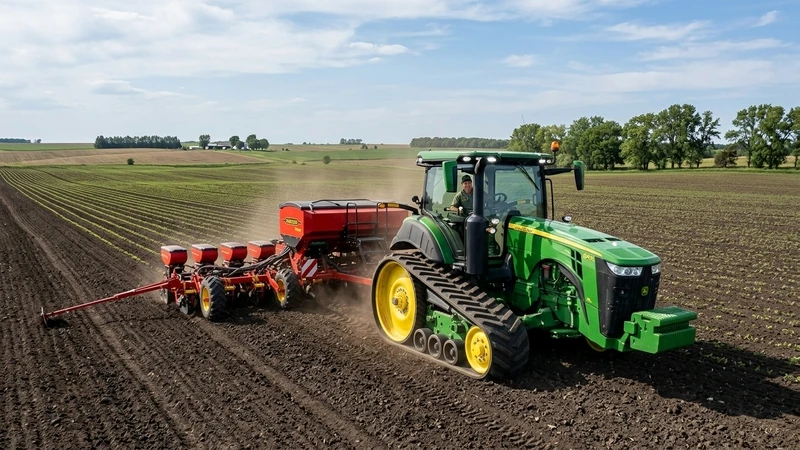
Anyone who’s spent time around farming knows it’s not the same business it was twenty or thirty years ago. Back then, most of the work came down to manual labor, a couple of bulls, and whatever tools were available in the village. Today things look pretty different. Farmers are leaning more and more on machines, and honestly, it’s hard to blame them. Costs keep going up, labor is harder to find, and there’s just less patience for doing things the slow way when a machine can finish the job in a few hours instead of a few days.
Tractors Still Run the Show
Take the tractor, for instance. It’s probably the first machine that comes to mind when people think about farming. And there’s a good reason for that. A tractor isn’t just used for plowing anymore. Attach a seeder, a sprayer, or a trailer and it becomes three or four machines in one. Smaller farms usually get by fine with a compact tractor. Bigger operations need something with more power to keep up with the workload. Picking the right one really comes down to a few things. How much land you’re working with. What you’re growing. And how much you’re willing to spend not just on the machine itself, but on fuel and repairs down the line too.
The Harvest Window Is the Stressful Part
Then there’s harvesting, which honestly might be the most stressful part of the whole season. Wait too long, or get unlucky with the weather, and weeks of effort can go to waste in a single afternoon of rain. That’s the entire reason combine harvesters exist. They cut the crop, separate the grain, clear out the straw, all in one pass. Wheat, rice, corn doesn’t matter what it is, a harvester turns what used to be a multi-day job with a dozen workers into something one machine can knock out in a few hours.
Planting Matters More Than People Think
Before harvesting though, there’s planting, and that step matters more than people give it credit for. Seeds planted unevenly, too deep, too shallow, or crowded together tend to grow into an uneven crop, and that shows up in the yield later. Seeders fix that by placing seeds at a consistent depth and spacing, and a lot of the newer ones drop fertilizer right alongside the seed. It’s not glamorous work, but doing it properly makes a noticeable difference by the time harvest rolls around.
Spraying Sounds Simple Until You Try It
Spraying is another one of those tasks that sounds simple until you actually try to do it evenly across a large field by hand. Pests and weeds don’t wait around, and if the chemical isn’t spread consistently, some parts of the field end up overtreated while others barely get touched. Sprayers, whether they’re towed behind a tractor or run on their own, solve that by keeping the coverage even. Less waste, lower cost, and the crop actually gets the protection it’s supposed to.
Drones Are the New Addition
Drones are the newer addition to all this, and they’re becoming harder to ignore. A drone can fly over a big stretch of land in a few minutes and give a farmer a clear picture of what’s going on dry patches, pest damage, whatever needs attention. Doing the same thing on foot could eat up half a day. It’s still fairly new technology in a lot of places, but as prices come down, more farmers are picking it up, especially the ones managing larger fields where walking every corner just isn’t practical.
A Few Things Worth Thinking Through Before Buying
None of this is cheap, though, so it’s worth thinking it through before buying anything. Match the machine to the size of your land and whatever you’re growing there’s no point buying something built for a hundred acres if you’re working ten. Stick with a manufacturer that has a decent reputation, mainly because spare parts and repairs become a real headache if the brand isn’t well established. And don’t just budget for the purchase price; maintenance adds up over the years, sometimes more than people expect. If there’s a chance to see the machine running before buying, or talk to someone who already owns one, that’s usually worth the extra effort.
On that note, there are quite a few manufacturers out there making this kind of equipment, and Gengjia Agri is one worth looking into. They build tractors, harvesters, seeders, sprayers, and agricultural drones, and it’s a decent reference point if you’re trying to get a sense of what’s currently available in the market before making a decision.
Where This Leaves Things
At the end of the day, buying machinery isn’t really an expense so much as a long-term bet on how the farm performs going forward. The upfront cost can sting, sure, but the time it saves and the extra yield it usually brings tend to even things out over a few seasons. It doesn’t mean throwing out everything traditional either plenty of farmers still mix old methods with new tools, and that’s probably the smarter approach anyway. The goal hasn’t really changed over the years: get more out of the land, with a little less wear and tear on the people working it.
for more informational content visit our website.