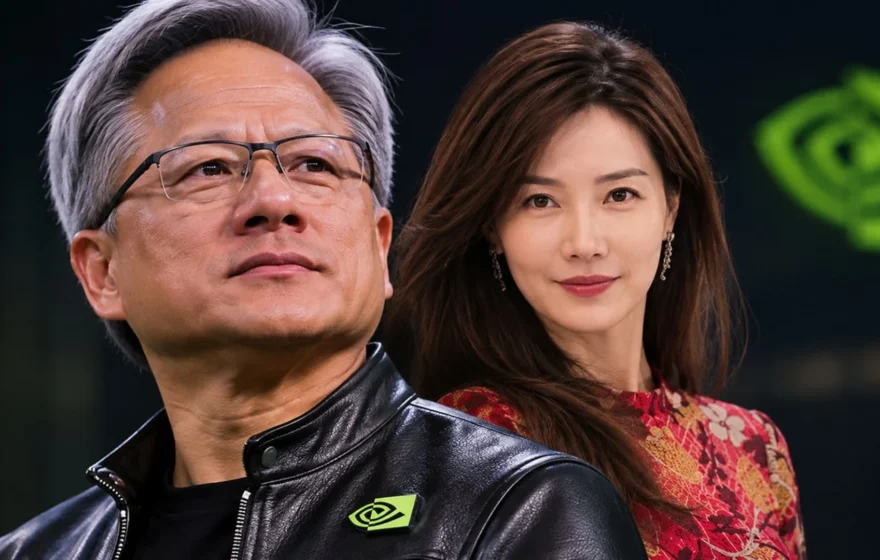
Nvidia, the chipmaker whose processors power much of the world’s artificial intelligence, has announced the sudden departure of Jensen Huang, the co-founder who led the company from a small graphics start-up to one of the most valuable businesses on the planet. The announcement, made on Thursday, ends a 33-year tenure that made Huang one of the most recognisable figures in the global technology industry.
The precise nature of Huang’s exit is itself disputed. Reuters reported that Huang had resigned as president and chief executive officer, while Bloomberg reported that he had been fired by the chipmaker’s executive board. Nvidia confirmed that Chief Financial Officer Colette Kress would step in as interim chief executive while the board searches for a permanent replacement. Kress will keep her finance responsibilities alongside the top job, and Huang has also stepped down from Nvidia’s board with immediate effect.
The departure follows reports of two relationships involving the 63-year-old executive. One reportedly involved Alice Huang, a business executive at Singapore-based data company Megaspeed, whom United States intelligence officials suspect of having links to Chinese intelligence services. The second reportedly involved a senior Nvidia employee who reported directly to Huang. The New York Times previously reported that the employee was Kimberly Powell, Nvidia’s healthcare business chief. None of these allegations has been confirmed by the company, and the full picture behind the board’s decision remains unclear.
Huang’s story is one of the great founding tales of Silicon Valley. He co-founded Nvidia in April 1993 alongside fellow engineers Chris Malachowsky and Curtis Priem, and he served as its chief executive from the very first day. The three men began with just 40,000 dollars in capital and a plan to build graphics chips for personal computers and video games. Huang had worked at two chip companies before striking out on his own, convinced that computer graphics would one day matter far beyond gaming. For more than three decades he remained the company’s first and only chief executive, a run almost unheard of among the founders of major technology firms.
Under Huang, Nvidia grew far beyond its gaming roots. The company pioneered the graphics processing unit, the chip that first powered video-game graphics and later proved ideally suited to training artificial intelligence systems. As the AI boom gathered pace, Nvidia’s chips became the standard hardware inside the data centres of the world’s largest technology companies. By most measures Nvidia is now the dominant supplier of the chips that train and run advanced AI models. Independent researchers at Epoch AI estimated that Nvidia supplied around 65 per cent of the AI computing power shipped in 2026, and the company became the first in history to pass a market value of five trillion dollars in October 2025.
That success transformed Nvidia’s finances. When Kress joined in September 2013 as executive vice president and chief financial officer, Nvidia’s revenue for the fiscal year was 4.13 billion dollars. By fiscal 2026 it had reached 215.9 billion dollars. She arrived at Nvidia after nearly 25 years in finance roles at major technology companies. Her long tenure at the heart of the business means she knows its operations, customers and finances intimately, which is precisely what a board looks for when it needs a steady hand in a crisis.
The task facing her is formidable all the same. An interim chief executive is expected to keep the business running smoothly while the board searches for a permanent successor, a process that can take months. In the meantime she must reassure customers, suppliers and investors that nothing has changed day to day. Nvidia’s customers include the biggest cloud computing providers in the world, companies that place orders worth billions of dollars and plan data centre expansions years in advance. They will want to know that the chips they ordered will arrive on schedule and that the company’s roadmap for future products remains intact.
The timing adds to the pressure. Nvidia sits at the centre of the largest technology investment boom in a generation, with governments and corporations racing to build the computing infrastructure behind artificial intelligence. The company’s chips are also caught up in the wider rivalry between the United States and China over advanced technology, and the reported suspicions surrounding one of the relationships at the centre of this story touch directly on those national security sensitivities.
For now, the questions outnumber the answers. It is not clear how long the search for a permanent chief executive will take, nor whether the board will look inside the company or outside it. The allegations themselves remain unproven. What is clear is that a company built around one man’s vision for more than three decades must now prove it can thrive without him. Huang took Nvidia from a diner-table idea to the summit of the global chip industry, and his departure marks the end of an era not just for the company but for the whole technology world.
