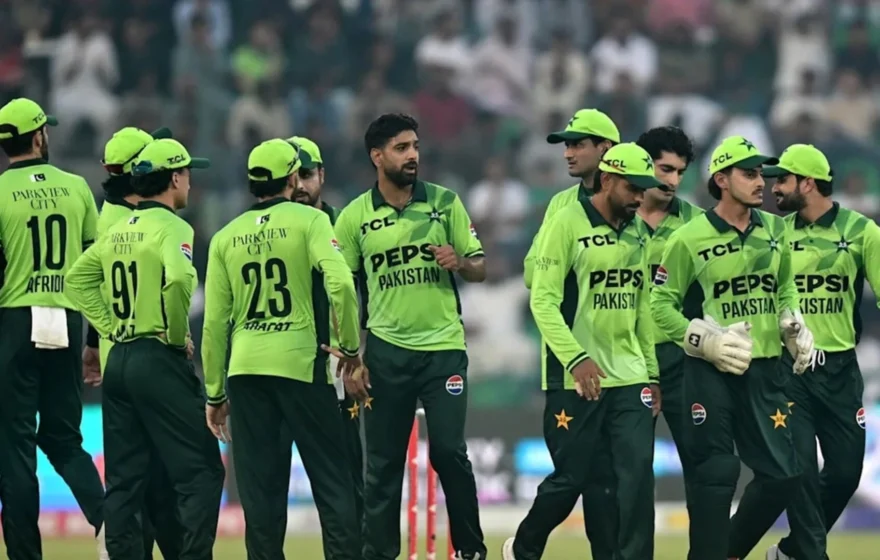
Pakistan lifted the ODI tri-series trophy in Lahore, and then paid a price for the pace at which they got there. The International Cricket Council has fined Pakistan five per cent of their match fee for bowling too slowly in the final against Sri Lanka at Gaddafi Stadium, a sanction that arrived after the celebrations had died down and served as a reminder that even a winning side is not exempt from the game’s timekeeping rules.
The charge was a narrow one, but it was clear-cut. Pakistan were found to be one over short of the required rate once time allowances were taken into account, meaning the bowling side had not delivered its full allocation of overs within the time the regulations allow. Match referee Jeff Crowe, a member of the Emirates ICC Elite Panel of Match Referees, imposed the penalty under Article 2.22 of the ICC Code of Conduct for Players and Player Support Personnel, the provision that deals with minimum over-rate offences. Under that article, players are fined five per cent of their match fee for every over their side fails to bowl in the allotted time, so a single over short translated directly into a five per cent fine.
There will be no hearing, because the process in such cases is deliberately straightforward. The charge was laid by on-field umpires Ahsan Raza and Wayne Knights, together with third umpire Sharfuddoula Ibne Shahid and fourth umpire Rashid Riaz, and Pakistan captain Shaheen Shah Afridi pleaded guilty and accepted the proposed sanction. A guilty plea closes the matter, sparing both player and governing body a formal hearing over what is, in essence, a matter of arithmetic rather than intent.
What makes this case harder for Pakistan to shrug off is that it was not a first offence in this tournament. In the opening match, played in Rawalpindi on October 18, Pakistan were fined ten per cent after being ruled two overs short against Sri Lanka. On that occasion Sri Lanka were also fined, five per cent for finishing one over short, so both finalists began the tournament with a warning already on their record. A repeat offence in the final therefore reads less like bad luck and more like a recurring problem with how Pakistan manage the clock in the field.
The irony is that the final itself was a memorable Pakistan victory, and the fine does nothing to change the result. Sri Lanka batted first and posted 325 for eight from their fifty overs, built around Kamindu Mendis, who made 131 from 128 balls, and Pavan Rathnayake, who contributed 77 from 65 deliveries. Shaheen Shah Afridi, Naseem Shah, Haris Rauf and Salman Ali Agha took two wickets each. A target of 326 in a final is a demanding chase, and for a time it looked as though it might prove too much.
Pakistan’s reply began in the worst possible fashion. Maaz Sadaqat was dismissed for five and Babar Azam went for a duck, leaving the hosts at fourteen for two. What followed was the partnership that turned the match. Fakhar Zaman and Saad Baig added 149 runs for the third wicket, rebuilding the innings with a blend of caution and aggression. Fakhar struck his twelfth one-day international century with 127 from just 99 balls, containing eleven fours and six sixes, while Saad gave him excellent support with 74 from 75 deliveries.
The finish, when it came, was emphatic. Arafat Minhas accelerated with 61 from only 31 balls, adding 94 runs for the sixth wicket alongside Hasan Nawaz, who finished unbeaten on 37. Shaheen fittingly finished the match with a six, as Pakistan reached 331 for seven in 48.3 overs, winning by three wickets with nine balls to spare.
That wider tournament picture is worth remembering, because Pakistan were not the only team to fall foul of the over-rate rules. Sri Lanka were fined five per cent for being one over short in their match against England in Lahore, again with Jeff Crowe imposing the sanction, and Sri Lanka captain Kusal Mendis accepted that penalty in the same way Shaheen accepted his. The pattern suggests the ICC’s officials applied the rule consistently throughout the tri-series. Time allowances are built into the calculation precisely so that genuine interruptions are not held against a fielding side, which means a team found short has, in the officials’ judgement, simply taken too long over the routine business of bowling its overs.
For Pakistan, the lesson is practical rather than dramatic. A five per cent fine will not overshadow a series win, but repeated offences point to something a coaching staff can fix: quicker turnarounds between overs, sharper fielding changes, and a captain who keeps one eye on the clock even while chasing a large total. In a final, with the trophy on the line, it is easy to understand why those details slip. The ICC’s message, delivered quietly after the trophy presentation, is that they still matter, and that the next time Pakistan are one over short, nobody will be able to say they were not warned.
