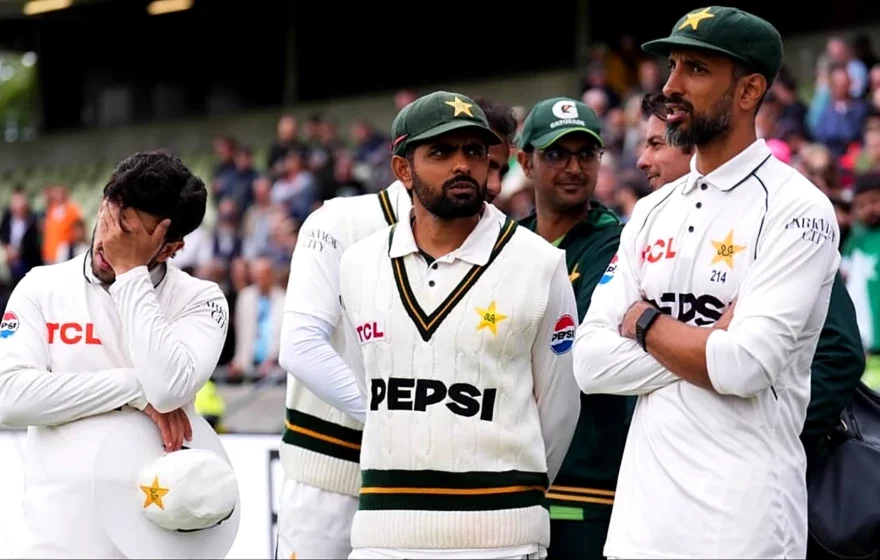
Pakistan’s Test team is heading for a major overhaul. Head coach Mike Hesson has decided to reshape the side from the top down, with a new opening combination and pace-friendly home pitches at the centre of the plan, after a year of disappointing results in the longest format. The changes will be put to the test when Sri Lanka arrive for a two-match series, the first Test cricket Pakistan will host this year.
The series begins in Rawalpindi on November 9, with the second match scheduled for Lahore on November 17. That homecoming has been a long time coming. Pakistan have already played seven Tests in 2026 across three overseas tours, but not a single home Test. The Sri Lanka series therefore carries extra weight: a chance to reset the team’s identity in front of its own supporters.
The need for change is written plainly in the results. Pakistan have lost six of their seven Tests this year. They were beaten 2-0 by Bangladesh and 3-0 by England, while their series against the West Indies finished level at 1-1, with their only victory of the year coming against the Caribbean side. A record like that leaves little room for patience: sticking with the same approach would only produce more of the same.
One of the boldest moves concerns the pitches themselves. Hesson has reportedly instructed ground staff to prepare surfaces that offer greater assistance to fast bowlers for both matches against Sri Lanka. For years, Pakistan’s home Tests have often been played on flat, slow tracks that blunted their own bowling attack. The new thinking turns that logic on its head: lively pitches should suit Pakistan’s traditional strength, fast bowling, and prepare players for conditions abroad, where the ball seams and swings and batting demands sharper technique.
The shift in selection is equally striking. Five players who featured in the final Test against England, Saim Ayub, Abdullah Shafique, Shan Masood, Mohammad Imran and Mohammad Ali, are no longer part of the team’s plans. Masood’s case illustrates the ruthlessness of the reset. The 37-year-old scored 95 in the first innings of the Birmingham Test, yet Hesson reportedly believes the moment has come to give a younger player his opportunity. It is a decision that will divide opinion, but it signals that past service alone will no longer guarantee a place.
A new opening partnership sits at the heart of the rebuild. Azan Awais and Abdullah Fazal have emerged as the leading contenders to open the batting, a role that has troubled Pakistan for years. Opening in Test cricket is one of the hardest jobs in the sport, and Pakistan’s revolving door at the top of the order has been a running weakness. Giving two young players a sustained chance, rather than shuffling the combination every series, could bring the stability the side has lacked, although it asks a great deal of players still finding their feet at the highest level.
The bowling attack is also set for fresh blood. Mohammad Abbas and Razaullah are expected to join the national squad after the three-day match against Sri Lanka, having impressed for the PCB Patron’s XI. Both are considered strong candidates for selection, fitting the new emphasis on pace-friendly conditions. Abbas in particular brings the control and seam movement that thrives on a lively surface, while blooding new fast bowlers alongside established names keeps the attack evolving rather than standing still.
Elsewhere, Hesson has turned his attention to one of Pakistan’s most important players. Babar Azam, the former captain, has been advised to play domestic four-day cricket to rediscover his form, and is currently featuring in the Quaid-e-Azam Trophy on the coach’s advice. The message is clear: no player, however decorated, is above rebuilding form in domestic cricket. The Pakistan Cricket Board has reinforced the point by making participation in domestic competitions compulsory, requiring leading players to turn out for their departments and regions despite reported reluctance from some quarters.
The scale of the challenge facing Hesson becomes clear in the rankings. Pakistan currently sit ninth among ten teams in the ICC Test rankings, with only Zimbabwe below them, and they are bottom of the World Test Championship standings. Those numbers measure how far the side has fallen in the format that was once its pride. The board’s think tank has already begun planning for the next World Test Championship cycle, and the Sri Lanka series is the first step in that longer project rather than a quick fix.
There is, however, a recent reason for optimism. Pakistan arrive fresh from victory in a tri-nation one-day series, a reminder that the talent in the squad is real even if the Test results have not shown it. The task now is to carry that confidence across formats and back a younger, more aggressive approach. If the new openers settle and the pace-friendly pitches reward the bowlers, the Sri Lanka series could mark the start of a genuine revival. If it does not, the questions will only grow louder, but for now, Pakistan have at least chosen a direction.
