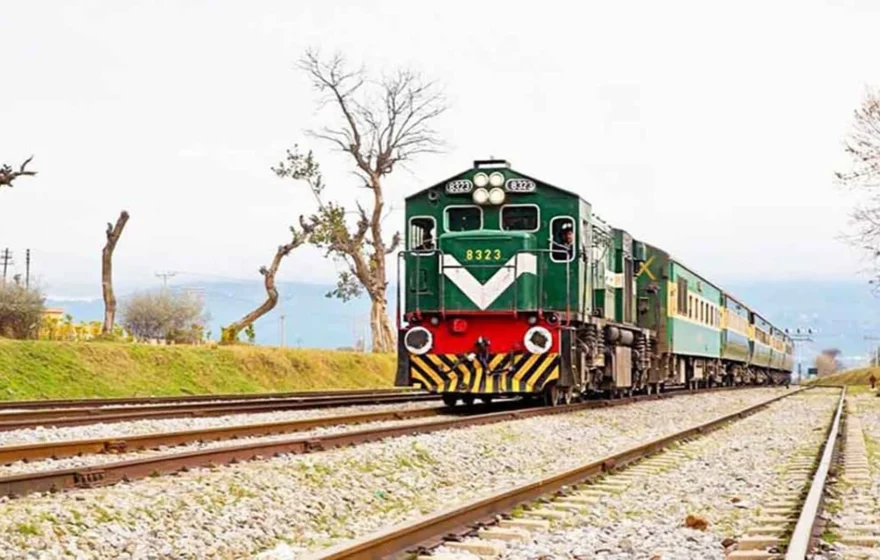
Pakistan Railways has set itself a clear deadline to expand its freight business, deciding to run 14 freight trains by January in response to growing demand from traders and manufacturers. The move is part of a wider effort to lift revenue and steady the finances of the state-owned railway, which has long struggled to cover its costs.
The decision was taken at a meeting chaired by Federal Minister for Railways Muhammad Hanif Abbasi at the Railways Headquarters. Senior officials reviewed freight operations and agreed on a package of measures aimed at moving more cargo by rail, cutting losses and making better use of the network the country already has. The minister told the meeting that the business community had been asking for more freight capacity, and the railway would respond by adding trains rather than turning cargo away.
The target is ambitious but it is not being set from a standing start. Pakistan Railways already runs nine freight trains, so the plan means adding five more services within weeks and lifting capacity by more than half. The minister had already signalled the same direction in October, when he said the number of freight trains would rise from nine to 14 by January. The meeting has now turned that promise into a formal decision.
Alongside the extra trains, the meeting approved a dry port at Khanewal, a railway junction town in Punjab on one of the busiest sections of the main line. A dry port works as an inland terminal where containers and bulk cargo can be loaded, unloaded and stored away from the seaports, and the new facility is expected to attract cargo from the surrounding districts and give traders a faster route to the ports in Karachi, while easing pressure on the roads, which currently carry most of the country’s goods.
Safety was also high on the agenda. The meeting decided to ask the Federal Investigation Agency to investigate train examiners in connection with accidents caused by mechanical faults. Train examiners are the staff who check coaches and wagons before a train leaves, and their work is one of the last lines of defence against a fault that could cause an accident. Bringing in the FIA signals that the ministry wants an independent look at whether inspections are being carried out properly.
To tackle another long-running problem, the railway will install five additional weighbridges across the country by December 31. A weighbridge checks the weight of a loaded wagon, and overloading has been a persistent issue because it damages tracks and wagons and raises the risk of derailments. The new weighbridges are meant to close that gap and make sure every wagon is carrying only what it is meant to carry.
The minister also directed that operational meetings should now be held at the divisional level instead of at the Railways Headquarters, pushing decision-making closer to the ground so that divisional officers who deal with trains, stations and staff every day can raise problems and settle them without waiting for instructions from the centre.
Other decisions included phasing out DVM and DVS coaches from the railway system and running sleeper factories in double shifts to increase production. Sleepers are the cross-ties that hold the rails in place, and producing more of them is essential for track renewal. Running the factories in two shifts should raise output without waiting for new plants to be built.
The freight push comes after a strong year for the railway’s finances. Pakistan Railways earned a record Rs115.16 billion in the 2025-26 financial year, up by about 24 per cent on the year before, with freight bringing in Rs40.78 billion and passenger services Rs50.59 billion. Its operating ratio improved from 96 per cent to 84.7 per cent. The minister has set an even higher freight target of Rs65 billion for the current financial year, above the Rs60 billion target for passengers.
There is a much bigger prize in sight as well. The railway wants to raise its share of the country’s freight market to 20 per cent, from around 8 per cent now, once the Main Line-1 upgrade between Karachi and Peshawar is rebuilt. That line carries 98 per cent of the railway’s freight and 76 per cent of its passengers, but construction on the upgrade has yet to begin. Until then, the extra freight trains, the Khanewal dry port and the new weighbridges are the practical steps the railway can take with the network it has today.
The challenge will be delivering on the deadline. Adding five freight trains means having enough locomotives, wagons and trained staff ready, and the ministry has said more than 40 General Utility series locomotives will be brought into freight service to support the target. Freight volumes also fell short of expectations last year because of disruptions linked to the Iran-US conflict in the Gulf region. Even so, the decisions taken at the headquarters show a clear direction of travel: more trains, more cargo and tighter safety. If the January deadline is met, it will be the clearest sign yet that the promised turnaround is under way.
