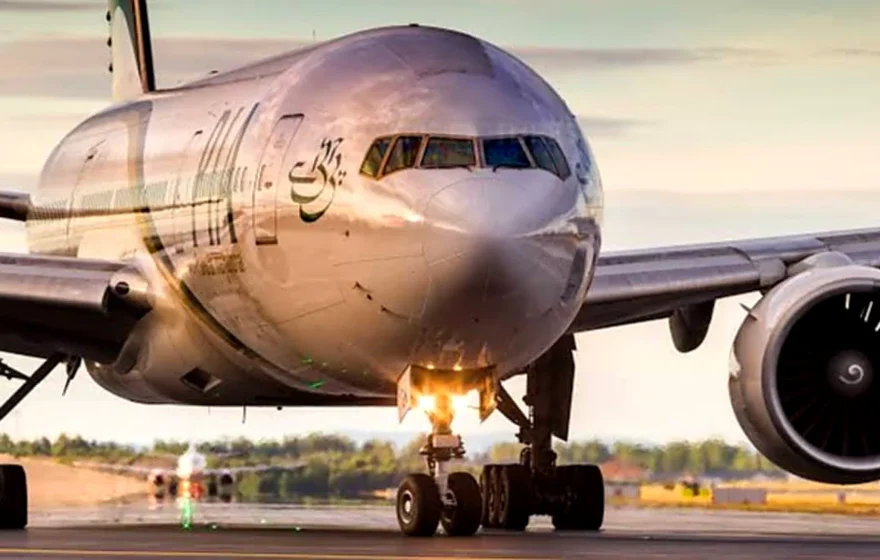
Pakistan International Airlines has brought back its direct service between Islamabad and Beijing, restoring a non-stop air link between the two capitals after a break of nearly seven months. The first flight under the renewed schedule operated on October 30, and the airline will now fly the route once a week, every Friday. For passengers who have spent months travelling between Pakistan and China through connecting flights in third countries, the change removes a long detour and returns a straightforward journey between the two cities.
The airline has presented the restored service as a direct and convenient option for people travelling between the capitals, with an emphasis on keeping fares competitive and operations regular in the Chinese market. That emphasis matters, because a weekly service lives or dies on reliability. With only one departure a week in each direction, a single cancellation can disrupt plans far more than it would on a daily route, and passengers will judge the comeback less by the announcement than by whether the Friday flight keeps operating week after week through the winter season.
The return also comes with a wider network behind it. PIA has deepened its working arrangements with three major Chinese carriers, Air China, Shenzhen Airlines and Hainan Airlines, so that passengers arriving in Beijing can continue onward to destinations across China. Through Air China in particular, travellers can connect from Beijing to a range of domestic cities. Reporting on the relaunch has put the number of onward cities reachable through these partnerships at more than twenty-five, which helps explain why the airline is treating Beijing as a hub for its China business rather than as a single destination in its own right.
The passengers the route serves are unusually varied, and that breadth is part of its importance. The service is used by students travelling to and from universities in China, by families visiting relatives, by business travellers working on trade and commercial ties, and by tourists in both directions. A direct flight shortens all of those journeys, but it also removes the uncertainty that comes with connections, missed onward flights and overnight stops. For students in particular, whose academic calendars leave little room for disruption, a predictable weekly departure can be more valuable than a marginally cheaper ticket that requires two changes of aircraft.
To understand why the route disappeared in the first place, it is necessary to go back to April of this year. PIA suspended its Beijing flights then, after a run of increases in jet fuel prices that made long-haul flying far more expensive to operate. At the same time, the airline also suspended its Kuala Lumpur service as part of the same effort to control costs. The airline said at the time that it could not pass the whole burden of higher fuel prices on to passengers, and that it had therefore taken administrative steps to manage its expenses instead.
The scale of that pressure was considerable. Contemporary reporting put jet fuel prices at between eighty-five and ninety dollars a barrel before the surge, rising to between one hundred and fifty and two hundred dollars a barrel, with the increase described as the fourth consecutive rise in fuel costs. Fuel can account for as much as a quarter of an airline’s operating expenses, so a movement of that size quickly changes which routes make financial sense. Beijing services were halted from April 11 and Kuala Lumpur services from April 14, according to reporting at the time, and the airline’s management said it hoped fuel prices would stabilise, allowing suspended routes to be restored.
That weight should not obscure the practical questions that remain. A weekly service is a starting point, not a full restoration, and passengers who miss a Friday departure will still face a long wait for the next flight. The airline has not, in this announcement, set out plans to increase frequency. Whether the service grows will depend on how full the aircraft are, on whether fuel prices remain manageable, and on whether the partnerships with Chinese carriers deliver the onward traffic that makes the route sustainable.
For passengers, the immediate position is straightforward. Tickets are available through PIA offices, authorised travel agents and major online booking platforms, and anyone planning to use the service should confirm the Friday schedule for their specific date of travel, since weekly services can change with the season and with aircraft availability. Those with onward connections inside China should check how the partnership arrangements apply to their booking, particularly where a journey involves more than one carrier.
Seen in full, the resumption is a modest but meaningful recovery. It restores a direct link that had been missing since April, it reconnects two capitals through a single flight rather than a chain of connections, and it gives PIA a renewed foothold in one of its most strategically important markets. The test now is durability: if the Friday flight operates reliably and fills consistently, the October comeback will be remembered as the moment the route properly returned.
