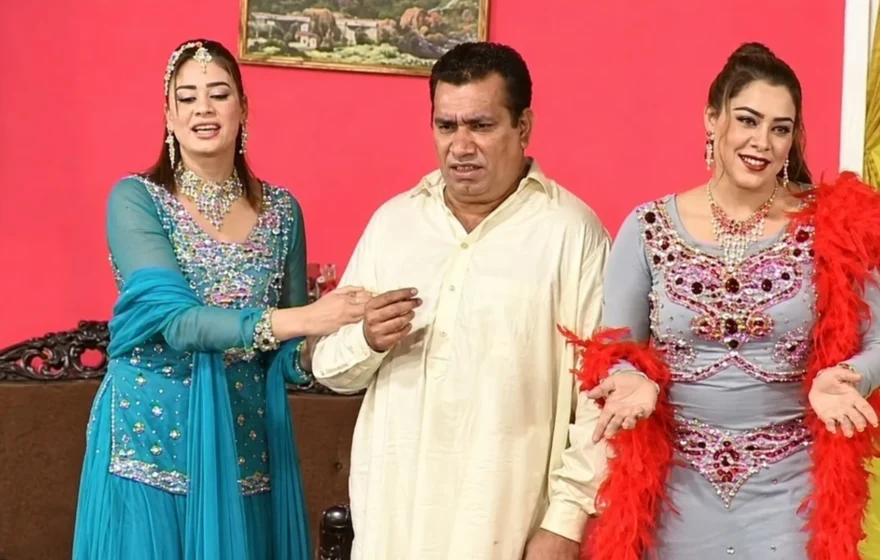
The Punjab Assembly’s Standing Committee on Information and Culture has approved a bill that would send the organisers of unauthorised stage shows to jail for up to six months and fine them as much as Rs1 million, in the province’s toughest attempt yet to bring commercial theatre under formal control.
The Punjab Dramatic and Theatrical Performances Bill 2026 would sweep away the Dramatic Performances Act of 1876, a colonial-era law nearly a century and a half old. If the assembly passes it, Punjab will have a modern licensing and monitoring system for every public performance in the province.
Under the proposed law, no theatrical performance could be staged at a public venue without a licence from the information and culture secretary. The licence fee has been proposed at Rs25,000, and every script would have to pass a designated Script Review Committee before reaching the stage, with final approval by the Punjab Council of the Arts. The proposed charge for script review is Rs35,000.
The bill goes further than paperwork. Every artist, director, crew member and makeup professional working on a stage production would have to register with the relevant authorities, and unregistered people would not be allowed to take part. For an industry where performers have traditionally moved between theatres on informal arrangements, this is a major change.
District monitoring teams and censorship committees would be authorised to inspect dress rehearsals and to watch performances through live or recorded electronic feeds, with the stated aim of preventing vulgarity, defamation, anti-state material and sectarian content. Organisers would have to keep unedited audio and video recordings of each performance for at least thirty days, so complaints can be checked against the actual show.
The penalties are deliberately steep. Violations involving unapproved scripts, unregistered performers or the unauthorised use of premises could lead to proceedings before a first-class judicial magistrate, with imprisonment of up to six months and fines reaching Rs1 million. Administrative fines of up to Rs300,000 have been proposed for a first violation and up to Rs500,000 for a repeat offence, while a theatre’s licence could be suspended or cancelled if three violations are recorded within a single year. Those affected by official decisions could appeal through administrative channels, including to the Punjab chief secretary.
The push for a new law is rooted in a statute never designed for the Punjab of today. The Dramatic Performances Act of 1876 was enacted by the colonial government to control performances it considered scandalous, defamatory, seditious or obscene, giving the authorities powers to prohibit a play and demand scripts in advance. It survived independence, partition and decades of amendments without ever being replaced.
The first real attempt to modernise the system came in 2023, when the Punjab government moved responsibility for dramatic performances from the home department to the Information and Culture Department through the Punjab Theatrical Performance Ordinance 2023. The change expanded the role of the Punjab Council of the Arts, previously limited largely to approving scripts, and gave it the power to frame rules for commercial theatres, bringing monitoring and discipline under one roof.
That reform followed a crackdown by the caretaker government of Mohsin Naqvi, which sealed more than ten large commercial theatres in Lahore, Sheikhupura and Kasur. The theatres were later unsealed on the orders of the Lahore High Court. The drive continued under Chief Minister Maryam Nawaz, whose government formed a seven-member advisory committee to make commercial theatre, in its words, civilised and family-friendly, while information minister Azma Bokhari announced in early 2025 that actors and dancers found promoting vulgarity would face a lifetime ban from the stage.
Enforcement has already tightened on the ground this year. In September, the Punjab Council of the Arts and the information and culture department took action against female stage actors and theatre managements in Lahore and Gujranwala over alleged violations of the Drama Act. Show-cause notices were served on performers at theatres including Shabistan, Mehfil and Capri. Earlier the same month, the council issued notices to six stage actresses over what it described as inappropriate performances.
For theatre owners and performers, the new bill raises questions that go beyond the fines. Supporters argue that commercial theatre in Punjab has drifted too far towards vulgarity and driven families away. They say a clear licensing system, approved scripts and registered artists will protect audiences and give performers a safer profession. Critics worry that script approval, rehearsal inspections, live monitoring and heavy fines give officials wide discretion over what can be said and shown on stage, and that smaller theatres may struggle to pay the new fees or survive a suspension.
What happens next depends on the assembly. The standing committee’s approval moves the bill a step closer to becoming law, but it must still be passed by the full house and brought into force. Theatre owners, performers and arts bodies are expected to make their case as it moves through the legislature. What is already clear is that Punjab’s stage, governed for a century and a half by a colonial-era statute, is about to be regulated as never before.
