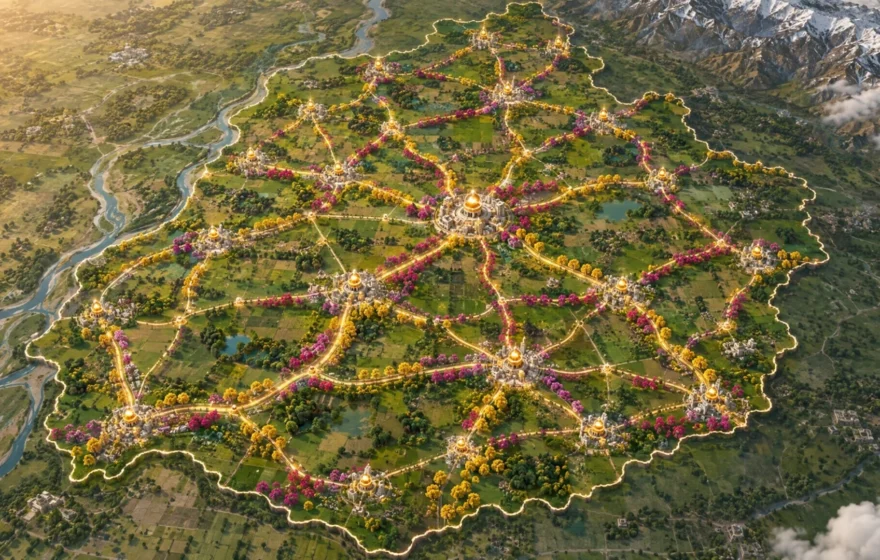
Punjab’s cities are about to look very different. The Punjab Horticulture Authority has started work on a network of flower avenues along major roads in 21 cities, planting golden-yellow amaltas and magenta bougainvillea in a greening drive the province has never attempted at this scale. The authority’s director general, Raja Mansoor Ahmad, has told district agencies to pick out suitable roads for the floral corridors, and the plan is to carry the same treatment to every remaining district of the province within weeks.
The 21-City Map
The first phase covers the cities where horticulture agencies are already up and running. Lahore, Rawalpindi, Multan, Bahawalpur, Gujranwala, Sargodha, Faisalabad, Sahiwal, Dera Ghazi Khan, Sialkot, Rahim Yar Khan, Okara, Khushab, Khanewal, Nankana Sahib, Jhelum, Muzaffargarh, Sheikhupura, Jhang, Gujrat and Murree will all get avenues lined with flowering trees and shrubs. Together they stretch the length of the province, from Murree in the north to Rahim Yar Khan near the Sindh border in the south. Ahmad told a virtual meeting of the district agencies that the avenues would give each city a distinctive landscape identity.
20 More Districts
The rest of the province will not have to wait long. On the directions of the chief minister, the government has already set up horticulture agencies in the remaining 20 districts, and those agencies are due to become operational by January 2027. That will put all 41 districts of Punjab under the authority’s greening umbrella. The province-wide rollout was approved by Chief Minister Maryam Nawaz in October, and the government has cleared 2,820 technical posts to staff the new district authorities. The chief minister first announced a horticulture authority for every district in August 2024; what is new is the scale, with plantation moving in stages from tehsils and cities down to villages.
Why Amaltas and Bougainvillea
Ahmad said the choice of species was practical as well as beautiful. Amaltas, with its striking clusters of yellow flowers, suits avenues, parks and green belts, while bougainvillea thrives on hedges and road medians. Both flourish in Punjab’s sunny climate, and both are already familiar sights in the province: bougainvillea has been planted along Khayaban-e-Jinnah in Lahore, amaltas lines other roads in the city, and three varieties of marigold are being grown across Punjab. The two flowering species were chosen to work together, the yellow of the amaltas against the magenta of the bougainvillea, so that a road planted under the scheme is recognisable at a glance. Monthly planting plans for seasonal flowers will keep the displays changing through the year rather than blooming once and fading.
A Consistent Look Across the Province
The rollout comes with a uniform visual identity. Matching planters and flowerpots will be placed along roads, footpaths and green belts in every city, field vehicles including water bowsers and tractor trolleys will carry the same branding, and field staff will wear standard uniforms. The aim is to give urban landscaping one consistent, recognisable look across the province, in the same spirit as the Suthra Punjab cleanliness programme. Ahmad said the combination of colour and order would make city roads more vibrant and give urban centres a more attractive, organised feel.
Nurseries and Accountability
To sustain the drive, the authority will set up commercial nurseries in each city, selling flowers and plants to the public at affordable prices. The nurseries are meant to feed plantation campaigns and make it easy for households to buy saplings for their own streets and gardens. Managing directors have also been told to prepare monthly planting plans and to develop key performance indicators that measure their work against targets for plantation, park upkeep and the timely completion of projects. The authority recently completed its annual monsoon plantation drive, the season when abundant rain helps young saplings put down deep roots quickly, with preference given to local, shade-giving varieties. The new nurseries and the monthly plans are intended to keep that momentum going through the dry months as well.
The real test of the flower avenues will come after the planting, in the months when Punjab’s cities are at their hottest and driest. The province is facing recurring smog, worsening air pollution and rising temperatures, and plantation drives on their own cannot answer those problems. Lahore’s own history shows both the promise and the difficulty: the Shalimar Gardens date from the 1640s, and the Rose Garden in Bagh-e-Jinnah is being rehabilitated, with 165 of its original 200 rose varieties surviving and 35 more being planted. Trees and flowers need water, care and protection from encroachment long after the cameras have gone. If the new authorities can keep the avenues alive through a Punjab summer, the drive will have changed the way the province’s cities look and feel. The measure of it will be visible next year, when the amaltas blooms and residents can judge whether the colour lasted.
