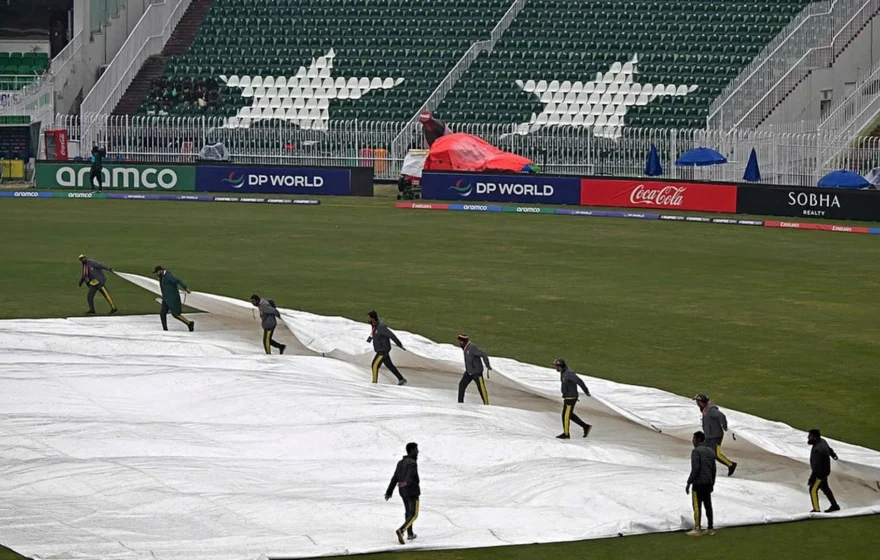
Rain is expected to break into the first Test between Pakistan and Sri Lanka at the Rawalpindi Cricket Stadium, with heavy showers forecast for the afternoon of the fourth day on November 12. The morning session may yet go ahead as planned, but the afternoon looks far less promising, with the kind of steady, heavy rain that keeps the covers on and the players in the dressing room for long stretches.
According to AccuWeather, the morning should still be playable. Cloudy conditions are expected, with temperatures around 21 degrees Celsius and only a 25 percent chance of rain. Winds will blow from the south-southeast at around 7 kilometres per hour, light enough to cause no trouble, and there is every chance of an uninterrupted morning session. That morning window matters, because it may be the only real cricket of the day.
The picture changes sharply after lunch. The chance of rain rises to 92 percent in the afternoon, with heavy showers expected to last around two and a half hours. Rainfall could reach 14.6 millimetres, while southerly winds may pick up to 9 kilometres per hour, with gusts of up to 24 kilometres per hour. Cloud cover will range from 88 to 98 percent through the day, and visibility could drop to as little as 3 kilometres during the worst of the afternoon.
Even so, a complete washout looks unlikely. Both teams could still get a substantial amount of play in the morning before the rain arrives, and that may be enough to keep the match moving. In Test cricket, lost time is not always lost for good, since play can sometimes be extended or started early the next day, but a long afternoon break almost always tilts a match towards a draw. The side that uses the morning best, with bat or ball, will carry a real advantage into whatever remains of the day.
The weather threat comes at a delicate point. Sri Lanka fought back strongly after an early collapse on the third day, with Dhananjaya de Silva and captain Kusal Mendis frustrating Pakistan’s bowling attack. De Silva remained unbeaten on 104, a century built under pressure, while Mendis was batting on 38 after the visitors had lost Kamindu Mendis and two other batters. Their stand has given Sri Lanka something to defend, and it has given Pakistan a problem, because the longer those two stay together, the harder it becomes for the home side to force a result.
That fightback followed a commanding first innings from Pakistan. The hosts declared at 434 for 9 after 106.3 overs, with five batters reaching half-centuries. Three of those fifties came from players on Test debut, matching a record that had stood untouched for 34 years. Tayyab Arif set the tone at the top with 57 from just 51 deliveries, including nine fours and a six, opening alongside Azan Awais. Mohammad Taha, the all-rounder, added a steady 51 from 105 balls, and Arafat Minhas completed the historic trio with 52 from 72 deliveries at number eight, helping Pakistan cross 400. Only once before, when three Zimbabwe players did it against India in 1992, had three debutants scored fifties in the same innings.
The match is the opening game of a two-Test series, which makes the weather doubly important. A draw in Rawalpindi would leave everything to be decided in the second Test. Pakistan, with a big first-innings total behind them, would have hoped to press for a win over the fourth and fifth days. Sri Lanka, having steadied themselves through de Silva and Mendis, would have wanted time at the crease to wipe out the deficit and bat into a safe position. Rain now threatens to take that time away from both of them, and the side that adapts fastest to a shortened day will shape what is left of the game.
For the players, a rain-affected day brings its own demands. Batsmen lose rhythm when they are forced off and on, bowlers struggle to keep their footing on a damp outfield, and captains must keep rethinking fields and bowling changes as conditions shift. The morning session will therefore be played at a higher tempo than usual, with Pakistan looking for early wickets and Sri Lanka looking to survive it and build on their recovery. Every over bowled before the showers arrive will count for more than usual, and every wicket will carry extra weight.
What happens next now depends less on either team and more on the clouds over Rawalpindi. If the morning stays dry, Pakistan will have their chance to break the partnership that has held them up, and Sri Lanka will have their chance to push towards parity. If the afternoon rain arrives as forecast, the match will drift towards a draw, and attention will turn to how much play can be salvaged on the final day. Either way, the fourth day may be remembered for the weather, which has a habit of deciding Test matches just when they are getting interesting.
