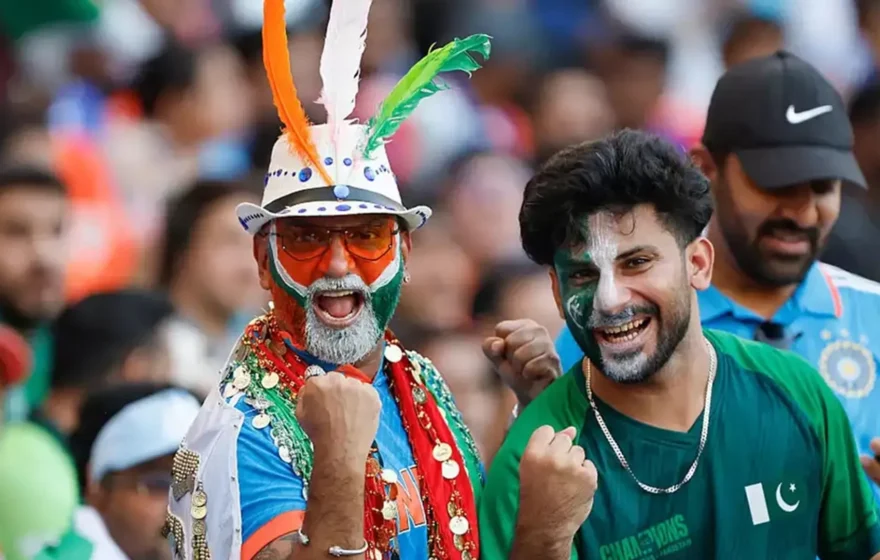
The group-stage meeting between Pakistan and India at the ICC Men’s Cricket World Cup 2027 has attracted nearly 8.4 million ticket requests, more than the tournament final itself. The International Cricket Council revealed the figures on Monday, and they confirm what cricket fans have long known: when these two teams meet, no other fixture in the sport commands quite the same attention, not even the match that decides the trophy.
The two sides will meet on October 10, 2027, at the 34,000-seat Wanderers Stadium in Johannesburg, South Africa. The final, scheduled for November 21 at the same ground, has drawn nearly 8 million requests. That the group match has outstripped the final is striking, because finals usually top every demand chart. It speaks to the unique pull of the Pakistan-India rivalry, a contest shaped by history, geography and the rarity of meetings between the sides, who now face each other almost exclusively in global tournaments. For millions of supporters, this is not just another group game; it is the fixture they plan their tournament around.
Pakistan and India have been placed in Group A alongside Australia, Afghanistan, Zimbabwe and a qualifying team. The draw also leaves open the possibility that the rivals could meet again in the Super 7 stage and potentially for a third time in the final, depending on how both sides progress. That prospect only adds to the excitement, because a group-stage result could set up a later rematch with even higher stakes. Tournament organisers will be hoping for exactly that kind of storyline, which keeps interest alive deep into the event.
The wider ballot numbers are remarkable in their own right. The ICC says more than 120 million ticket requests have been received for the tournament, from approximately 2.8 million fans in 193 countries. South Africa, the United Kingdom, India, the United States and Australia lead the registrations, while fans from African countries have submitted more than 14.9 million applications. The ticket ballot opened on October 1 and will remain available until November 21. Registration is free, and successful applicants get the chance to buy tickets through a randomised selection process, a system designed to give ordinary supporters a fair shot at seats that demand far exceeds.
Those numbers need to be read against the size of the venues. The Wanderers holds 34,000 spectators, so even 8.4 million requests for one match means the overwhelming majority of applicants will be disappointed. That imbalance is the reality of modern mega-events, where global television audiences run into hundreds of millions and stadium capacity can only accommodate a fraction of those who want to attend. The ballot system, for all its frustrations, is the fairest way organisers have found to ration something so scarce, and the free registration removes at least one barrier for fans who could never afford premium hospitality packages.
The tournament itself will be a landmark event. Fourteen teams will play 57 matches across 12 venues in South Africa, Zimbabwe and Namibia from October 2 to November 21, 2027. It will mark the return of the Men’s Cricket World Cup to Africa after 24 years, the continent having last hosted it in 2003. Namibia will host men’s World Cup matches for the first time, while Zimbabwe will introduce its new stadium at Victoria Falls. For African cricket, the tournament is a chance to showcase the game to new audiences and to leave behind upgraded facilities and a larger fan base. The strong response from African supporters, with more than 14.9 million applications, suggests that appetite is already there.
For Pakistan and India, the group match will carry its usual weight of expectation. Players on both sides know that a win in this fixture lives long in the memory, while a defeat brings scrutiny that lasts far beyond the tournament. Coaches will try to treat it as just another game worth the same points as any other, but nobody involved truly believes that, and the ticket numbers prove why. Supporters, broadcasters and sponsors all treat it differently, and the atmosphere at the Wanderers on October 10 is likely to be among the most intense of the entire event.
Looking ahead, the ballot figures are also a signal to the ICC about the future shape of the World Cup. Demand on this scale suggests the appetite for the 50-over game remains enormous, even as shorter formats dominate domestic calendars. It also raises questions about how the sport balances access, affordability and commercial return, because a system in which millions miss out inevitably creates a secondary market and frustration among genuine fans. For now, though, the story is simpler: a group match in Johannesburg has become the hottest ticket in world cricket, and the final, for once, will have to settle for second place.
