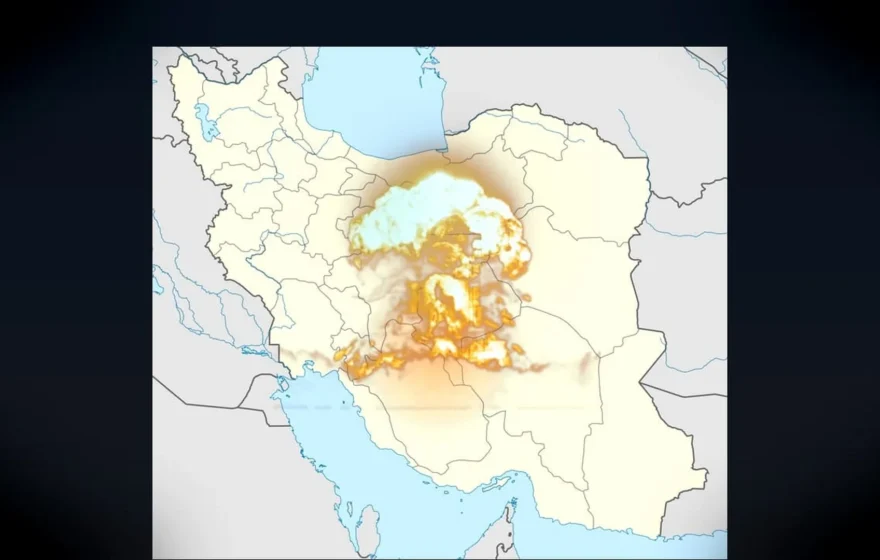
Iranian health authorities have begun handing out iodine tablets to people living around the Bushehr nuclear power plant, the country’s only working nuclear power station, as part of an emergency preparedness plan drawn up before last year’s war. The move was reported on Friday, as talk of fresh American strikes on Iran’s nuclear sites has returned.
The Young Journalists Club, an Iranian news agency, said the distribution started in the area closest to the plant and was then extended across the city of Bushehr. Crisis management officials ordered the release of 180,000 tablets, which residents can now collect free of charge, but only from comprehensive health centres. The tablets are not being sold in pharmacies and are not being handed out door to door. Collection is in person at the designated centres.
The tablets contain stable iodine, the same substance sold in many countries as potassium iodide. They protect the thyroid gland from one specific danger, radioactive iodine. If a nuclear accident or a strike on a nuclear facility released radioactive iodine into the air, people nearby could breathe it in, and the thyroid would soak it up and hold on to it. That raises the risk of thyroid cancer, especially in children. Stable iodine taken at the right time fills the thyroid first, leaving little room for the radioactive form.
Health officials in Bushehr gave clear instructions on timing and dose. The tablets work best when taken from 24 hours before a possible exposure up to four hours afterwards, and they offer little protection if taken a full day after exposure. The dose depends on age. Babies under one month old should receive one eighth of a tablet, children between one month and three years a quarter of a tablet, children between three and 12 half a tablet, and everyone over the age of 12 a full tablet. Officials stressed what the tablets cannot do: they give no protection against other radioactive substances or against radiation from outside the body, and should only be taken on official advice.
The plan was put together before the June 2025 war between Israel and Iran, a 12-day conflict in which the United States also bombed three of Iran’s nuclear sites. Bushehr was not among the facilities hit, but it is the most exposed of Iran’s nuclear sites in another sense. It sits on the Persian Gulf coast, only about 17 kilometres from the city of Bushehr, and it is closer to the capitals of Kuwait and Qatar than it is to Tehran. Any serious incident there would be a regional event, so the plant is watched closely by Iran’s neighbours and the International Atomic Energy Agency.
Work on the plant began in 1975, when the Shah of Iran hired the German firm Siemens to build two reactors. The project collapsed after the 1979 revolution, and the site was bombed repeatedly during the Iran-Iraq war. Russia took over the contract in 1995 and spent years finishing the first reactor, which connected to the national grid in September 2011 and entered commercial operation in September 2013. It produces about 1,000 megawatts of electricity and remains Iran’s only operational nuclear power plant. Two more reactors are under construction there, and Russian specialists still work at the site.
That warning has fresh relevance. On November 1, United States President Donald Trump warned that Washington could strike Iran’s remaining suspected nuclear facilities within ten minutes, a threat he linked to a site he called Pickaxe Mountain. Two weeks earlier, on October 16, he had ruled out using nuclear weapons against Iran but left the door open to further conventional strikes. Neither statement named Bushehr, and there has been no suggestion that the plant itself is a target. But the rhetoric has put civil defence planning back on the agenda, and the iodine distribution is the most visible sign of it.
It is worth being careful about how much of this story is confirmed. ProPakistani, which first carried the report, noted that much of the coverage circulating internationally is being pushed by outlets it described as Israel-backed and propaganda-centred, and that verified sources have yet to confirm or report the distribution. The checkable details are specific and consistent with standard emergency practice. The wider claims about what the distribution means should be read with that caution in mind.
What is certain is that iodine tablets are a standard part of emergency planning wherever a nuclear plant operates. Health authorities in many countries keep large stocks near reactors and hand them out in advance or at the first sign of trouble, because the window in which they help is short. The World Health Organisation recommends a single dose, alongside sheltering indoors and, if ordered, evacuation. Iran is now following the same playbook. For the people of Bushehr it is a reminder that the plant powering part of their country also carries a risk to plan for, even in peacetime.
