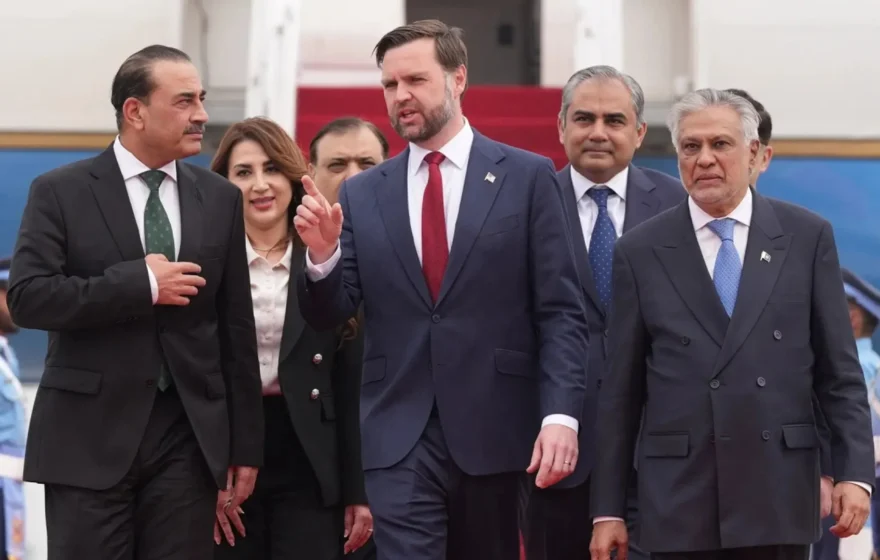
United States Vice President JD Vance has been speaking almost every day with Pakistan’s army chief, Field Marshal Asim Munir, as Washington tries to secure a new ceasefire with Iran and restart negotiations over Tehran’s nuclear programme, according to a report by the American news outlet Axios. Published on Friday and based on two sources familiar with the discussions, the report says Vance has personally taken charge of the effort over the past two weeks.
According to the report, Vance has been in contact not only with Munir but also with Qatari Prime Minister Sheikh Mohammed bin Abdulrahman Al-Thani and other mediators. The conversations have covered the possibility of a working-level technical meeting between American and Iranian officials in the coming days, although no such meeting has taken place so far.
The vice president’s direct involvement has lifted the diplomatic push to the highest level of the Trump administration. White House envoy Steve Witkoff and presidential adviser Jared Kushner, the president’s son-in-law, are also taking part. Two weeks ago, Vance sent a letter to Mohsen Rezaei, the secretary of Iran’s Supreme National Security Council, proposing a return to direct talks.
President Donald Trump has allowed the diplomatic track to continue, telling reporters on Friday that Washington was talking to Tehran. At the same time, the American military remains ready to resume strikes if the president decides to abandon the negotiations, a warning that gives the talks an urgency neither side can ignore.
Pakistan’s Role in Previous Iran Negotiations
Pakistan has already played an important part in earlier diplomatic efforts between Washington and Tehran, and that history helps explain why Vance has turned to Field Marshal Munir so often. Vance previously led the American negotiating team at a summit on Iran held in Islamabad in April, and he was involved in the talks that produced a United States-Iran memorandum of understanding in June.
He later headed the American delegation during another round of direct negotiations with Iran in Switzerland. Those discussions ended with Iran agreeing to invite United Nations inspectors to visit its nuclear facilities. The agreement later fell apart after Iran’s Islamic Revolutionary Guard Corps resumed attacks on ships, and that collapse is one reason the current effort is being handled with such caution.
Pakistan’s position as a neighbour of Iran, with long-standing ties to both Tehran and Washington, has made it a natural channel for messages that cannot easily be delivered directly. Islamabad has kept communication open with both sides through the months of tension, and the near-daily calls suggest Washington now sees Pakistan as one of its most useful links to Tehran.
Vance Takes Lead in Iran Negotiations
The scale of Vance’s role marks a striking change for a vice president who had opposed the war with Iran before it began. His decision to take the diplomacy into his own hands follows a difficult midterm election result for the administration, and it places him at the centre of one of its most sensitive foreign policy questions.
The report says Vance has spent the past two weeks personally involved in indirect talks with Iran, working through the Qatari and Pakistani mediators rather than through the usual diplomatic channels. His letter to Rezaei was the clearest sign yet that Washington wants a direct channel reopened, and the positive response from Tehran suggests the Iranian leadership is at least willing to listen.
Qatar’s role has been just as central. Sheikh Mohammed told reporters on Friday that his country had been working with officials in the American administration who wanted to contain the situation and prevent further escalation. He added that discussions had continued after the American midterm elections, even though diplomatic activity had slowed while Washington dealt with other issues.
Iran Deal Faces Slow Progress Amid Military Tensions
Despite the flurry of calls and letters, the report described the negotiations as slow, and the fighting has not stopped while the talking goes on. On Friday, the American military struck an anti-aircraft missile launcher on Iran’s Qeshm Island in the Strait of Hormuz after it allegedly fired a missile towards an American fighter jet, an incident Trump confirmed.
The Qeshm strike was the latest in a series of limited American attacks in recent weeks. Iranian state media reported explosions on the island, while American officials described their actions as defensive strikes to protect shipping in the strait. At least eleven ships were attacked in and around the Strait of Hormuz in the week ending on November 6, three of them sinking, according to the United Kingdom Maritime Trade Operations body.
The stakes of failure are high for everyone involved. The Strait of Hormuz carries a large share of the world’s seaborne oil, and any wider conflict would threaten energy supplies and shipping far beyond the Gulf. For Pakistan, a new war next door would bring refugees, economic disruption and security risks along a long shared border.
Whether Vance’s near-daily conversations with Munir and the Qatari prime minister can produce a breakthrough remains an open question. A technical meeting between American and Iranian officials would be the first concrete step, and the mediators are still working to arrange one. Until then, diplomacy and military pressure are likely to continue side by side.
