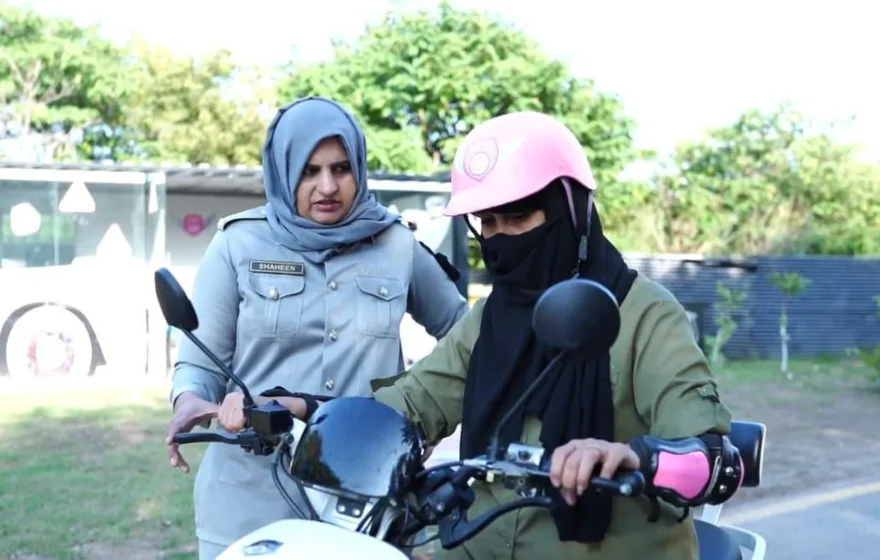
Islamabad Traffic Police has opened a second batch of free scooty training for women, after the first round of classes filled up so quickly that many applicants could not be fitted in.
The new batch will run from 16 to 30 November, Chief Traffic Officer Kainat Azhar Khan announced, giving women who missed the first phase another chance to learn to ride a scooty without paying anything. The first phase, running from 1 to 15 November, is still under way. Women who cannot attend those classes, or who could not be accommodated once the places were taken, can now join the second phase instead.
The decision was driven by the sheer number of applications. Khan said the response from women in the city had been overwhelming, and that fitting all the incoming admissions into the programme’s three daily shifts had become difficult. Rather than turn applicants away, the traffic police split the intake into two phases, doubling the number of women who can be trained this month.
It is a measure of how much demand there is for something that did not exist in the capital until this year. For many women in Islamabad, a scooty is the most practical way to travel on their own: cheaper than a car, easier to park and handle than a motorcycle, and far more flexible than waiting for a bus or a ride. But knowing how to ride one, and feeling confident enough to do it in traffic, is a different matter, and until recently there was nowhere in the city offering that training free of charge.
The programme is run by Islamabad Traffic Police at the Uraan Driving School, which sits at the traffic police headquarters in Faizabad. Registration takes place at Islamabad Police Lines in H-11, and the practical lessons are given by experienced female police officers. The choice of women instructors is deliberate: it creates an environment in which learners feel comfortable, particularly those who have never ridden before.
The school itself is new. It was inaugurated in February 2026 by Inspector General of Police Syed Ali Nasir Rizvi as a dedicated facility for women who want to learn to ride scooties, motorcycles and cars. Its first batch saw around a hundred women complete their training in March 2026, and further batches followed. The November programme is the latest step in that effort, and the speed with which its places filled suggests it is reaching women who had been waiting for exactly this kind of opportunity.
Khan has described the aim in plain terms: to help women become more self-reliant. The ability to ride a scooty changes the shape of a day for a working woman, a student or a mother. It removes the wait for transport, the cost of daily rides, and the need to plan every journey around someone else’s schedule. For a woman who commutes to a college or an office, or who drops children at school before going to work, that independence is worth a great deal, and it is why the training has drawn such a strong response.
The training is also about road safety. A new rider who has been taught properly is a safer rider, and the lessons, delivered by traffic police officers, cover the rules of the road as well as the practical skills of handling a scooty.
There is one thing the programme does not do, and it is worth stating clearly: it does not give participants a scooty. The training, and nothing else, is free. Women who complete the course will need to arrange their own vehicle afterwards, whether by buying one, borrowing one, or using a family vehicle. The distinction matters, because the announcement has drawn interest from women across the city, and anyone signing up should know exactly what is on offer.
The second batch runs from 16 to 30 November, immediately after the first phase ends, so there is no gap. Women interested in joining should register at Islamabad Police Lines in H-11, and can get further details from Islamabad Traffic Police through its official channels, including its account on X, @ICT_Police, and the traffic police helplines 1915 and 1715. With the first phase already full, those who want a place in the second batch would be wise not to leave registration until the last days.
The wider picture is that Islamabad is testing a model other cities could follow. A police force that teaches women to ride, rather than only policing them, is a different kind of public service, and the demand so far suggests it is one the city wants. If the second batch fills as quickly as the first, the traffic police will have to decide whether to keep the programme running into December and beyond. For now, the immediate question is simpler: how many of the women who applied in the first days of November will get their chance in the second half of the month.
