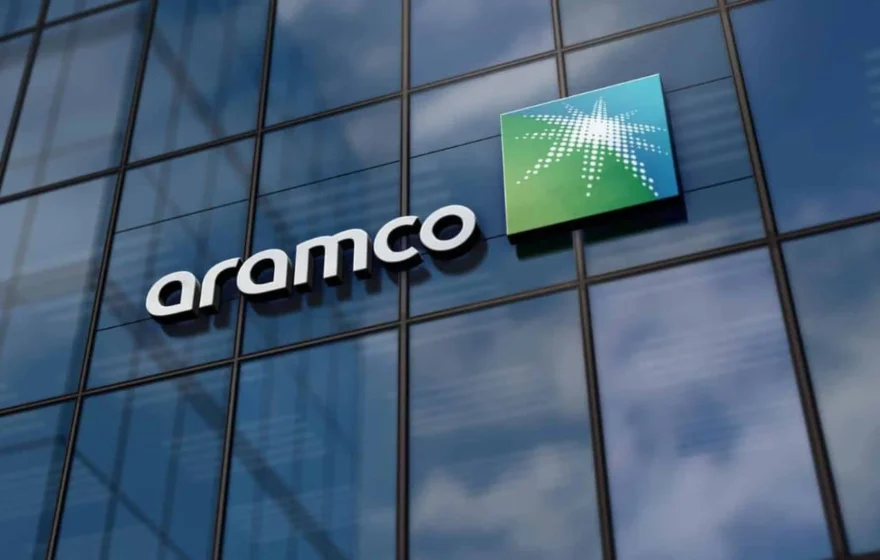
A Saudi Aramco office building in Riyadh was damaged on Sunday after Yemen’s Houthis launched a fresh wave of missiles and drones at the Saudi capital, in the latest sign that the war in Yemen is spilling ever deeper into the heart of the kingdom. Saudi officials said falling debris caused only limited damage and that nobody was killed or hurt, but witnesses described shattered windows across several floors of the tower.
The Houthis quickly claimed responsibility, saying they had fired ballistic missiles, cruise missiles and drones at targets inside Saudi Arabia, including Riyadh’s financial district, King Khalid International Airport, Aramco oil storage facilities and the eastern city of Abqaiq. If the claim is accurate, this was one of the broadest single rounds of attacks on Saudi territory since fighting flared again this year.
Saudi Air Defences Intercept Missiles
The Saudi-led coalition said its air defences had intercepted missiles fired towards Riyadh. Coalition spokesman Major General Turki al-Malki said Saudi forces had shot down two ballistic missiles heading for the capital, and officials also reported intercepting two cruise missiles aimed at Riyadh and at southern parts of the kingdom. Al Jazeera reported that the coalition had destroyed several ballistic missiles in total, with two fired towards Riyadh and another towards the Eastern Province.
Residents across Riyadh heard loud blasts during the interceptions, and Saudi Civil Defence sent out an alert before later announcing that the immediate danger had passed. A witness for the Reuters news agency reported blown-out windows across several floors of the Aramco building, a picture that sits uneasily with the official description of the damage as limited. The Energy Ministry said the harm came from falling debris rather than a direct hit.
Riyadh’s Financial District Becomes a Target
The building that was hit stands in the King Abdullah Financial District, known as KAFD, one of the most prominent business quarters in Riyadh and a centrepiece of Saudi Arabia’s economic transformation programme. The district is a cluster of high-rise office towers, luxury shops, homes and public spaces, and it houses major Saudi and international businesses, including the investment bank Goldman Sachs. The headquarters of the Public Investment Fund, the kingdom’s sovereign wealth fund, are there, as is the Saudi stock exchange.
Houthis Step Up Attacks on Saudi Arabia
Aramco’s facilities have come under repeated attack in recent months as hostilities have gathered pace. The Houthis have gone after oil refineries, storage sites, tankers, corporate offices and other energy infrastructure, and the campaign has widened steadily from military targets to civilian ones.
The latest incident came only hours after Saudi Arabia’s Education Ministry announced that schools in Riyadh would return to in-person classes, after weeks of remote learning brought on by earlier attacks. The most serious single attack so far came on 10 October, when a strike on Riyadh’s international airport killed 13 people and wounded more than 300, one of the deadliest attacks inside the kingdom since Saudi Arabia entered the Yemen conflict in 2015. The airport only resumed flights on 25 October.
Yemen Conflict Intensifies Again
The roots of the present fighting go back more than a decade. The Houthis seized Yemen’s capital, Sanaa, in 2014, and Saudi Arabia then led a military coalition into Yemen in 2015 in support of the internationally recognised government. A truce brokered by the United Nations in 2022 largely brought major fighting to a halt for several years, but that ceasefire collapsed in July 2026, and a renewed cycle of Saudi air strikes and Houthi missile and drone attacks has followed.
According to the account cited by Dawn, tensions rose sharply after the Houthis allowed an Iranian aircraft to land in Sanaa despite Saudi control over Yemeni airspace. The group then announced a maritime blockade against Saudi Arabia and began targeting Saudi vessels, territory and energy infrastructure, before expanding its control along the Red Sea coast. Fighting inside Yemen has also intensified, with government forces launching an operation last month, called Dawn of Yemen, aimed at retaking Houthi-held territory, including the capital. The United Nations says more than 1,600 people have been killed and over 300,000 displaced since the latest round of fighting began.
Pakistan Condemns Houthi Attacks
Pakistan has repeatedly condemned Houthi attacks on Saudi Arabia, describing them as violations of the kingdom’s sovereignty, and the latest strike puts Islamabad’s promises to Riyadh back in the spotlight. The two countries now have two defence arrangements aimed at strengthening collective deterrence: the Strategic Mutual Defence Agreement, signed in Riyadh on 17 September 2025, under which an attack on either country is treated as an attack on both, and the Makkah Joint Defence Agreement, signed on 7 August 2026 by Saudi Arabia, Turkiye and Pakistan, which sets out mechanisms to deploy military forces rapidly if required.
Pakistan’s military spokesman, Lieutenant General Ahmed Sharif Chaudhry, said in October that Pakistan was providing Saudi Arabia with whatever support was needed, while stressing that the alliance had a defensive purpose and no offensive mandate. Sunday’s attack comes as Saudi Arabia is seeking greater help from its allies while facing sustained missile and drone attacks from Yemen, and with the financial district now in the Houthis’ sights, the pressure on Riyadh’s partners is only likely to grow.
