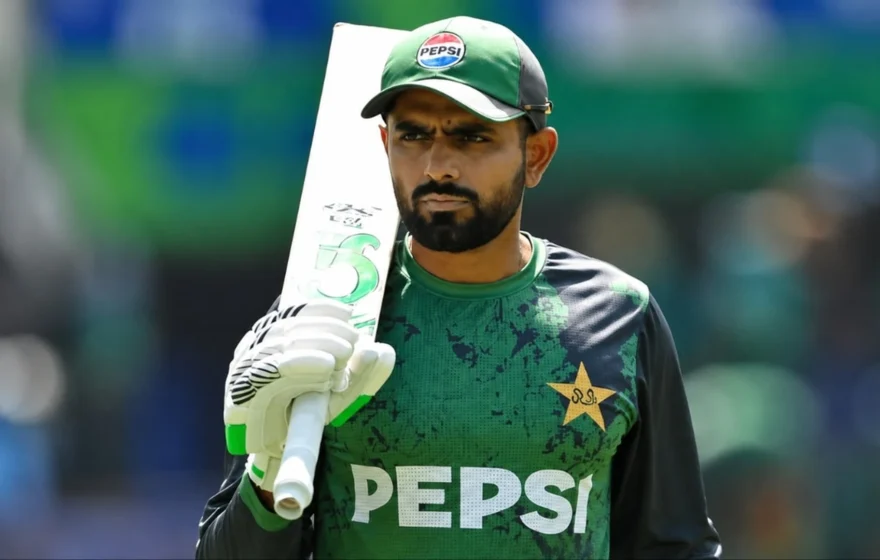
Pakistan captain Babar Azam has opened a new cricket academy in Lahore, named after his father, Azam Siddiqui. The academy, called Azaam Cricket Academy, will focus on coaching young cricketers, with particular attention on developing young batters.
The news comes as Babar leads Pakistan in a two-match home Test series against Sri Lanka. Even so, the academy underlines a wider ambition that goes beyond his own playing career. Rather than simply lending his name to a coaching centre, Babar appears intent on passing on the lessons he has gathered over more than a decade at the highest level, offering youngsters in Lahore the guidance he received as a boy.
For Babar, the project is deeply personal. He has spoken often about the part his father played in his development, and the naming of the academy is a direct tribute to that support. As a youngster growing up in Lahore, Babar was driven from ground to ground by his father, who watched his matches and talked through his batting with him. It was his father who enrolled him in a local cricket club, the first organised step on a journey that would eventually carry him into the Pakistan team.
That early grounding mattered. Babar went on to train at the National Cricket Academy in Lahore, represented Pakistan at Under-19 level and made his international debut against Zimbabwe in 2015. From there his rise was steady. He became one of the most consistent batters in world cricket, played for Pakistan in all three formats and captained the national side, leading the team to the final of the 2022 ICC Men’s T20 World Cup in Australia.
The timing of the launch is also significant. Babar was reappointed as Test captain in July, and he is currently leading a reshaped Pakistan side in the home series against Sri Lanka. The first Test began in Rawalpindi on November 9, with Babar scoring 50 in the opening match and sharing a 69-run partnership with debutant Mohammad Taha. Taha, who made 51 on his first appearance for Pakistan, later said Babar had helped him settle at the crease during his maiden international innings.
That influence is precisely what the academy hopes to build on. Pakistan has no shortage of raw cricketing talent, but the path from street and school cricket to the professional game is often uneven. Coaching can be patchy, facilities vary widely from city to city, and many promising youngsters never receive the technical guidance they need at the age when habits are formed. An academy run by a current international captain offers something different: coaching shaped by first-hand experience of what international cricket actually demands.
Lahore has long been one of the great nurseries of Pakistani cricket. The city has produced a long line of international players, and its club scene remains fiercely competitive. Yet even in Lahore, a young batter with talent still needs someone to teach him how to build an innings, how to handle pressure and how to practise with purpose. That is the gap an academy like this can fill, provided it is run seriously, with qualified coaches and a clear programme rather than as a short-lived publicity exercise.
There is also a broader question for Pakistan cricket, which has spent much of the past year searching for stability. The Test side sits ninth and last in the World Test Championship standings after a difficult run that included a 3-0 whitewash in England, and the current series against Sri Lanka is part of a rebuilding effort built around younger players. The second Test is scheduled to follow from November 17. In that context, an academy that develops batters for the long term is a necessity, even if its results will only show years from now.
Babar himself knows better than most how long that process takes, having spent years in the nets as a teenager working on his technique under the guidance of his father and his coaches. His own career has not been without difficult spells. He is currently going through a lean run in Test cricket, having gone 40 Test innings without a century. Yet his standing in the game, and the respect he commands among younger players, remains considerable.
The real test of Azaam Cricket Academy will come over time. New academies are announced regularly in Pakistan, and not all of them last. What will matter is whether it offers consistent coaching, reaches youngsters who might otherwise be overlooked and sees its graduates go on to play serious cricket. If it does those things, it could become a meaningful part of Lahore’s cricketing landscape and a fitting legacy for a player still very much in the middle of his career.
For now, though, the launch is a reminder of where Babar Azam came from and what he values. A father who drove his son to practice, a club that gave him his first chance and a city that shaped him have all been repaid in the most fitting way he could manage: a place where the next generation can begin the same journey.
