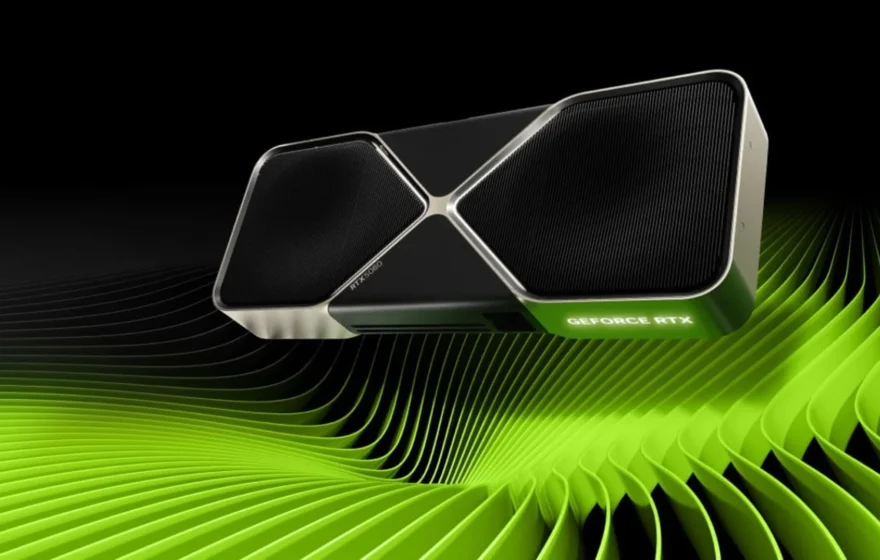
Nvidia has reportedly shelved plans to launch a 24GB version of its GeForce RTX 5080 in China in January 2027, because the memory chips it needed have become too expensive. The existing 16GB model, which the new card was expected to replace as the company’s leading GeForce card in China, will stay in production instead, leaving buyers with the same card they have had since the start of last year.
The report comes from Chinese supply-chain forum Board Channels, picked up by Japanese outlet Gazlog. It says Nvidia told its board partners the January launch plan was off and offered no new date. Nvidia has never announced a 24GB RTX 5080 and has said nothing in public about the report, so the story rests on trade reporting alone. Even so, it has travelled quickly, because it fits a pattern gamers have watched all year: memory is getting dearer.
What Killed the Upgrade?
The problem is not the graphics processor itself. The 24GB card was expected to use the same chip as the current RTX 5080, with eight 3GB GDDR7 memory chips taking the place of the eight 2GB chips in the card on sale today. The memory bus stayed the same, so the extra capacity would simply have given the card more room for modern games.
What changed was the price of those chips. Gazlog reported that each 3GB chip now costs about three times as much as a 2GB chip, with other outlets putting the gap at roughly 60 to 70 dollars for a 3GB chip against about 20 dollars for a 2GB one. Across eight chips, that adds 320 to 400 dollars to the cost of each card before any profit margin, a heavy burden on a product launched at 999 dollars.
Gizmochina cited an estimate that put the finished 24GB card at around 2,000 dollars, roughly double the launch price of the 16GB Founders Edition. Nvidia never announced a price for the 24GB model. A card built on such costly memory would have to sell for far more than the card it replaced, and Nvidia appears to have decided buyers would not pay it.
How the Launch Fell Apart
The launch had already been slipping. Earlier accounts had pointed to a China launch as soon as December 2026, yet the practical work of getting the card ready was not keeping pace.
Gazlog said Nvidia’s board partners were due to receive the documents needed to design and test their own circuit boards and cooling systems in October, but the material had still not arrived by the end of the month. Without those design kits, partners could not build their own versions, and a January launch was already looking doubtful.
Board Channels later reported that Nvidia had told its partners the January plan was dropped and gave them no replacement date. The report concerns the China launch, where the card was expected to appear first. It does make clear that Nvidia will keep supplying partners with kits built around the cheaper 2GB chips, so production of the current 16GB card can carry on.
Could the 16 GB Card Hit $3,000?
For anyone hoping the decision would bring prices down, the early signs are not encouraging. Nvidia’s own marketplace in the United States shows the 999-dollar Founders Edition as out of stock, while partner versions are listed at roughly 1,800 to 2,500 dollars, far above the price announced when the card went on sale on 30 January 2025. The 16GB card remains in the lineup, but staying in production is not the same as staying affordable.
Prices in China could also rise further. MSI reportedly plans to raise distributor prices for some RTX 5080 cards there by 1,300 to 8,000 yuan, or about 195 to 1,200 dollars. Wccftech has estimated that some cards could reach 3,000 dollars at retail if those increases take hold, although that figure is a projection rather than a confirmed price.
The wider picture helps explain why one memory chip can derail a whole product. Memory prices have climbed sharply this year as artificial intelligence data centres absorb supply, and the denser GDDR7 parts a 24GB card needs are among the hardest to obtain. Card makers are competing with data centre operators for the same factories, and gamers are losing that contest.
For gamers, the practical effect is simple. The card meant to replace the RTX 5080 is not coming, at least not in January, and the card on sale costs far more than its launch price in most shops. Those who were waiting for the 24GB model, hoping it would push the 16GB card down in price, will have to wait longer, and may have to pay more when they finally buy.
Whether the 24GB card is gone for good or simply delayed until memory prices ease is not yet clear. What is clear is that the price of memory now decides which graphics cards get made. A 24GB RTX 5080 only made sense while 3GB GDDR7 chips were affordable, and right now they are not. Until that changes, Nvidia’s leading card in China will remain the one it launched nearly two years ago.
