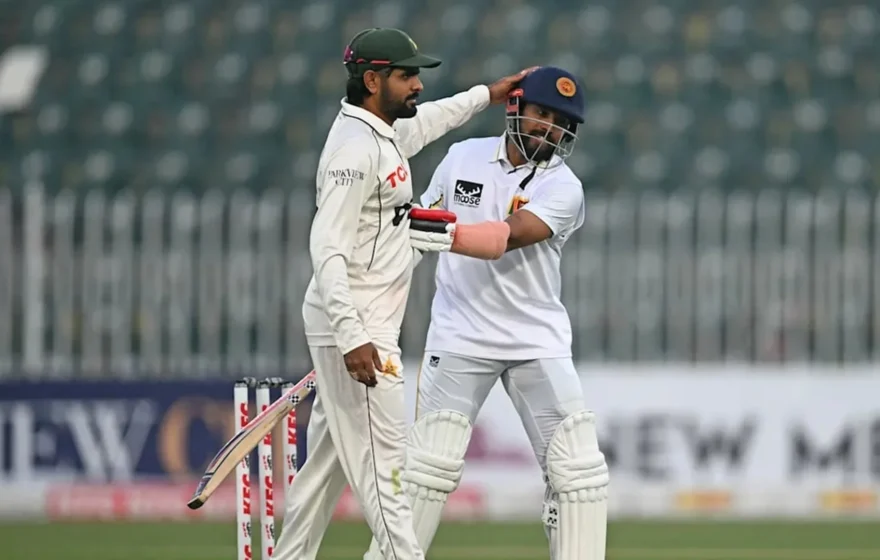
Pakistan and Sri Lanka have both been punished by the International Cricket Council for slow over-rates in the drawn first Test at Rawalpindi, with heavy fines and World Test Championship points deductions that have pushed both teams further down the standings in the 2025-27 cycle. The sanctions, confirmed by the ICC on Tuesday, underline how costly something as routine as the pace of play can become when championship points are on the line.
Sri Lanka have borne the heavier blow, losing fifteen points after being found fifteen overs short of the required rate during the first Test at the Rawalpindi Cricket Stadium. Pakistan have lost five points after falling five overs behind the target. Under the ICC World Test Championship playing conditions, a team loses one point for every over it fails to bowl within the required time, once allowances for stoppages are taken into account.
The effect on the table has been dramatic. Sri Lanka have slipped from seventh to eighth place, with their points percentage collapsing from 33.33 to 15.47. Pakistan remain ninth and last in the nine-team standings, but their position has grown weaker still, with their points percentage dropping to 3.33. Before the deduction, Pakistan had nine points and a percentage of 7.50 from the draw. They now have only four points. Sri Lanka, who had 28 points from seven matches before the game, have been left with barely any margin for error in the remainder of the cycle.
The financial penalties are just as severe. Both teams have been fined under Article 2.22 of the ICC Code of Conduct, which sets a penalty of five percent of a player’s match fee for every over a side falls short, up to a maximum of half the fee. Pakistan’s players have been fined 25 percent of their match fees, while Sri Lanka’s players have received the maximum 50 percent fine. The same penalties apply to the player support personnel of both sides.
Match referee Dean Cosker imposed the sanctions after charges were brought by the on-field umpires Adrian Holdstock and Rod Tucker, third umpire Allahuddien Paleker and fourth umpire Faisal Afridi. There will be no formal hearing, because both captains accepted the charges and the proposed penalties. Pakistan captain Babar Azam and Sri Lanka skipper Kusal Mendis agreed to the sanctions, and the penalties have taken immediate effect.
The match itself, played from November 9 to 13, ended in a draw after five days of cricket, with weather interruptions adding to the frustrations of both sides. Pakistan declared their first innings at 434 for nine, with five batters reaching half-centuries. Sri Lanka replied with centuries from Dhananjaya de Silva and captain Kusal Mendis to reach 446 and take a twelve-run lead. The visitors looked well placed before debutant Saqib Khan turned the game with a seven-wicket haul, his first in Test cricket. Pakistan then batted through the rest of the match, finishing their second innings at 284 for eight to make sure of the draw.
In the World Test Championship, a win is worth twelve points, a draw four and a defeat none, and teams are ranked by the percentage of available points they have won. That system means every point matters, and deductions for slow over-rates can be the difference between staying in contention and falling out of it. New Zealand currently lead the standings with a points percentage above seventy, and the gap between the leaders and the two sides punished in Rawalpindi now looks wider than ever.
For Pakistan, the penalty follows a pattern that has become painfully familiar. The team have played ten Tests in the 2025-27 cycle, winning two, drawing one and losing seven, and slow over-rates have cost them points before. An earlier deduction of eleven points during the tour of England, where Pakistan lost the series three-nil, did much of the damage, and this latest loss continues a trend that has kept them anchored to the bottom of the table.
Both sides have a chance to respond. The second and final Test began at Rawalpindi on Tuesday, November 17, and runs until November 21, after the fixture was moved from Lahore because of smog over Punjab. Pakistan have made the stronger start, bowling Sri Lanka out for just 98 in their first innings on the opening day. A victory would be worth twelve championship points, more than enough to offset the deductions, and it would restore some pride after a first Test in which both sides were left to count the cost of their own slowness.
The lesson of Rawalpindi is a simple one. In a competition where points are scarce and the table is decided by percentages, the pace at which a side bowls its overs is not a minor detail. It is a part of the game that can decide where a team finishes, and on this occasion it has cost Pakistan and Sri Lanka dearly. How they respond in the second Test will determine whether this week is remembered as a turning point or simply as another chapter in a difficult campaign for both sides.
