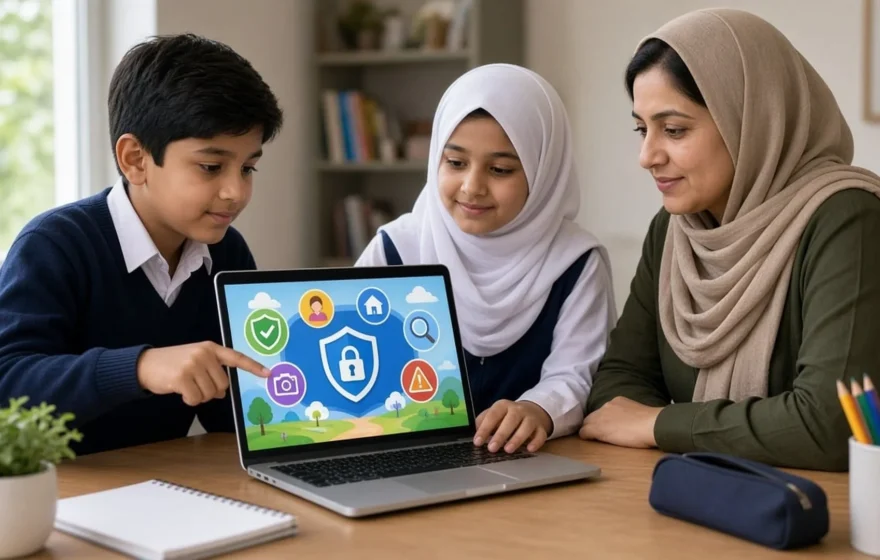
The National Cyber Crime Investigation Agency has launched a new online platform that teaches children how to stay safe on the internet, to give young Pakistanis the skills they need to navigate a digital world that is growing riskier by the year.
The platform, called Kids Corner, was announced by the agency in a post on X, where it described the service as a friendly space built around fun activities, informative challenges and simple safety tips. Children who use it learn how to protect their personal information, recognise online risks and use the internet responsibly, lessons that have become essential as more of everyday life now happens on a screen.
The launch comes at a time when the scale of the danger facing children online in Pakistan has become clearer than ever. A major study published in September by UNICEF, ECPAT International and INTERPOL found that nearly one in sixteen internet-using children aged between twelve and seventeen in Pakistan, around one and a half million children, experienced some form of technology-facilitated sexual exploitation or abuse in a single year. Most of the affected children never told anyone, and in about eighty-five per cent of the cases the person responsible was someone the child already knew. Social media accounted for forty-four per cent of the reported incidents, and artificial intelligence is now being used to create fake images and videos of children.
A survey by the cybersecurity firm Kaspersky, cited in Dawn in October, found YouTube to be the most popular mobile app among children in Pakistan, followed by Instagram and WhatsApp. Multiplayer games and messaging platforms can put young users in direct contact with strangers, opening the door to grooming, fraud and blackmail. The Pakistan Telecommunication Authority has told the Islamabad High Court that it cannot force age checks on social media, which makes teaching children to protect themselves all the more important.
What Kids Corner Offers
Kids Corner is available on the agency’s website at nccia.gov.pk/kids.html and is built around three sections: Safety Missions, Learn Online Safety and Fun Challenges. The idea is to turn safety lessons into something children actually want to do, with activities and challenges replacing long lectures and warning notices.
At the heart of the platform are four basic safety lessons. The first is to keep passwords private and never share them with friends or strangers online. The second is to think before clicking, so children pause before opening a link, downloading a file or replying to a message from someone they do not know. The third is to stay safe from strangers, and the fourth is to talk to a trusted adult whenever something online feels wrong or frightening.
The platform is not aimed at children alone. It also carries guidance for parents and resources for teachers, so that families and schools can back up the lessons at home and in the classroom. That matters because safety habits stick when the adults around a child understand the risks and know how to respond.
Part of a Wider Child Safety Push
Kids Corner is the latest step in the agency’s wider effort to protect children online. The NCCIA has been holding cyber awareness sessions at schools, colleges and universities across the country, and in October it said it would use artificial intelligence to track online crimes against children.
A day before the launch of Kids Corner, the agency introduced a new app for reporting online scams, fraud and hacks. Children and parents facing cyber threats can also contact the NCCIA helpline on 1799, which runs around the clock.
The agency itself is still young. The government set up the NCCIA in May 2024 and it became fully operational in April 2025, taking over from the Cyber Crime Wing of the Federal Investigation Agency. It operates under the Prevention of Electronic Crimes Act of 2016 and the amendments passed in 2025, and complaints can be filed through its online portal at complaint.nccia.gov.pk or by calling the helpline.
The launch also follows a nationwide cyber security awareness campaign run by the Pakistan Telecommunication Authority with the United Nations Development Programme from October 17 to 23, on the theme of a safe, secure and trustworthy cyberspace. The federal information technology minister, Shaza Fatima Khawaja, said child online safety was a priority, warning that children in online games and virtual communities could come into contact with strangers and face risks including cyberbullying, grooming and peer pressure.
Whether Kids Corner makes a real difference will depend on how widely it is used. A website on its own cannot protect a child who never visits it, and the research shows that most children who face abuse online stay silent, often because they fear blame or do not know where to turn. That is why the combination matters: a platform that teaches the warning signs, a reporting app and a helpline for when something goes wrong, and parents and teachers who know how to listen. If schools take it into classrooms and families treat its four simple rules as part of everyday life, it could give young internet users in Pakistan a clear, practical sense of how to stay safe online.
