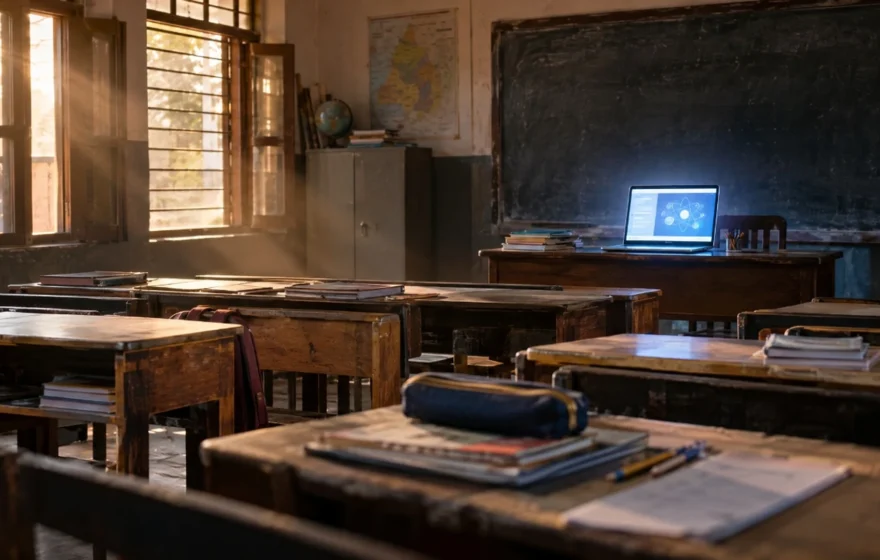
Punjab’s government schools are about to put their trust in an unlikely new teacher: YouTube. Stung by poor results in the ninth and tenth-grade board examinations, the School Education Department has told schools to use educational videos to re-teach difficult lessons to struggling students in special after-hours classes — a quiet admission that classroom teaching alone is no longer enough.
The numbers behind the decision are hard to ignore: in Lahore, the province’s largest board, fewer than half of this year’s ninth-grade candidates passed. According to the board’s official gazette, 280,676 candidates appeared for the Class 9 first annual examination and only 130,543 passed, a pass rate of 46.51 per cent. The tenth-grade picture was better but far from comfortable: 182,186 of the 282,308 candidates who appeared passed, a rate of 64.53 per cent. In other words, more than one in three matric students in Lahore failed to clear the examination, and in the ninth grade the figure was more than one in two.
The weak results were not confined to one subject or one group. In the tenth grade, science students passed at 69.23 per cent while humanities students managed only 48.78 per cent. Girls did better than boys in both groups, but the overall picture stayed the same: a large share of students left the examination hall without the grades they needed. The results, announced in August for Class 10 and in September for Class 9, raised hard questions about what was going wrong inside classrooms, and the department has now answered with a plan that leans heavily on screens.
The Screen Replaces the Blackboard
The Secretary of School Education has voiced serious concern over the low pass rate and directed officials to act quickly to improve next year’s results. Under the new guidelines, teachers must explain difficult subjects and concepts repeatedly, in simple words, making full use of educational YouTube videos and other modern teaching aids.
The change goes beyond the videos themselves. The daily routine in schools is being overhauled, with students set to receive worksheets, handouts and homework every day, to practise past board papers every week, and to take part in regular question-and-answer and discussion sessions in class. Schools have also been told to put educational charts, pictures and diagrams up on classroom walls, so learning material stays in front of students all day.
The idea is simple enough: a student who did not understand a topic the first time can watch it explained again, at their own pace, by a teacher on a screen who never tires and never rushes. The after-hours classes are aimed squarely at the weakest students, the ones the board results show are being left behind in the largest numbers.
A Not-So-Subtle Message to Teachers
Not everyone reads the plan so generously. The decision has reopened an uncomfortable debate about teacher performance, with parents and critics asking the same pointed question: if a video can teach the children, what were the teachers doing all this time?
The move is widely being seen as the department outsourcing instruction to the internet rather than confronting teaching standards directly — a de facto vote of no confidence in its own classrooms. When a government tells its schools to re-teach lessons through videos, it is conceding that the first attempt did not work for a large number of students.
There is a counter-argument, and it is worth hearing. A video does not replace a teacher; it gives a good teacher another tool. The real question is whether the department will pair the videos with training and support for teachers, or whether the screen is simply being asked to do a job the system has not equipped its teachers to do.
Monitoring Tightens, Toppers Rewarded
To make the plan stick, the department has given DPIs, CEOs and DEOs strict monitoring duties, with teaching activity checked during school visits. The message is clear: this is an instruction to be followed up, not a suggestion to be filed away.
And it is not all pressure: students who perform well will be encouraged and given appreciation certificates, the guidelines say.
The department says the whole strategy has a single target: making sure the next round of board results tells a very different story. The department has already revised the Class 10 smart syllabus for the 2027 examinations, so the digital plan arrives as part of a wider attempt to steady results rather than a one-off experiment.
Whether it works will depend on details the guidelines do not spell out: schools need the screens, electricity and internet to play the videos, and teachers must choose the right ones and build lessons around them instead of simply pressing play. The students who need the most help are often the ones with the least support at home, and an after-hours class is only useful if they can stay for it. If the department gets those details right, the screen could become a genuine second teacher. If it does not, Punjab will have changed the medium without changing the outcome, and next year’s gazette will tell the same story again.
