
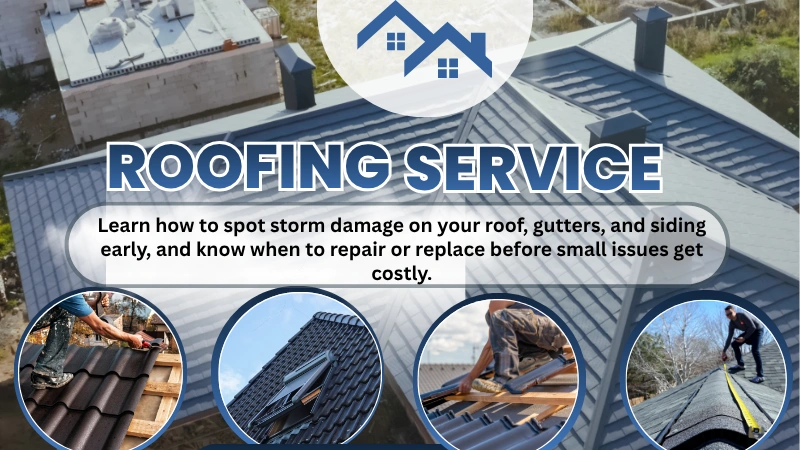
Every year, storms roll through neighborhoods and leave behind more damage than people realize. A tree branch might snap off, some shingles might shift, and a few days later everything looks normal again from the street. But roofs don’t always show their damage right away, and that’s exactly why so many homeowners end up dealing with leaks weeks or even months after the actual storm passed.
If you’ve recently had bad weather in your area, here’s what you should actually be checking, and why it matters.
Roof Damage Doesn’t Always Look Serious
People usually picture roof damage as something big and obvious, like a hole punched through by a fallen branch. In reality, most storm damage is small and easy to miss. Hail can chip away at the protective layer on a shingle without cracking it completely. Strong wind can loosen a shingle just enough to break its seal, but it might still look fine sitting there.
This is the tricky part. The roof can look completely untouched while quietly losing its ability to keep water out.
Signs Worth Checking For
You don’t have to climb onto the roof to spot most warning signs. A short walk around your house with a good look upward is usually enough.
Shingle granules in the gutter – If you notice small dark grains collecting in your gutters, that’s often shingle coating washing away, which usually means the roof is wearing down faster than normal.
Curled, cracked, or missing shingles – These are the most visible signs and usually the easiest to catch early.
Dents on metal fixtures – Vents, flashing, and gutters are often the first place hail damage shows up.
Ceiling stains – A faint discoloration on your ceiling, especially near the attic, is usually a sign that water has already gotten through.
Sagging spots on the roofline – This can mean water has been sitting in one area for a while, softening the wood underneath.
Gutters and Siding Matter Just as Much
It’s easy to focus only on the roof and forget the rest of the exterior, but gutters and siding play a big role in protecting your home too. When gutters get bent or clogged during a storm, rainwater stops draining properly and instead runs straight down the side of the house. Over time, that leads to siding damage and can even affect the foundation.
Loose or cracked siding is another problem that’s easy to overlook. Moisture can slip in behind damaged panels and sit there unnoticed, sometimes leading to mold that isn’t discovered until much later during an unrelated repair.
So when you’re inspecting your roof, take a few extra minutes to check your gutters and siding as well.
Repair or Replace?
Not every storm means you need an entirely new roof. If only a few shingles or a small section have damage, a repair usually fixes the problem. But if your roof was already old before the storm hit, or the damage covers a large area, repeated repairs might cost you more than a full replacement over time.
The best way to know for sure is to get an inspection from a roofing company that’s familiar with storm patterns in your specific region. In places like South Carolina, where storms and heavy rain are common, local roofing companies such as Cane Bay Roofing tend to have a better eye for spotting real structural issues versus normal wear, simply because they see this kind of damage more often.
What to Do Right After a Storm
- Walk around your property and check the roof, gutters, and siding from the ground.
- Take photos of anything unusual, even small dents or missing shingles, in case you need them for an insurance claim later.
- Check your attic or top-floor ceilings for any signs of moisture.
- Call a roofing professional if you spot anything that looks off.
- Keep a record of the damage and any repairs made.
Related Post: Commercial Construction Trends Shaping Modern Building Projects
Final Thoughts
Storm damage rarely announces itself right away. It tends to sit quietly until the next heavy rain finds the weak spot, and by then, what could have been a simple fix has turned into a bigger repair job. The homeowners who avoid these surprises are usually the ones who take a few minutes after every storm to check their roof, gutters, and siding, rather than waiting until there’s a leak inside the house.
A little attention right after bad weather can save you a lot of time, money, and stress down the road.