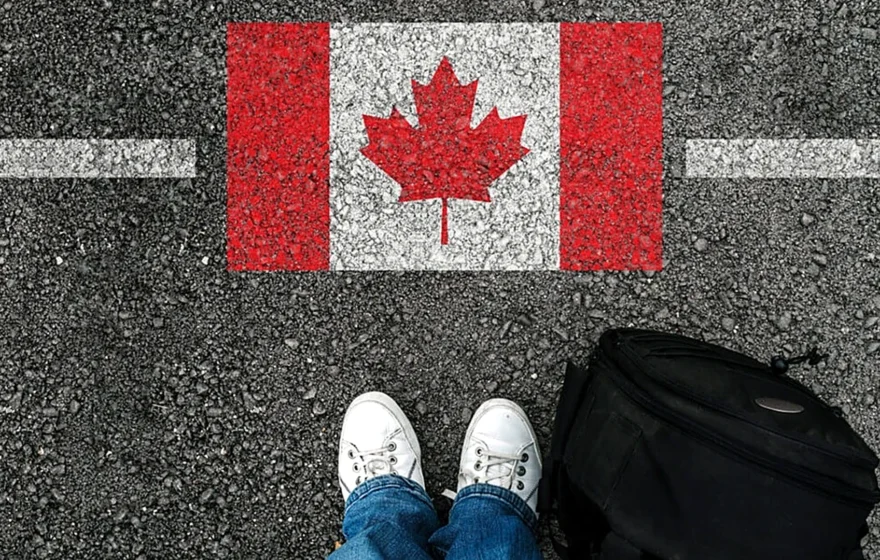
Canada has approved sweeping changes to its immigration and border security laws that will matter greatly to Pakistanis hoping to work, study, settle or seek protection there. The changes come under Bill C-12, formally titled the Strengthening Canada’s Immigration System and Borders Act, and they give Canadian authorities wider powers over visa applications, permanent residency and asylum claims. Pakistan’s Bureau of Emigration and Overseas Employment has circulated details of the new law, because it touches almost every route into Canada.
The legislation is built around four major areas of reform. Together, they tighten control over who can enter Canada, how quickly claims for protection must be made, and how much information different government departments can share about applicants. For people already planning a move, the message is clear: the system is stricter, deadlines matter more, and a routine application may now face closer scrutiny or a pause.
One of the most far-reaching changes is the power to suspend whole classes of applications on public interest grounds. Under the new law, the Canadian government can temporarily stop accepting or processing applications for work permits, study permits, temporary resident visas, electronic travel authorisations and permanent residency. Such a suspension would apply to a category, not one person alone, and even a temporary halt could disrupt travel plans, job start dates and university enrolments.
Immigration authorities have also been given clearer legal power to suspend or cancel visas and immigration documents that have already been issued. This power is linked to concerns about national security, fraud and the integrity of the immigration system. Holding a visa is therefore not necessarily the end of the story. If new information raises a serious concern about how a document was obtained, officials can act on it, so every detail in an application needs to be accurate and complete.
The asylum system faces some of the sharpest changes of all. Anyone who entered Canada after 24 June 2020 must now submit an asylum claim within one year of arrival. A claim filed after that deadline may be declared ineligible for referral to the Immigration and Refugee Board, the independent body that normally hears refugee claims. Missing the deadline does not end every avenue, since a pre-removal risk assessment may still be possible, but it closes the door to a full board hearing.
A separate, even shorter deadline applies to people who enter Canada from the United States through unofficial land border crossings. Those applicants must claim asylum within fourteen days of crossing. If they miss that window, their cases may also not be referred to the Immigration and Refugee Board. The rule targets irregular crossings along the Canada-United States border, and it puts a heavy burden on new arrivals to understand the system quickly and file on time, often without legal help.
The new rules also deal with claims that stall. A claim may be treated as abandoned or withdrawn if the applicant returns to their home country, fails to attend required immigration interviews or does not provide documents that have been requested. An asylum claim is not a passive process. Applicants are expected to stay in contact with the authorities, attend appointments and respond to requests, and a failure to do so can be read as a sign that protection is no longer being sought.
Another important change concerns information sharing between Canadian government departments and agencies. Officials can now share applicants’ personal information, including passport details and immigration status, to identify suspected fraud, misrepresentation and misuse of the system. Supporters argue that this will help catch people who use false documents or make inconsistent claims. Critics are likely to raise privacy questions, but applicants should assume that information given to one Canadian authority may be checked against records held by another.
For Pakistanis, the significance is hard to overstate. Canada has long been popular with Pakistani students, workers and families, and many households plan for years around one application. A student who delays, or a worker who relies on an agent, could now find a deadline passed or a category paused. Officials plainly want intending emigrants to understand the rules before they spend money or book travel.
The safest course is to treat accuracy and timing as the most important parts of any application. Forms should be checked against passports and certificates, and any previous refusal or overstay should be disclosed honestly, because expanded information sharing makes inconsistencies more likely to be found. Use licensed advisers where help is needed, keep a record of every deadline, and never rely on a verbal promise that a late claim will be accepted.
In the end, Bill C-12 is Canada tightening the rules of entry at a time when immigration systems worldwide are under strain. It does not end refugee protection, nor remove the pre-removal risk assessment for people not referred to the board. It does narrow the path to a full hearing and place much greater weight on acting quickly and following procedure exactly. For Pakistani applicants, that is a strong reason to prepare any application properly.
