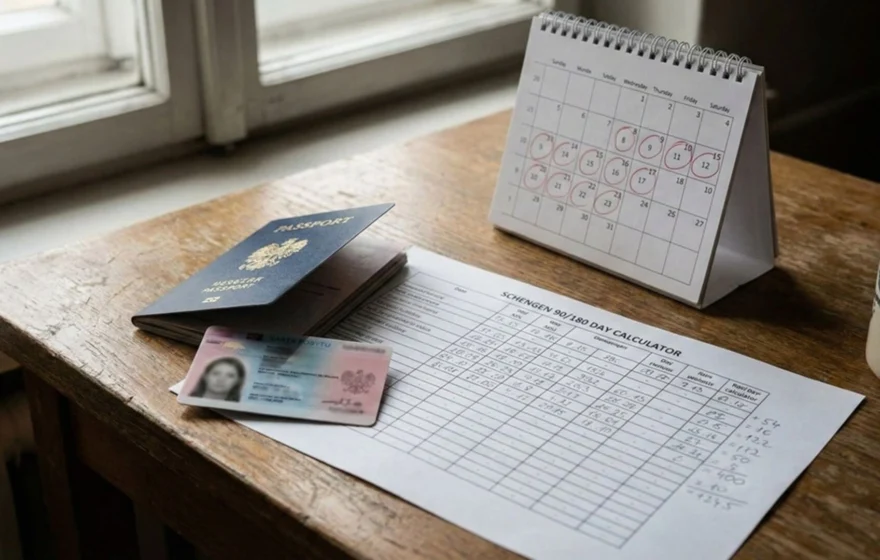
Poland has made online applications compulsory for foreigners seeking temporary residence, permanent residence, or long-term resident status in the European Union, replacing the paper-based system that applicants had relied on for years. The change means that, for most people in these categories, there is now only one accepted way to start a case: through the country’s new digital portal. Anyone who still sends a paper form by post risks having that application ignored altogether, no matter how carefully it was prepared or how early it was posted.
The new system is known as MOS, short for Modul Obslugi Spraw, or the Case Handling Module, and it is run by Poland’s Office for Foreigners. It went live on 27 April 2026, and it is reached through the official portal at mos.cudzoziemcy.gov.pl. From that date, submitting an application through MOS became mandatory for the three permit categories it covers.
Under the revised process, paper applications sent by post are no longer accepted for most residence permit categories. That point matters a great deal for people who posted their documents before the deadline but whose envelopes had not yet reached a provincial office when the new rules took effect. In those cases, the application will not be processed, regardless of when it was mailed. The date on the postmark does not save it. The Office for Foreigners has been clear that such applications are left without consideration, which is a harsh outcome for anyone who believed they had filed in time, but it is also the logical consequence of a system that now recognises only one channel for receiving applications.
The MOS portal is also the only accepted application channel for foreigners already living in Poland who want to regularise or extend their residence status. For all of them, the first step is now the same. They must create an account on the portal, complete the relevant online form, and upload the supporting documents electronically, rather than queuing at a provincial office with a paper file.
There are, however, a small number of exceptions, and they are worth knowing about before anyone assumes the online route applies to them. Five categories of temporary residence applications still have to be submitted on paper. They include applications for intra-corporate transfers, where an employee moves within the same company group, and long-term mobility cases for managers, specialists, and trainee employees in the same setting. They also include family reunification cases where the person concerned is outside Poland at the time of application, family members of Polish, European Union, or certain British citizens who are abroad when they apply, and people leading a family life with such citizens while themselves outside the country. For everyone outside those five groups, MOS is the only route.
To help applicants cope with the change, the Office for Foreigners has published frequently asked questions and additional guidance on legal migration. Those seeking further clarification can contact the office on working days between nine in the morning and four in the afternoon.
The change also sits alongside the rules that decide who can qualify for permanent residence in the first place. Poland’s official migration portal has outlined the circumstances under which foreigners may qualify, and they are deliberately narrow. They include marriage to a Polish citizen, where the marriage must have lasted at least three years and the applicant must have lived in Poland without interruption for at least two years on a temporary residence permit granted because of that marriage. They also include holding a valid Pole’s Card and intending to settle in Poland permanently, in which case an application can be made without a waiting period. People granted asylum in Poland, people of Polish origin who intend to settle permanently, and children of Polish citizens or of foreigners who already hold permanent or long-term resident status can also qualify in defined circumstances.
Long-term resident status in the European Union is a separate category, and it generally requires a much longer period of continuous residence, commonly five years, together with evidence of stable income and, in many cases, knowledge of the Polish language.
For foreigners already in Poland, the practical message of the new system is straightforward, even if the adjustment is demanding. Check first whether your category is one of the five that still uses paper, and if it is not, use MOS and use it early. Do not rely on the post, do not assume that a posting date will protect you, and keep copies of everything you upload. Read the frequently asked questions before you submit, and if anything is unclear, contact the Office for Foreigners during its working hours rather than guessing. The portal is now the gateway to residence in Poland, and learning to use it properly has become as important as meeting the underlying residence conditions themselves.
