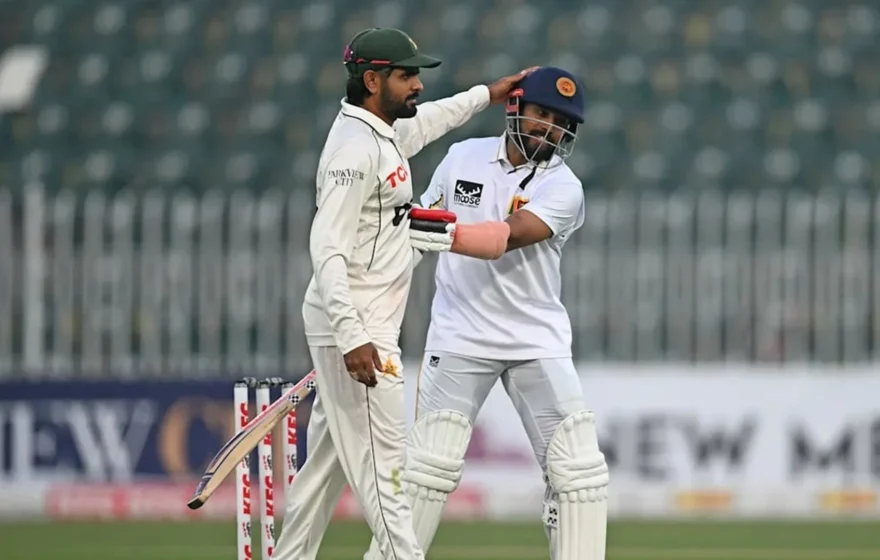
The Pakistan Cricket Board has thrown open the gates at Rawalpindi Cricket Stadium for the third day of the second Test against Sri Lanka, announcing free entry for spectators on Thursday as the home side close in on a series-clinching win. Fans can watch the action without buying a ticket, with the board waiving entry fees for the day to fill the stands at a decisive moment in the match.
Under the decision, anyone turning up at the stadium on Thursday, November 19, can walk in free of charge. The PCB said the move was aimed at boosting attendance and encouraging more spectators to enjoy Test cricket live, and it urged fans to come out in large numbers and support both teams.
The timing is no accident. Pakistan ended the second day firmly in control, with Sri Lanka struggling at 74 for three in their second innings and still 153 runs behind. The visitors have seven wickets in hand and must first wipe out the deficit before they can think about setting a target, while the home side know early wickets on the third morning could open the door to an innings win.
Sri Lanka’s second innings began badly, with three early wickets falling for just 39 runs as Pakistan’s seamers struck with the new ball. Captain Dhananjaya de Silva and opener Pasindu Sooriyabandara then steadied the innings with an unbeaten 35-run partnership that carried Sri Lanka to stumps. De Silva will resume on 24 and Sooriyabandara on 18, knowing their stand is the only thing between Sri Lanka and a heavy defeat. Saqib Khan, Razaullah and Aamir Jamal claimed one wicket each.
Bad light brought the second day to an early close, a familiar story in this series, so the third day will begin with Sri Lanka’s two set batters facing a fresh Pakistan attack under pressure from the very first ball. The visitors must bat long, erase the deficit, and build a lead that gives their bowlers something to defend, while Pakistan need only keep bowling with discipline.
Pakistan’s commanding position was built on a first-innings total of 325, a lead of 227 over Sri Lanka’s first-innings 98. The home side resumed the second day on 121 for three and were eventually bowled out in 87.5 overs, but not before their middle and lower order had turned a solid start into a match-defining advantage. Wicketkeeper-batter Ghazi Ghori top-scored with 54 off 90 balls in his maiden Test half-century, and shared a 42-run stand with Aamir Jamal for the eighth wicket. Razaullah blasted 42 off 32 balls with three sixes, while Azan Awais made 47 and Tayyab Arif 46.
Sri Lanka’s Lahiru Kumara took five wickets for 95 runs and Asitha Fernando three for 88, but the pair had little to defend after their side were bowled out for 98 on the opening day. Kusal Mendis held five catches behind the stumps, yet even that could not keep the total down. That collapse of 98 in 35.3 overs remains the passage of play that has shaped the whole Test, and Sri Lanka have been playing damage limitation ever since.
The first Test, played at the same ground from November 9 to 13, ended in a draw after bad weather and bad light wiped out 117 of the scheduled 360 overs. Pakistan declared on 434 for nine, Sri Lanka replied with 446, and the home side had to bat out the final day to save the game. Saud Shakeel scored 93 and 97, Dhananjaya de Silva made 167, and debutant Saqib Khan took seven for 130 to be named player of the match. Each side took four World Test Championship points, leaving the series level at 0-0.
That draw is precisely why this second match matters so much. With the series still level, the side that wins in Rawalpindi takes the series, and Pakistan now have that prize within reach. A win would also bring valuable World Test Championship points, while a draw would leave the series shared.
The free-entry announcement also speaks to a wider challenge facing Test cricket in Pakistan. Daytime crowds at Rawalpindi have often been thin, particularly on weekdays. A free day, with the home team on top and a result in sight, is one of the simplest ideas available, and it costs the board little if the stands would otherwise have been half empty.
What happens next depends on the first hour of the third day. If Pakistan’s bowlers break the De Silva-Sooriyabandara partnership early, Sri Lanka’s middle order will be exposed with the deficit still standing, and an innings defeat will come sharply into view. If the two batters survive the morning, the match could yet stretch into a fourth day. Pakistan have the runs, the wickets and the momentum, and on Thursday they will also have a crowd that did not have to pay to be there. The PCB has done its part by opening the gates. It is now up to the players to finish the job, and up to the fans to turn up and watch them do it.
