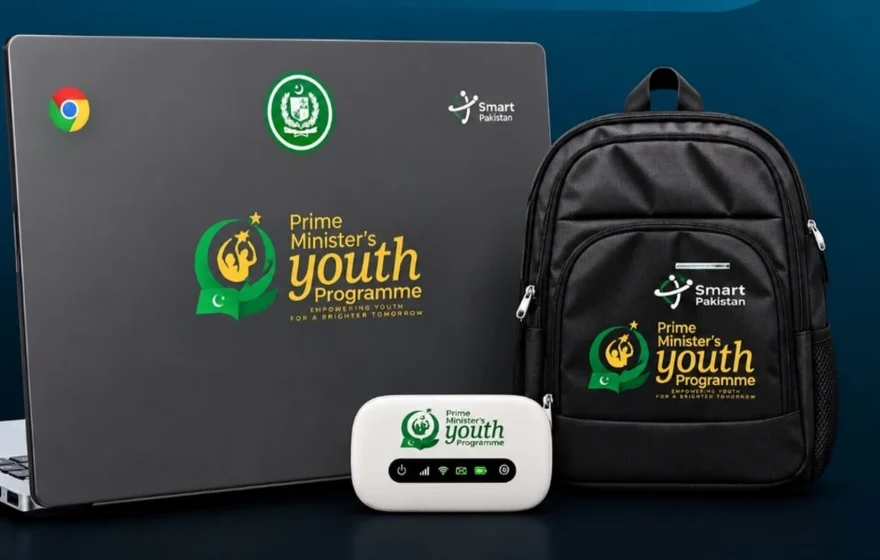
The federal government is set to distribute 500,000 refurbished Chromebooks to high-performing Grade 9 students across Pakistan under the Prime Minister’s Youth Chromebook Scheme, in one of the largest device giveaways for schoolchildren the country has seen. The scheme is being run by the Ministry of Federal Education and Professional Training together with the Prime Minister’s Youth Program, while the TT Care Foundation has committed to supplying the devices under a letter of understanding, according to a report in The News on Sunday.
Eligibility is built around academic merit. To qualify, a student must have scored at least 50 percent in their latest SSC-I examinations, with results to be verified by the Inter Boards Coordination Commission. Recipients will then be selected on merit within their own province or region, examination board and academic stream, so that students are competing against peers in comparable circumstances rather than against the whole country at once. The scheme is open to students at public schools, private schools supported by provincial education foundations and registered madaris, widening the net well beyond government classrooms alone.
The provincial breakdown shows where the devices will go. Punjab receives the largest share at 181,090 Chromebooks, followed by Sindh with 85,925, Khyber Pakhtunkhwa with 51,170 and Balochistan with 31,815. Islamabad has been allocated 100,000 devices, while Azad Jammu and Kashmir and Gilgit-Baltistan will each receive 25,000. Within each region, 80 percent of devices will go to school students and 20 percent to madaris students, and among school students the split by stream is 70 percent for science and 30 percent for arts, reflecting the balance of enrolment in those streams.
Before any device reaches a student, the authorities will verify results, enrolment and school affiliation, and the Chromebooks will then be delivered by courier. The scheme also includes a monitoring system to track deliveries and grievance committees to deal with complaints about selection, verification or non-delivery, an acknowledgement that a programme of this scale will inevitably throw up disputes and delays that need a proper channel for redress.
For the students who receive them, a Chromebook could open up a different kind of learning, from online study material to digital assignments that many schools still cannot offer. But the devices on their own will not close the gap: they will matter most where students also have connectivity, guidance on how to use them and teachers able to build them into lessons. If the selection stays fair, the deliveries stay on track and the support follows the hardware, this scheme could give half a million young Pakistanis a genuine head start.
