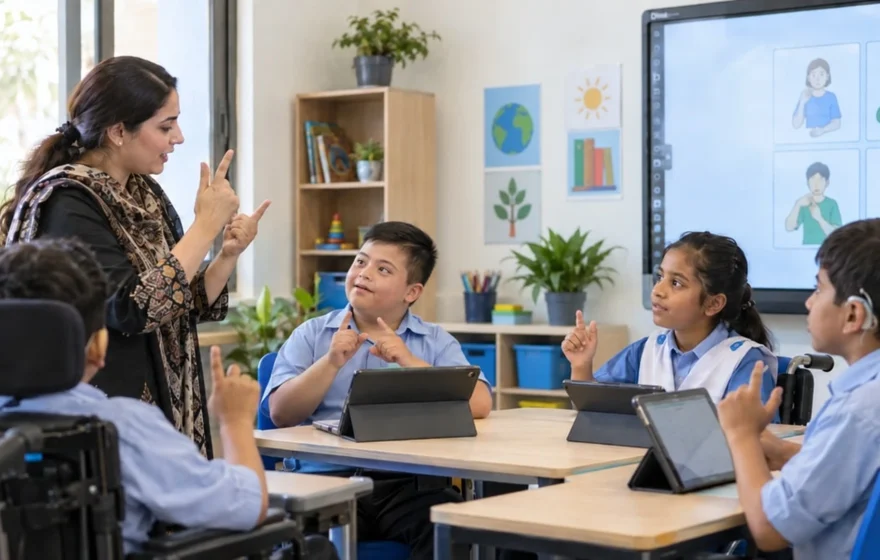
Punjab is preparing to digitise special education in the province, in a move aimed at making classroom learning easier and opening up better opportunities for children with disabilities. The plan was discussed in a meeting between the province’s special education department and a delegation from the Punjab Information Technology Board, where officials explored how digital teaching tools and modern facilities could be brought into special schools.
At the heart of the initiative is a shift in how lessons themselves are delivered. The department intends to develop classroom learning modules built to international standards, giving teachers structured, modern material to work with rather than relying solely on traditional methods. Textbooks will also be converted into simpler digital formats, so that children with different needs can access their course material more easily, whether that means clearer layouts, adjustable text or content designed to be navigated at a child’s own pace.
Teachers and school staff are a central part of the plan as well. The department will arrange training to strengthen their skills, recognising that new tools are only useful if the people using them every day know how to get the best out of them. Alongside that, a state-of-the-art in-house studio is proposed to produce educational videos, allowing lessons to be recorded and reused across schools and giving children a richer mix of visual and audio learning alongside their regular classes.
Director General of Special Education Shoaib Khan Jadoon, who led the discussions, said technology could help give children with disabilities the same educational opportunities as their peers. He added that preparing these children to meet the demands of the modern world remained a priority, and that the department wanted a teaching system that was simpler, more effective and supported by digital resources. The emphasis, in other words, is not on technology for its own sake but on using it to remove barriers that have long made learning harder for these pupils.
The real test of the plan will come in how it is delivered. Digital classrooms need reliable devices, accessible content and trained teachers working together, and the gains will depend on whether schools across the province, including those far from the big cities, receive the same standard of support. If Punjab gets that balance right, the initiative could make a genuine difference to children who have too often been left to fit into a system not designed for them, giving them tools built around how they actually learn.
